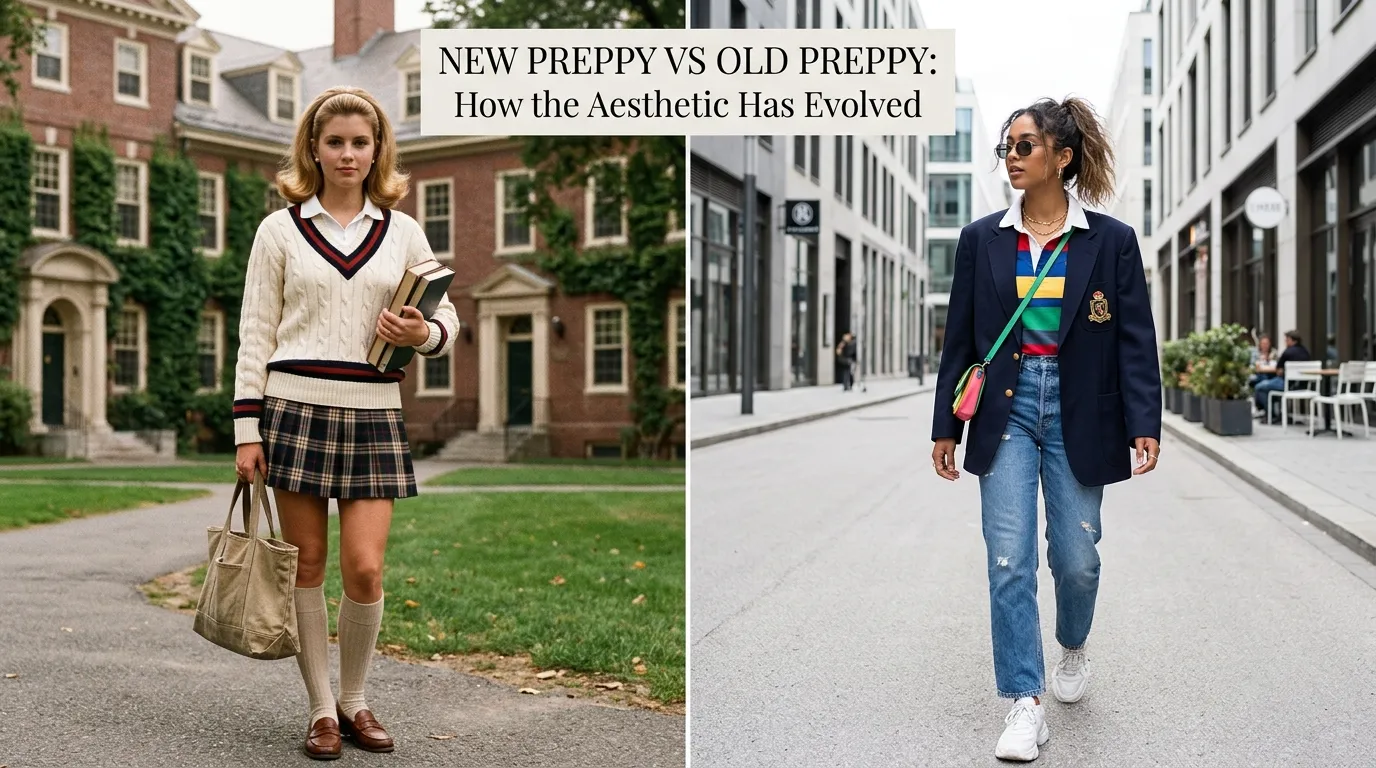
New Preppy vs Old Preppy: How the Aesthetic Has Evolved Over Time
There is something quietly fascinating about the way preppy fashion keeps reinventing itself. What started as the uniform of East Coast private school students and Ivy League graduates has, over the decades, shed its exclusivity and picked up something far more interesting: cultural relevance across generations. The new preppy aesthetic circulating on TikTok feeds and Pinterest boards today looks nothing like the stiff blazers and khaki chinos your parents might have worn, yet it carries the same unmistakable DNA. Understanding both versions, and where they diverge, tells you a lot about how fashion absorbs culture and reflects it back in unexpected ways.
What the New Preppy Aesthetic Actually Means
Redefining the New Preppy Look for a Modern Era
At its core, new preppy style is a reinterpretation of classic American collegiate fashion through a contemporary lens. It borrows the foundational vocabulary of traditional prep, things like pleated skirts, cable knit sweaters, loafers, and polo shirts, but restructures them around modern silhouettes, a more relaxed attitude toward formality, and a genuine appetite for mixing high and low. The result is a contemporary preppy fashion that feels lived-in rather than stiff, expressive rather than conformist.
Where old preppy was about signaling belonging to a specific social class, the new preppy aesthetic is more about visual storytelling. A girl layering an oversized cardigan over a plaid skirt with white sneakers is not trying to look like she attends a boarding school in Connecticut. She is building an aesthetic outfit that references those codes while making them entirely her own.
The updated preppy look also pulls from adjacent aesthetics. Tenniscore, coastal prep style, the clean girl aesthetic, and even old money aesthetic sensibilities all feed into what people today call new age preppy fashion. It is not a monolith. It is a mood board with recurring motifs.
Where New Preppy Parts Ways With Traditional Prep
The most obvious break from classic prep fashion is the silhouette. Traditional preppy clothing was built around tailored fits, structured blazers, and a certain neatness that signaled effort. New preppy leans oversized, relaxed, and occasionally a little undone. An oversized sweater tucked halfway into a pleated skirt is not something you would have found in The Official Preppy Handbook, the 1980 satirical guide that became an accidental bible of the original aesthetic. That book codified button-down shirts, chinos, loafers, and argyle prints as the non-negotiable building blocks of the preppy identity. Today those pieces still appear, but the grammar around them has changed completely.
Another significant departure is the relationship with streetwear. New preppy outfits comfortably incorporate white sneakers where loafers once stood, baseball caps where headbands or visors might have appeared, and an overall ease that streetwear culture has normalized. The streetwear preppy mix is one of the defining characteristics of the modern version, and it is one that the old guard would have considered deeply out of place.
Why Gen Z Has Adopted This Aesthetic So Enthusiastically
Gen Z’s relationship with fashion is fundamentally different from previous generations. They shop across price points without embarrassment, mix vintage pieces with fast fashion, and treat aesthetics as something to explore rather than commit to for life. New preppy fits that framework perfectly because it is flexible enough to be adapted without losing its identity.
There is also an element of irony and self-awareness built into Gen Z preppy style. Wearing pearl necklaces and a varsity jacket simultaneously is not a mistake; it is a deliberate collage. The aesthetic is referential, sometimes nostalgic, and often a little tongue-in-cheek. Preppy 2026 is not earnest the way the original was. It is knowing.
The Roots of Old Preppy Style

How Ivy League Fashion Created an Entire Visual Language
Old preppy did not emerge from nowhere. It grew out of the specific culture of American elite education, particularly the prep schools and Ivy League universities of the Northeast that were, for much of the twentieth century, the gateways to upper-class professional life. Brooks Brothers, founded in 1818, was dressing these institutions long before anyone had coined the word “preppy.” The aesthetic of East Coast fashion was practical in its origins: wool blazers against New England winters, khaki chinos for campus life, loafers for the club.
What made it a style, rather than just a dress code, was the way it was adopted beyond those original contexts. By the mid-twentieth century, Ivy League fashion had migrated into mainstream American culture through film, advertising, and the cultural prestige of American universities. Brands like Ralph Lauren and Tommy Hilfiger later commercialized and amplified these codes for a much broader audience, making classic preppy style accessible to people who had never set foot on an Ivy League campus.
The Building Blocks of a Classic Preppy Wardrobe
If The Official Preppy Handbook taught us anything, it is that old preppy was deeply committed to its own specific inventory. The wardrobe staples were not optional. Polo shirts, preferably with a small logo at the chest. Button-down shirts in Oxford cloth. Blazers in navy blue or plaid. Chinos in khaki or cream. Loafers, ideally penny loafers. Cable knit sweaters and cardigans layered with a collar peeking above. Sweater vests over button-downs. Tailored shorts for summer. Plaid skirts for women. Knee-high socks worn with sincerity.
The accessories had their own logic too. Leather belts with brass buckles. Pearl necklaces. Tennis bracelets. Simple gold jewelry. Tote bags in canvas. Sunglasses with a classic frame. The ensemble was always coordinated in a way that appeared effortless but was actually highly controlled.
The Color Palette and Patterns That Defined Classic Prep
Color was one of the most recognizable aspects of old preppy. The palette leaned toward navy blue, forest green, burgundy, and crisp white, with pastels appearing heavily in spring and summer contexts. The patterns were equally specific: argyle prints on knitwear, plaid patterns on skirts and blazers, stripes on shirts, and the occasional madras fabric that signaled summer holidays at the yacht club or country club.
What old preppy avoided was anything too casual, too loud, or too fashion-forward. The point was not to look like you were trying. It was to look like you belonged.
How Old Preppy and New Preppy Actually Compare
| Element | Old Preppy | New Preppy |
|---|---|---|
| Silhouette | Tailored, fitted, structured | Oversized, relaxed, slightly undone |
| Key pieces | Chinos, blazers, polo shirts, loafers | Pleated skirts, oversized sweaters, sneakers, cardigans |
| Color palette | Navy, forest green, burgundy, white | Pastels, neutral tones, beige aesthetic, monochrome outfits |
| Attitude | Earnest, aspirational, status-coded | Ironic, expressive, inclusive |
| Footwear | Penny loafers, boat shoes | White sneakers, chunky loafers, hybrid styles |
| Accessories | Pearl necklaces, leather belts, tennis bracelets | Headbands, gold jewelry, tote bags, baseball caps |
| Influence | Ivy League, East Coast, country club | TikTok, Pinterest, streetwear, coastal aesthetics |
| Patterns | Argyle, plaid, stripes, madras | Subtle plaid, stripes, clean minimalist prints |
| Social context | Elite school fashion, private school fashion | Campus fashion, back-to-school fashion, everyday wear |
| Cultural attitude | Exclusive, class-coded | Accessible, ironic, aesthetically fluid |
The Silhouette Shift: Modern Fits vs Traditional Tailoring
One of the clearest markers of new preppy is what happened to the fit. Traditional prep was structured from the shoulders down. Blazers were worn with intention. Shirts were tucked in. Everything had its place. The modern version has largely abandoned that architecture. Oversized sweaters hit mid-thigh. Blazers are now worn open over graphic tees. Pleated skirts are styled with chunky sneakers rather than heeled loafers. The body is not restrained; it is draped.
This shift is partly aesthetic and partly cultural. The mainstreaming of streetwear throughout the 2010s fundamentally changed how younger generations relate to proportion in clothing. Oversized became the default comfort zone for an entire generation, and when that generation picked up the preppy aesthetic, they brought those proportions with them.
What Streetwear Did to the Preppy Vocabulary
The streetwear influence on new preppy is perhaps the most discussed aspect of the aesthetic’s evolution, and for good reason. The collision of these two seemingly opposite style traditions produced something genuinely interesting. Varsity jackets, which were always at the borderline between prep and street, became central pieces. White sneakers replaced loafers as the go-to shoe. Hoodies appeared under blazers. Baggy chinos replaced tailored ones.
The result is a streetwear preppy mix that maintains enough of the original codes to still read as “preppy” while feeling current and wearable in the context of everyday modern life.
Minimalism vs Maximalism Within the Preppy World
Here is a distinction that does not get discussed enough: within the umbrella of new preppy, there are actually two competing tendencies. One pulls toward minimalism, clean lines, neutral tones, and the beige aesthetic popularized by the clean girl aesthetic trend. The other pulls toward a kind of maximalism that layers patterns, stacks pearl necklaces with gold jewelry, mixes plaid with stripes, and leans into the maximalist potential of the original aesthetic.
Both are genuinely valid expressions of modern preppy style. They reflect different personalities, different influences, and different interpretations of what the aesthetic is for.
Building a New Preppy Wardrobe: The Essentials
Oversized Sweaters and Pleated Skirts as the Foundation
If there are two pieces that anchor the new preppy wardrobe, they are the oversized sweater and the pleated skirt. Together or separately, these pieces do most of the heavy lifting. A cable knit sweater in a cream or pastel color worn over a plaid skirt with knee-high socks is essentially the mascot of the entire aesthetic. The key to making it feel current rather than costume-y is in the proportions: the sweater should be genuinely oversized, the skirt should sit at a length that feels intentional rather than accidental, and the overall silhouette should feel balanced.
Cardigans play an equally central role, particularly the cropped or boxy versions that have become staples of trendy preppy outfits. Worn open over a button-down, or layered under a blazer, the cardigan functions as both a style piece and a practical layering tool.
Accessories That Define the New Preppy Look
Accessories in the new preppy aesthetic are where the personality really comes through. Pearl necklaces remain central, but they are now worn in a way that reads as slightly ironic or at least self-aware rather than purely traditional. Gold jewelry adds warmth and a hint of the old money aesthetic. Tote bags, particularly canvas or structured leather ones, are practical and stylish. Headbands keep a clear reference to classic prep while feeling distinctly modern when paired with contemporary outfits.
Baseball caps occasionally appear, bridging the streetwear influence. Sunglasses with a classic or slightly vintage frame round out the look without overwhelming it.
The Sneaker vs Loafer Question
The shift from loafers to white sneakers is genuinely symbolic of the broader transformation between old and new preppy. Loafers, particularly penny loafers, were non-negotiable in the original aesthetic. They signaled a specific kind of effortless elegance rooted in the country club and campus traditions of East Coast fashion.
White sneakers, particularly the chunky or slightly retro varieties that have dominated casual fashion for the past several years, bring a completely different energy. They are relaxed, democratic, and streetwear-adjacent. What is interesting about new preppy is that loafers have not disappeared; they have just become one option among several rather than the only acceptable choice. Knowing how to style loafers alongside a modern preppy outfit, particularly with a slightly cropped trouser or a midi skirt, remains a skill worth developing.
How Social Media Transformed the Preppy Aesthetic

TikTok’s Specific Role in Rebuilding Preppy for a New Audience
The TikTok fashion trends machine is genuinely one of the most powerful forces in contemporary style, and it played a significant role in the rise of new preppy as a cultural phenomenon. TikTok’s algorithm rewards aesthetic consistency and strong visual identity, both of which preppy delivers in abundance. The plaid skirts, the cardigans, the loafers and sneakers, the knee-high socks: these translate beautifully into the kind of visually coherent short-form content that performs well on the platform.
More specifically, TikTok’s back-to-school fashion content became a seasonal proving ground for the new preppy aesthetic. Each August and September, millions of videos featuring aesthetic school outfits flood the platform, and preppy looks consistently dominate that space.
Pinterest as a Moodboard for Modern Prep
Pinterest outfits have always leaned toward the curated and aspirational, and new preppy fits that platform’s visual grammar perfectly. The pastel colors, neutral tones, and well-composed outfit flatlay photographs that characterize the aesthetic perform consistently well as Pinterest-inspired preppy looks. For many people, Pinterest functions as a personal style archive where they can trace the evolution of their taste over years, and preppy in its various forms has been a consistent presence.
The Influencer Layer
Influencer fashion has given the new preppy aesthetic both visibility and variety. Different creators interpret it differently, some leaning into the coastal prep angle, others emphasizing the tenniscore aesthetic or the vintage prep style element, still others blending it with old money aesthetic sensibilities. This diversity of interpretation is actually one of the things that has kept the trend alive well beyond the usual shelf life of a viral aesthetic. When something can contain multitudes, it has longevity.
Styling the New Preppy Look Across Different Contexts
Casual New Preppy Outfits for Everyday Wear
The casual version of this aesthetic is arguably its most wearable form. An oversized cable knit sweater in a neutral tone, paired with wide-leg chinos or a pleated mini skirt and white sneakers, covers most casual situations without effort. Add a tote bag and simple gold jewelry, and the outfit is complete. The key with casual new preppy is restraint: not every element needs to be preppy, and the pieces that are should feel relaxed rather than stiff.
New Preppy Fashion for School and College
Back-to-school fashion has always been a natural habitat for preppy style, and the new version is no different. The campus fashion version of the aesthetic tends to be practical: layers for changing weather, comfortable shoes for walking between classes, and outfits that hold up through a full day without needing attention. Sweater vests over a collared shirt, pleated trousers with loafers, or a blazer over a simple tee with tailored shorts are all solid campus fashion choices. For a resource that covers the full breadth of this aesthetic across seasons and occasions, Preppyglow offers a well-curated guide to the preppy style universe.
Seasonal Styling Strategies
Spring and summer new preppy leans heavily into pastel colors, light cotton fabrics, linen-blend pieces, and the coastal prep style that channels warm-weather leisure. Pastel fashion in pale yellow, sky blue, and soft pink reads as effortlessly fresh in warmer months.
Autumn and winter call for layering: cable knit sweaters over collared shirts, cardigans under structured coats, and the transition from white sneakers to more substantial footwear without losing the aesthetic’s core vocabulary. Navy blue and neutral tones anchor the colder-season wardrobe.
Brands Shaping the New Preppy Space
Accessible Labels Making New Preppy Wearable
The democratization of the preppy aesthetic is one of the most significant differences between its old and new versions. You no longer need to spend at the level of the original establishment brands to participate in the aesthetic. Zara and H&M have both delivered well-timed collections that capture the pleated skirts, oversized knitwear, and tailored separates that define affordable new preppy clothing. These pieces are trend-responsive and accessible, which is exactly what a broader audience needs.
Brandy Melville’s ultra-casual take on collegiate fashion has also influenced how the aesthetic is understood by younger consumers, particularly in its relaxed silhouettes and nostalgic references to campus life.
Heritage Labels Finding New Relevance
Ralph Lauren, Tommy Hilfiger, Lacoste, J.Crew, and Brooks Brothers represent the institutional memory of the preppy aesthetic. Each has navigated the shift toward new preppy in its own way. Ralph Lauren’s consistent output across price points, from the mainline to Polo to Purple Label, covers nearly every expression of the aesthetic. J.Crew has arguably been the most agile in adapting its preppy DNA to contemporary tastes, regularly collaborating and refreshing its core pieces to feel current without abandoning its heritage.
Sustainability and the New Preppy Consumer
One of the less-discussed aspects of the new preppy aesthetic is how naturally it aligns with secondhand and sustainable shopping. Classic preppy pieces, blazers, cable knit sweaters, button-down shirts, are exactly the kind of timeless clothing that vintage and thrift stores stock in abundance. Buying a wool blazer from a charity shop is both economical and genuinely more sustainable than buying a new fast-fashion version. Several sustainable labels have also recognized the alignment, offering preppy-coded pieces in organic or recycled fabrics. This overlap between sustainable brands in the new preppy space and the aesthetic’s natural inclination toward quality basics is one of its most quietly interesting dimensions.
Is Old Preppy Coming Back? What the Signs Say
The Return of Classic Prep Elements
There is a recurring conversation in fashion about whether old preppy, the strict tailored version, the one that lived by The Official Preppy Handbook and considered itself to have clear rules about what was and was not acceptable, is making a comeback. The honest answer is that elements of it are returning, but rarely in their original form. Classic preppy style is being filtered through contemporary sensibilities, which means the pieces appear but the rigidity does not.
Argyle prints, for instance, have had a genuine resurgence. Plaid blazers and trousers are back in serious circulation. Loafers returned as a mainstream footwear choice several years ago and have stayed. These are classic prep trends finding new relevance within a broader aesthetic ecosystem.
Mixing Old and New Preppy: The Most Interesting Styling Territory
The most creatively rewarding space in preppy fashion right now is the intersection of old and new. A strictly tailored blazer worn with an oversized crew neck sweater and straight-leg jeans. A classic penny loafer styled with a contemporary pleated skirt and a cropped cable knit. Pearl necklaces layered with more casual jewelry. This mixing old and new preppy approach requires a genuine understanding of both aesthetic systems, but when it works, it produces something genuinely distinctive.
For a comprehensive look at how to navigate these combinations, the style guides and resources at Preppyglow offer practical starting points for anyone building this kind of wardrobe.
Where the Preppy Aesthetic Is Heading
Preppy 2026 looks increasingly like an aesthetic that has found a stable, long-term home in the broader fashion culture rather than a trend with an expiration date. The tenniscore aesthetic continues to pull new energy into the preppy conversation. Coastal prep style resonates with the broader cultural appetite for the “quiet luxury” approach to dressing. The old money aesthetic, with its emphasis on understated quality and classic pieces, shares enough DNA with preppy to keep bringing new audiences toward the aesthetic’s core vocabulary.
The future of the preppy aesthetic is probably not a single coherent look but a family of related aesthetics that share certain foundational pieces and sensibilities while expressing themselves differently across contexts, platforms, and personalities.
The Part Nobody Talks About: Lesser-Known Truths About Preppy Fashion
One of the most interesting things about the preppy aesthetic is how successfully it has separated from its original social context. Old preppy was inseparable from the culture of affluent, predominantly white, East Coast American institutions. Elite fashion culture, private school fashion, yacht club aesthetic, country club style: these were not metaphors but literal contexts in which the clothes were worn.
New preppy has genuinely decoupled from those origins. It now operates as a visual language that anyone can adopt without any connection to the institutions that produced it. This is both a democratization and a kind of erasure of context, depending on how you look at it.
There is also a lesser-known distinction between new preppy and old money aesthetic that often gets blurred in online discussions. Old money aesthetic is quieter, more expensive-looking, and deliberately avoids logos or obvious trend participation. New preppy is more comfortable with visible pattern, occasional irony, and trend responsiveness. They overlap but are not the same thing.
Frequently Asked Questions About New Preppy Style
Is preppy style still in fashion in 2026?
Yes, and arguably more broadly relevant than it has been in decades. The new preppy aesthetic has adapted to contemporary tastes through its integration with streetwear, social media aesthetics, and the ongoing interest in classic, quality-coded clothing. Preppy 2026 looks different from its predecessors but the foundational pieces and sensibility are firmly embedded in mainstream fashion culture.
What exactly is the new preppy aesthetic?
New preppy is a contemporary reinterpretation of classic American collegiate and Ivy League fashion. It retains the core pieces, such as pleated skirts, sweaters, loafers, and button-down shirts, but reframes them with relaxed silhouettes, streetwear influences, and a more flexible attitude toward mixing and matching. It draws from tenniscore, coastal prep, clean girl aesthetic, and vintage prep style simultaneously.
How do you dress in the new preppy style?
Start with foundational pieces: an oversized cable knit or crew neck sweater, a pleated skirt or tailored trousers, and either white sneakers or loafers depending on the look you want. Layer with a cardigan or blazer, add pearl necklaces or gold jewelry, and carry a tote bag. The key is to keep proportions relaxed rather than stiff, and to mix pieces from different preppy sub-aesthetics rather than following a rigid formula.
What defines old preppy fashion?
Old preppy fashion is defined by structured, tailored clothing associated with Ivy League and East Coast American prep school culture. The key pieces are polo shirts, button-down shirts in Oxford cloth, blazers, chinos, penny loafers, cable knit sweaters, and argyle or plaid patterns. The aesthetic, codified in part by The Official Preppy Handbook, emphasized a specific kind of effortless neatness rooted in affluent American cultural institutions.
Why is preppy style trending again?
Several overlapping reasons. Social media platforms, particularly TikTok and Pinterest, gave the aesthetic a new visual platform and a new audience. Gen Z’s appetite for referential, mix-and-match fashion made old aesthetics newly relevant. The broader cultural interest in “quiet luxury” and old money sensibilities pulled attention toward preppy’s classic, quality-coded vocabulary. And the aesthetic’s flexibility, its ability to absorb streetwear, minimalism, and coastal references without losing its core identity, has kept it alive and evolving.
Can you mix streetwear with preppy fashion?
Not only can you, but the streetwear preppy mix is one of the defining characteristics of the new preppy aesthetic. White sneakers replacing loafers, varsity jackets layered over collared shirts, baseball caps with pleated skirts: these combinations are now central to how the aesthetic is understood and worn. The key is to let the preppy pieces set the foundational tone while using streetwear elements to relax the overall look.
