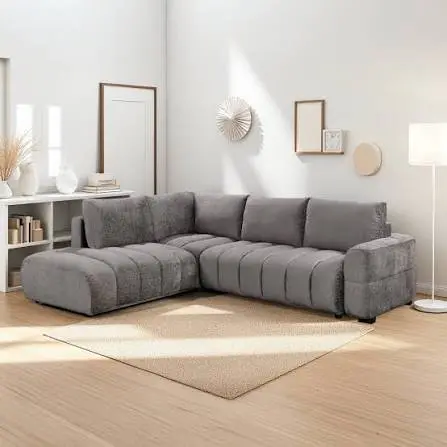
How to Position a Sectional Sofa With Chaise Without Blocking Room Traffic
A sectional sofa with chaise can anchor a living room beautifully, but its larger footprint makes placement more complicated than positioning a standard sofa. The chaise extends the seating area into the room, which can unintentionally interrupt walkways, crowd a doorway, or make other furniture difficult to reach.
Good placement starts with understanding how people move through the room. Instead of choosing a wall first and fitting the furniture around it, consider the room’s entrances, circulation paths, focal points, and the dimensions of the sectional itself.
Start by Mapping the Room’s Traffic
Before moving furniture, identify the routes people naturally use. Look at entrances, hallways, doors to adjoining rooms, windows, and frequently accessed areas such as entertainment centers or patios.
The main walkway should remain clear. People should not have to squeeze between the chaise and a wall or walk directly in front of someone seated on the sofa simply to cross the room.
Use painter’s tape to mark the approximate footprint of the sectional on the floor. This simple step can reveal circulation problems before the furniture arrives.
Measure the Sectional and the Room
Never rely solely on photographs or showroom impressions. Record the sectional’s overall width, depth, chaise length, and height. Then measure the room, including door openings and any architectural features that limit placement.
When comparing different configurations, browsing sectional sofas can also help you compare dimensions and layouts before deciding which configuration suits the room.
Pay particular attention to the chaise depth. A sectional may fit comfortably along one wall while the chaise projects far enough into the room to interfere with a walkway.
Decide Which Direction the Chaise Should Face
The chaise can often be positioned on either the left or right side, depending on the sectional’s configuration. This choice can have a major effect on traffic flow.
If one side of the room contains a frequently used doorway, placing the chaise on the opposite side may preserve a more direct route. If the room opens toward another living area, the chaise can sometimes help define the seating zone without extending across the primary passage.
There is no universally correct chaise direction. The practical choice depends on the room’s existing circulation pattern.
Create a Defined Seating Zone
A sectional does not always need to sit directly against a wall. In a large room, positioning it slightly away from the wall can create a more intentional seating area while leaving circulation space around the perimeter.
A large area rug can reinforce this arrangement by visually grouping the sectional, coffee table, and additional seating.
The goal is to make the seating area feel complete without turning it into an obstacle. A sectional placed in the middle of a room should help organize the space rather than divide it awkwardly.
Keep Essential Paths Open
Think about the routes people use every day rather than theoretical walking space. The path from the main entrance to the kitchen, hallway, or another frequently used room deserves particular attention.
Avoid positioning the chaise where someone must repeatedly walk around its end to reach another part of the home.
Leave Space Around Tables and Seating
The relationship between the sectional and nearby furniture matters just as much as the sectional’s distance from walls.
A coffee table should be close enough to be useful but far enough away to allow people to sit down and stand up comfortably. Side tables should remain accessible without forcing someone to lean around the chaise.
Additional chairs should also have enough room to function independently. If every piece is pushed toward the sectional, the entire arrangement can become difficult to navigate.
Consider Doors, Windows, and Electronics
Furniture placement should account for more than foot traffic. Make sure doors can open fully and windows remain accessible when necessary. Avoid covering heating vents, electrical outlets, or important controls.
If the sectional faces a television, consider viewing angles before finalizing its position. A layout that provides excellent circulation but forces everyone to sit at an uncomfortable angle is not particularly successful.
Common Questions About Sectional Placement
Should a sectional always go against a wall?
No. In larger rooms, floating a sectional can help define a seating area and create circulation around it. The arrangement simply needs enough space to remain practical.
Which side should the chaise be on?
Choose the side that interferes least with major walkways and frequently used doors. Room layout should determine the orientation rather than a general decorating rule.
Can a sectional work in a small living room?
Yes, but accurate measurements are essential. A compact sectional can provide substantial seating, while an oversized chaise may overwhelm limited floor space.
A well-positioned sectional should feel substantial without becoming an obstacle. By mapping traffic patterns, measuring carefully, choosing the appropriate chaise orientation, and leaving practical space between furniture, you can create a living room that supports both comfortable seating and easy movement.
