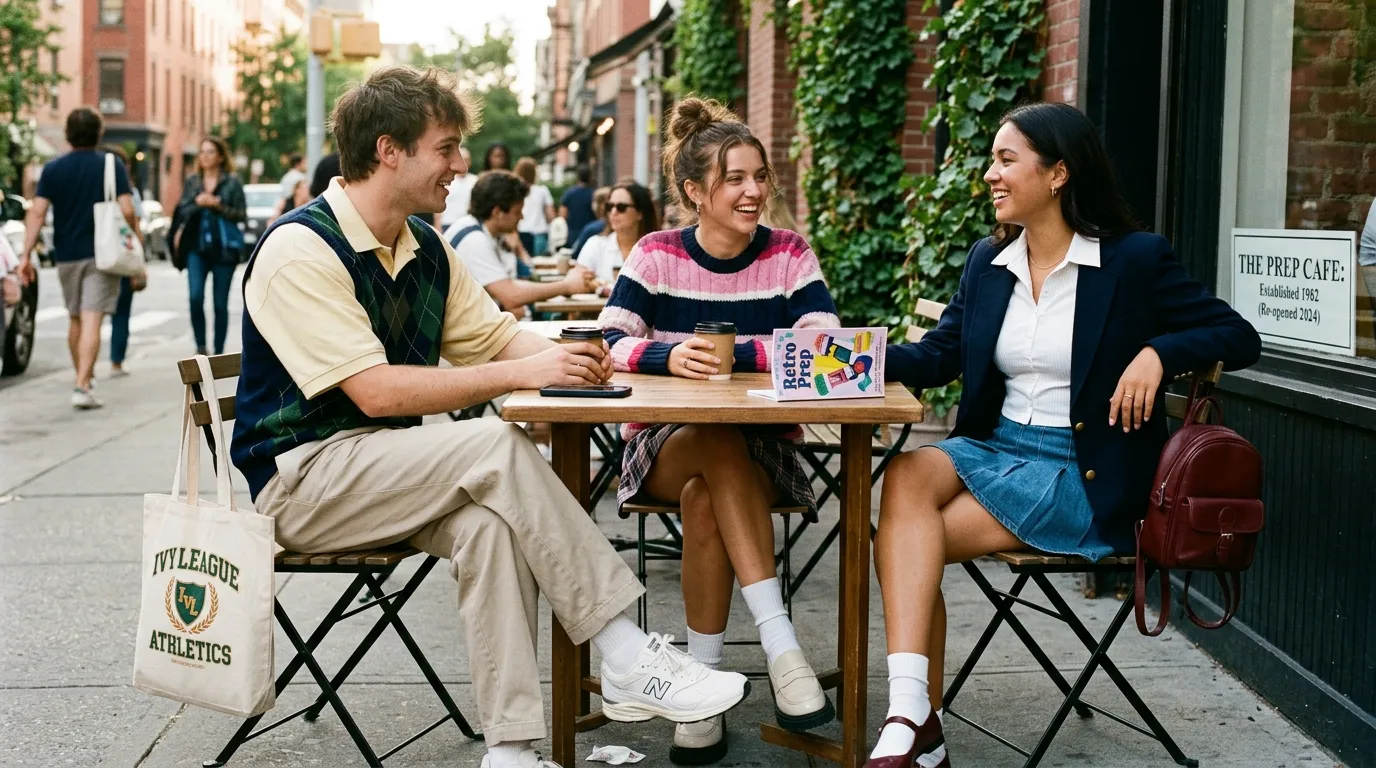
80s Preppy Fashion: How Retro Preppy Style Is Making a Comeback
There’s something about the 80s preppy aesthetic that just refuses to fade. Walk through any college town today, scroll through TikTok for ten minutes, or glance at what’s trending on Instagram – and you’ll see it everywhere. Cable-knit sweaters layered over button-down shirts. Pleated skirts paired with loafers. Blazers thrown over chinos with a silk scarf tied loosely around the neck. The look is crisp, intentional, and unmistakably rooted in a decade that took collegiate fashion to its peak.
But this isn’t just nostalgia talking. The revival of 80s preppy fashion is a genuine cultural reset – one that blends the timeless appeal of Ivy League style with the kind of modern twist fashion that today’s generation actually wants to wear.
The Origins and History of 80s Preppy Style
To understand where this aesthetic stands today, you have to go back further than the decade itself. Preppy style didn’t appear fully formed in 1980. Its roots trace back to the Ivy League campuses of the Northeastern United States – Harvard, Yale, Princeton – where students in the 1950s and 1960s dressed in a way that signaled academic seriousness combined with quiet social confidence. Think wool blazers, Oxford button-down shirts, and penny loafers worn not as fashion statements but as uniforms for a particular kind of life.
By the late 1970s, this look had been codified by a shift in American culture. The publication of The Official Preppy Handbook in 1980 turned what had been an elite, almost unconscious dress code into a widely recognized and widely imitable aesthetic. Suddenly, preppy wasn’t just for the Ivy League – it was aspirational fashion for the entire country.
Ralph Lauren played a central role in translating this lifestyle into ready-to-wear clothing. His collections throughout the late 70s and into the 80s crystallized what the preppy wardrobe looked like: Ralph Lauren polo shirts with that unmistakable logo, blazers with gold buttons, and chinos cut just right. The brand didn’t invent the look, but it made it accessible and gave it commercial momentum.
What made the 80s version of preppy distinct from its predecessors was scale and attitude. The decade amplified everything – bolder patterns, brighter pastel colors, louder accessories. The clean-cut aesthetic was still there, but it had been turned up a notch. Preppy became performative in the best possible way.
How Preppy Style Has Evolved From the 80s to Now
The trajectory of preppy fashion across the decades is less a straight line and more a pendulum. In the 1990s, the look was largely displaced by grunge and streetwear. By the early 2000s, it had returned in a more ironic, deconstructed form. Then came the mid-2010s, when the “old money” aesthetic quietly began building momentum again – not as nostalgia, but as a counter-reaction to the maximalism of fast fashion.
What’s interesting is how each generation rediscovers preppy and reframes it. In the 80s, it was about aspiration – dressing like you belonged to a certain world even if you didn’t. Today, particularly through the lens of social media fashion trends, it’s more about aesthetic coherence. People aren’t necessarily trying to emulate the yacht club lifestyle or signal social class; they’re drawn to the polished look because it photographs well, feels intentional, and provides a clear visual identity.
The evolution also reflects how classic fashion aesthetics tend to survive. Preppy’s core building blocks – the structured blazers, the argyle patterns, the navy and white color palette – are inherently versatile. They adapt without losing their identity.
The Core Elements That Define 80s Preppy Outfits
If you had to strip the aesthetic down to its bones, a handful of wardrobe staples define 80s preppy fashion more than anything else. These aren’t just items – they’re the grammar of the look.
The Essential Wardrobe Pieces
- Polo shirts – particularly in solid colors or with fine stripes, worn with the collar slightly popped (a very 80s touch)
- Cable-knit sweaters – often in cream, navy, or pastels, sometimes tied around the shoulders in the iconic preppy gesture
- Chinos and khaki pants – well-fitted, pressed, and usually in beige, tan, or olive
- Blazers – single-breasted, often in navy or plaid patterns, with brass or horn buttons
- Button-down shirts – Oxford cloth, usually in white, light blue, or soft pink, always tucked in
- Pleated skirts – often in tartan prints or solid plaids, hitting at or just below the knee
- Sweater vests – layered over collared shirts, a look that’s come back with particular force recently
- Bermuda shorts – in summer iterations of the same color families
- Loafers – the shoe that perhaps best encapsulates the entire aesthetic; penny loafers and tassel loafers both qualify
Patterns and Color Palettes That Carry the Look
The color language of 80s preppy is one of its most recognizable features. The navy and white color palette anchors everything. From there, pastels – soft pinks, mint greens, sky blues, and buttery yellows – add the warmth. Bold stripes appear on shirts and knit pieces. Argyle patterns show up on sweater vests and socks. Tartan prints and plaid patterns come through on skirts, blazers, and scarves. The overall effect is coordinated without being matchy – each piece in conversation with the others without shouting.
The Icons Who Shaped the 80s Preppy Aesthetic
No examination of this era’s fashion is complete without acknowledging the people who wore it most visibly. These weren’t necessarily designers – they were cultural figures whose style choices helped define what preppy looked like to an entire generation.
Princess Diana stands as perhaps the most studied preppy dresser of the 1980s. Her early years as a royal were defined by exactly the kind of classic silhouettes and polished outfits that characterize the look – cable-knit sweaters over collared shirts, pleated skirts, loafers, and a silk scarf tied with practiced ease. Princess Diana preppy outfits have been referenced by stylists and influencers so consistently that they function almost as a style blueprint. What made her particularly interesting was how she wore these clothes without any apparent effort – it looked like a wardrobe rather than a costume.
Tom Cruise in Risky Business (1983) offered a different angle. His character’s look – the argyle sweater, the Oxford shirt, the khaki trousers – became one of the defining references for preppy style men have gravitated toward ever since. The film didn’t make him a fashion icon in the traditional sense, but that specific visual shorthand entered the cultural memory and has been referenced repeatedly.
Ralph Lauren as a figure (not just a brand) exemplified the aspirational architecture of preppy. His own personal style mirrored the collections he designed, and that authenticity gave the aesthetic a coherence that advertising alone couldn’t manufacture.
How 80s Preppy Fashion Is Being Revived Today
The current revival of 80s preppy fashion didn’t happen by accident. Several converging forces brought it back, and understanding those forces helps explain why the trend feels genuinely different from previous revivals.
The “old money aesthetic” that surged on social media platforms around 2022-2023 laid important groundwork. That trend celebrated quiet luxury, understated dressing, and clothing that looked expensive without being flashy – values that align almost perfectly with the preppy tradition. When people began building wardrobes around that ethos, they inevitably gravitated toward preppy pieces.
TikTok accelerated everything. 80s retro TikTok trends brought specific visual references – the shoulder-swept sweater, the argyle vest, the pleated skirt with loafers – to millions of younger viewers who had never encountered the original aesthetic firsthand. Instagram outfits built around collegiate fashion started accumulating significant engagement, encouraging more creators to experiment with the look.
What’s particularly savvy about how the current generation has embraced this style is the way they’ve updated it. Rather than wholesale reproduction of the original look, they’ve incorporated the preppy aesthetic into their existing wardrobes. A sweater vest over a hoodie. Loafers with white socks. Blazers over athleisure pieces. The reference is clear, but the execution is contemporary.
For a well-researched breakdown of what defines this aesthetic at its core, Preppyglow offers an excellent deep-dive into modern preppy dressing – covering everything from wardrobe essentials to how the look has been updated for today’s context.
How to Style 80s Preppy Fashion Today

The great advantage of preppy’s current moment is that the look doesn’t require a complete wardrobe overhaul. It integrates remarkably well with modern wardrobes – which is part of why the revival has had such staying power.
Blending Vintage Preppy Pieces with Today’s Trends
The most effective approach is to treat one or two preppy anchors as the focal point of an otherwise contemporary outfit. A cable-knit sweater with modern wide-leg trousers. A blazer over a simple white T-shirt and mom jeans. A pleated plaid skirt with a plain fitted cardigan. Each of these combinations reads as vintage-inspired without feeling like a costume. The key is restraint – choose one piece that references the era and build around it in a modern way.
Best Color Combinations and Pattern Mixing
When working with preppy’s distinctive color families, the most reliable approach is to anchor with neutrals. Navy and white as a foundation, then introduce one or two pastel accents. A cream cable-knit over a navy button-down. A pale pink blazer with grey chinos. If you’re working with patterns – and preppy patterns are some of the most recognizable in fashion – mix scales rather than mixing styles. A finer argyle print works with a bolder plaid if the colors are coordinated. Two competing bold patterns at the same scale tend to cancel each other out.
Adding Athleisure Elements to the Preppy Framework
One of the more interesting developments in the current revival is how naturally preppy blends with athleisure. The athletic origins of many preppy staples – polo shirts from polo and tennis, Bermuda shorts from golf, the overall association with tennis and golf style – make this combination almost historically logical. A clean polo shirt with tailored joggers. A blazer over a fitted hoodie. Sneakers with a pleated skirt and a sweater vest. The athleisure mix doesn’t undermine the classic aesthetic; it brings it into a more casual, wearable register that suits everyday life.
Building Out Your Accessories for the Full Effect
Accessories are where 80s preppy fashion becomes immediately recognizable – and where you can introduce the aesthetic most easily without committing to a full outfit. A leather satchel in tan or cognac reads as collegiate without being costume-y. Aviator sunglasses have enough of a retro fashion edge to work with the look. A silk scarf tied at the neck or in the hair references the period precisely. Headbands – particularly the padded fabric variety – have returned with real momentum. A classic wrist watch, particularly one with a leather strap, completes the polished look in a way that no other accessory can quite replicate.
80s Preppy Fashion vs. Related Aesthetics: A Comparison
The preppy aesthetic often gets conflated with adjacent style movements that share certain surface features. Understanding the distinctions helps you dress with more intention.
| Aesthetic | Core Identity | Key Pieces | Color Palette | Era Feel |
|---|---|---|---|---|
| 80s Preppy | Collegiate, Ivy League-inspired | Blazers, polo shirts, loafers, cable-knits | Navy, pastels, white | Aspirational, polished |
| Old Money | Inherited wealth, understated luxury | Cashmere, tailored trousers, simple shirts | Beige, cream, navy, dark green | Quiet, timeless |
| Dark Academia | Literary, scholarly, moody | Tweed, corduroy, turtlenecks | Brown, black, burgundy, tan | Intellectual, melancholic |
| Cottagecore | Rural, pastoral, handmade | Floral dresses, linen, aprons | Soft florals, green, cream | Whimsical, nostalgic |
| Clean Girl | Minimal, effortless | Sleek basics, simple jewelry | Neutral, monochrome | Modern, refined |
While old money style and 80s preppy share DNA – both rooted in Ivy League campus fashion and classic silhouettes – preppy is brasher, more colorful, and more explicitly referential. Old money dressing aims for invisibility; 80s preppy wanted to be seen.
Dark academia borrows preppy’s structural pieces (the blazer, the trousers) but subverts the cheerfulness with darker tones and a more introspective attitude. If preppy is the athlete-scholar, dark academia is the library recluse.
Lesser-Known Facts About 80s Preppy Fashion

Most writing about preppy style focuses on the obvious touchstones – the polo shirts, the loafers, the Ivy League connection. But several aspects of the aesthetic are routinely overlooked.
Preppy was always slightly transgressive. The original prep school students who developed the look were pushing back against formal dress codes – the polo shirt was more casual than the alternatives available, not more formal. The aesthetic has always had an undercurrent of rebellion beneath the polish.
The popped collar was originally functional. Tennis players turned up their collars to protect their necks from sun. When it became a fashion gesture in the 80s, it was already carrying decades of genuine utility behind it.
Preppy has a complicated relationship with exclusivity. The look originated in genuinely elite circles, and its spread throughout the 1980s involved a certain democratization that older prep school alumni found uncomfortable. The aesthetic has always been caught between its origins and its aspirations.
Gender fluidity was always implicit. The 80s preppy wardrobe was notable for how much overlap existed between men’s and women’s pieces – the blazer, the button-down, the loafer, the cable-knit sweater. Today’s generation, which has taken the look in a noticeably gender-fluid direction, is actually returning to something that was always latent in the aesthetic.
Practical Guide to Building Your 80s Preppy Wardrobe

Starting from scratch doesn’t require a large investment – the preppy aesthetic rewards quality over quantity, and many of its core pieces are widely available at accessible price points.
Start with these five anchor pieces:
- One navy blazer in a classic fit
- Two Oxford button-down shirts (white and light blue)
- One cable-knit or argyle sweater vest
- One pair of well-fitted chinos (a cornerstone of preppy guy fashion done right)
- One pair of loafers
Build out with these additions:
- Polo shirts in pastel colors
- A tartan plaid scarf or silk scarf
- A leather satchel
- A pair of aviator sunglasses
- Headbands in fabric or velvet
Vintage shopping tips: The original 80s pieces are abundant in thrift stores and vintage shops – look specifically for Ralph Lauren polo shirts, wool blazers with brass buttons, and anything in classic argyle patterns. The quality of vintage pieces from this era is often significantly higher than contemporary alternatives at similar price points.
If you want a curated breakdown of how to approach a modern preppy wardrobe, the Preppyglow style guide covers both foundational pieces and contemporary styling approaches in useful detail.
FAQs About 80s Preppy Fashion
What exactly is 80s preppy fashion, and how does it differ from general preppy style?
80s preppy fashion refers specifically to the version of collegiate, Ivy League-inspired dressing that peaked during the 1980s – characterized by a bolder, more expressive take on the classic preppy wardrobe. While general preppy style covers a broader range of eras and interpretations, the 80s version is distinguished by its louder color palettes (particularly pastels), its prominent use of argyle and tartan patterns, and the decade’s signature styling gestures like the popped polo collar and the shoulder-draped sweater. It’s the same foundational aesthetic, amplified.
Who were the most influential icons of 80s preppy fashion?
Princess Diana’s early royal wardrobe is the most extensively referenced source of 80s preppy inspiration – her combination of cable-knit sweaters, pleated skirts, and loafers established a template that’s still being cited today. Tom Cruise’s look in Risky Business captured the male collegiate iteration. Ralph Lauren as both a designer and a cultural figure provided the commercial vocabulary that made the aesthetic widely accessible.
How can I incorporate 80s preppy style into a modern wardrobe without looking outdated?
The most effective approach is to treat preppy pieces as accents rather than full outfits. A sweater vest layered over a simple T-shirt. A blazer with contemporary trousers. Loafers with modern fitted jeans. Using one or two preppy anchors against a more current silhouette keeps the reference clear without tipping into costume territory. Athleisure mixing – hoodies under blazers, sneakers with pleated skirts – also reads as contemporary rather than retro.
Why is 80s preppy fashion coming back right now?
Several factors converged. The old money aesthetic and quiet luxury trends that gained significant social media traction from 2022 onward share significant DNA with classic preppy dressing. TikTok’s nostalgia cycles brought specific 80s visual references to younger audiences. And there’s a broader cultural appetite for dressing with intention – for clothing that signals coherent values and aesthetic choices – that the structured, polished look of 80s preppy satisfies particularly well.
What are the essential accessories for an 80s preppy look?
The most important accessories are the loafers (or tassel loafers), a leather satchel, and at least one scarf – either a silk scarf worn at the neck or a tartan wool scarf in cooler months. Aviator sunglasses, headbands, and a classic watch with a leather strap round out the look. The accessory philosophy in preppy dressing is the same as in the clothing: each piece should feel considered, not decorative.
Is 80s preppy fashion appropriate for professional settings today?
Entirely, and in some contexts it’s ideal. The blazer-chinos-button-down combination that sits at the core of the aesthetic translates directly into business casual and even more formal professional settings. The key is calibrating the bolder pattern elements – saving the louder argyle and plaid pieces for more casual contexts while leaning on the navy-and-white basics for office wear. Preppy’s clean-cut aesthetic and classic silhouettes have always been inherently professional.
Where can I find authentic 80s preppy pieces?
Vintage and thrift stores are the most reliable sources for genuine era pieces, particularly in college towns and larger cities. Online resale platforms carry significant inventory of original Ralph Lauren polo shirts, blazers, and knitwear from the period. Contemporary brands also produce preppy staples that align closely with the original aesthetic. For a current view of what to look for and where to find it, fashion resources focused specifically on the preppy style guide format are worth consulting.
