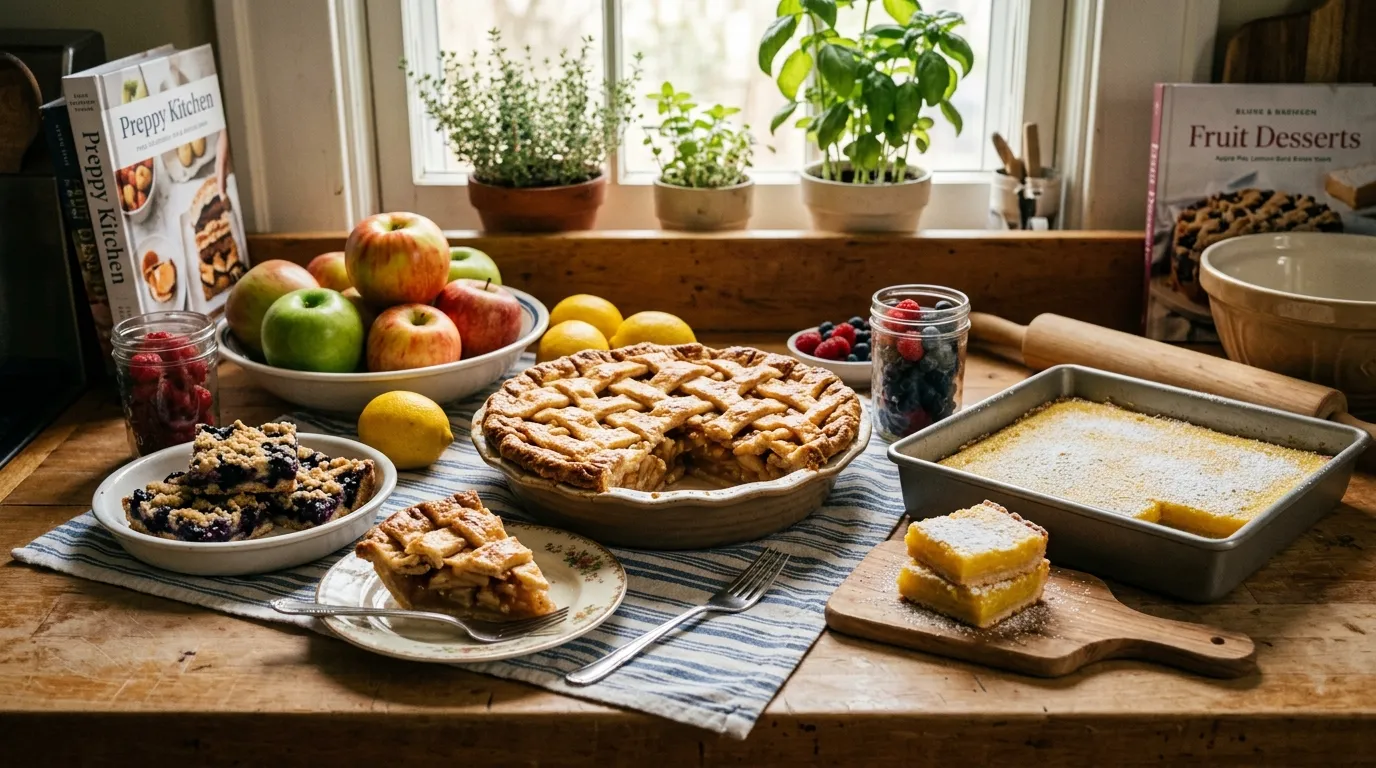
Preppy Apple Pie, Lemon Bars & More: Best Fruit Dessert Recipes
There is something quietly powerful about a homemade apple pie cooling on a counter. The smell alone does most of the work. Cinnamon, brown sugar, and warm butter fill a kitchen the way no candle ever could. And while fruit desserts span a wide and delicious universe, few recipes carry the cultural weight, the technique depth, or the sheer crowd-pleasing reliability of a classic apple pie done properly.
This guide covers everything you need: the ingredients, the method, the science behind each step, and the lesser-known tips that separate a forgettable pie from one people ask about for years. Whether you are tackling this for a Thanksgiving dessert, a weekend baking project, or simply because the season calls for it, the details here will carry you through.
What Makes a Preppy Kitchen Apple Pie Worth Talking About
The term “Preppy Kitchen” has become closely associated with John Kanell, a baker and content creator whose approach to homemade dessert leans into precision without sacrificing warmth. His apple pie recipe in particular gained a strong following because it treats the pie not as a shortcut project but as something worth doing completely. That philosophy shapes everything discussed below.
A classic American dessert like apple pie is not complicated in theory. Apples, sugar, spice, and pastry. But each of those elements has layers of decision-making inside it, and those decisions are where most home bakers either build something memorable or settle for something merely acceptable. Understanding the “why” behind each choice is what transforms this from a recipe you follow once into a technique you own permanently.
For anyone curious about how aesthetic sensibility intersects with baking culture, the Preppyglow style guide captures that same attention to detail and refinement that shows up in the best homemade kitchens.
The Core Ingredients and Why Each One Matters
Choosing the Right Apples for a Complex Filling
The single most impactful decision in any apple pie recipe is which apples go into the filling. Not because the others do not matter, but because apples control texture, sweetness level, moisture content, and how well the filling holds its structure after baking.
The most effective approach is using a mixture of varieties rather than committing to one. Granny Smith apples bring acidity and hold their shape exceptionally well during baking, which is why they appear in nearly every serious apple pie filling discussion. Honeycrisp apples, on the other hand, break down slightly more while releasing natural sweetness and a complex flavor that Granny Smith alone cannot deliver.
A working combination many bakers land on:
- Granny Smith apples: firm, tart, structural backbone of the filling
- Honeycrisp apples: sweeter, slightly softer, adds depth and a natural juice
- Braeburn or Golden Delicious: optional third variety for an old fashioned apple pie character
Avoid Red Delicious entirely. They turn mushy, release too much water, and contribute very little flavor. McIntosh can work in small quantities but tends to collapse into near-applesauce in a baked fruit pie.
The quantity matters too. A standard 9-inch pie needs roughly 6 to 7 cups of sliced apples, accounting for the significant volume reduction that happens in the oven. Packing the filling generously before baking is not overfilling; it is compensating for what the heat will take away.
Building the Apple Cinnamon Filling
Once apples are selected and peeled, the filling comes together through a straightforward but specific process. Slice them into uniform pieces, roughly a quarter inch thick. Thicker slices survive the heat better and give the finished pie a more satisfying bite rather than a mushy texture.
Toss the sliced apples with:
- Brown sugar (adds molasses undertones that white sugar cannot replicate)
- Granulated sugar (provides clean sweetness and helps draw moisture)
- Cinnamon (the defining spice of any cinnamon apple pie)
- Nutmeg (used sparingly, it adds warmth without announcing itself)
- A pinch of salt (amplifies every other flavor without adding saltiness)
- Lemon juice (balances sweetness and keeps the apples from oxidizing)
- Vanilla extract (rounds out the apple pie spices with a floral, warm note)
- A small amount of flour or cornstarch (thickens the juices into a proper sauce rather than a watery pool)
One practical step many recipes skip: after tossing the apples in sugar, let them sit for 20 to 30 minutes. They will release significant liquid. Drain most of that liquid before adding the filling to the crust. Then reduce that drained juice in a small saucepan until syrupy and stir it back into the apples. This concentrates flavor without adding excess moisture to the pie, which is the main cause of soggy bottom crusts.
The Buttery Pie Crust: Flaky, Tender, and Worth Making From Scratch
A store-bought crust will get you through dinner. A homemade flaky pie crust will get you compliments for weeks.
The difference comes down to fat temperature and handling. Butter must be cold, preferably cut into cubes and refrigerated for 15 to 20 minutes before use. Cold butter stays in distinct pieces during mixing, and those pieces create the steam pockets that produce flaky layers in the oven. Warm butter incorporates too fully and produces a crumbly, dense crust.
A reliable buttery pie crust formula for a double crust pie:
- 2.5 cups all-purpose flour
- 1 teaspoon salt
- 1 tablespoon sugar
- 1 cup (2 sticks) cold unsalted butter, cubed
- 6 to 8 tablespoons ice water
Work the butter into the flour using your fingertips or a pastry cutter until the mixture resembles coarse crumbs with some pea-sized butter pieces remaining. Add ice water one tablespoon at a time, mixing gently until the dough just comes together. Over-mixing activates gluten and produces a tough crust. Divide into two discs, wrap in plastic, and refrigerate for at least one hour or overnight.
Apple Variety Comparison Table
| Apple Variety | Flavor Profile | Texture After Baking | Best Use in Pie |
|---|---|---|---|
| Granny Smith | Tart, sharp | Firm, holds shape | Primary structural apple |
| Honeycrisp | Sweet, balanced | Slightly soft | Flavor and sweetness balance |
| Braeburn | Spiced, complex | Moderate | Depth in apple cinnamon filling |
| Golden Delicious | Mild, sweet | Soft | Supporting role only |
| McIntosh | Tart-sweet | Mushy | Avoid or use minimally |
| Red Delicious | Very sweet | Very mushy | Not recommended |
How to Assemble and Bake a Classic Apple Pie

Preparing the Crust and Filling Together
Remove the chilled dough from the refrigerator 5 to 10 minutes before rolling. This prevents cracking without warming the butter. On a lightly floured surface, roll one disc into a 12-inch circle roughly an eighth inch thick. Transfer it to a 9-inch pie dish, letting the excess hang over the edges. Refrigerate this lined dish while finishing the filling.
Pile the prepared apple filling into the crust, mounding it slightly in the center. The apples will settle and compress during baking, so generosity here is appropriate.
Getting Creative With the Top Crust
The top crust is where most bakers either play it safe or express themselves. A full double crust pie is the traditional approach, sealed at the edges and vented with small cuts to let steam escape. But a lattice apple pie is worth the extra 10 minutes.
A lattice crust does more than look beautiful. It allows more moisture to evaporate during baking, which concentrates the filling and reduces the chance of a soupy interior. Cut the second dough disc into strips roughly three-quarters of an inch wide and weave them over the filling in an over-under pattern. Trim the edges and crimp them with a fork or by hand.
Before baking, brush the entire top crust with egg wash (one egg beaten with one tablespoon of water or cream). This produces the deep golden-brown color associated with a well-baked fruit pie recipe. Sprinkle with coarse sugar for texture and an appealing visual finish.
Baking Temperature and Timing
Bake at 425°F (220°C) for the first 20 minutes. The high heat sets the crust quickly and jump-starts the filling. Then reduce the oven to 375°F (190°C) and continue baking for another 40 to 50 minutes, until the filling is bubbling through the vents and the crust is uniformly golden.
A pie shield or strips of foil around the edges prevent over-browning on the rim, which tends to happen before the center is fully baked.
The total baking time for a baked apple dessert of this size is typically 60 to 70 minutes, but visual cues matter more than the clock. Bubbling filling is the most reliable indicator that the apples have cooked through and the thickener has activated.
Why You Should Never Slice a Hot Apple Pie

This is the most frequently broken rule in pie baking, and the consequences are real. A fresh-from-the-oven apple pie has filling that is still liquid. The thickening agent (flour or cornstarch) needs time to cool and set into a stable gel. Cutting into a warm pie means the filling runs out immediately, the slices collapse, and what should have been a proud moment becomes a frustrating mess.
The minimum resting time is two hours at room temperature. Three hours is better. Overnight refrigeration produces the cleanest, most precisely cut slices of all.
If serving warm is important, and it often is, simply reheat individual slices in a 300°F oven for 10 to 12 minutes. This brings back the warmth without sacrificing the structure that cooling has built.
Serving a Warm Slice Well
The filling itself carries tremendous flavor, but pairing elevates everything. A warm apple pie served alongside vanilla ice cream is the definitive American combination, and it works because the cold, creamy fat of the ice cream cuts the richness of the buttery pie crust while complementing the cinnamon-spiced filling.
Whipped cream is the lighter option, especially appropriate if the pie is being served after a heavy meal. A drizzle of salted caramel sauce over the top pulls the apple and brown sugar notes forward dramatically.
For a more unexpected pairing, a sharp aged cheddar alongside a warm slice is a genuinely old tradition in parts of New England, where the savory-sweet combination has been embraced for generations. It sounds unconventional until you try it.
Pro Tips That Actually Make a Difference
These are the kinds of observations that accumulate after making the same recipe enough times to notice what changes outcomes:
- Parbaking the bottom crust for 10 minutes before adding filling almost entirely eliminates the soggy bottom problem that plagues many home bakers.
- Chilling the assembled pie for 30 minutes before baking helps the crust hold its shape and slows butter absorption into the dough.
- Using a glass or ceramic dish rather than a dark metal pan allows you to see how the bottom crust is browning during baking.
- Tasting your apples before adding sugar matters. A very tart batch of Granny Smith apples might need an extra tablespoon of sugar. A sweet Honeycrisp-heavy mix might need slightly less.
- Letting the pie cool on a wire rack rather than directly on the counter allows air to circulate under the dish and prevents condensation from softening the bottom crust.
One lesser-known insight: adding a tablespoon of apple cider vinegar to the pie crust dough in place of the same amount of ice water produces a noticeably more tender result. The acid inhibits gluten development without affecting flavor. Most people cannot identify why a crust made this way tastes different; they just know it is better.
Storing Apple Pie Without Losing Quality
Room Temperature Storage
A fully baked homemade apple pie can sit at room temperature, loosely covered, for up to two days. The sugar content and low moisture of the filling make refrigeration unnecessary for short-term storage. However, anything beyond 48 hours in a warm kitchen risks fermentation in the filling.
Refrigerator Storage
Refrigerated, a classic apple pie keeps well for 4 to 5 days. Cover it loosely with foil or plastic wrap. The crust will soften somewhat due to humidity inside the refrigerator, but a brief reheat in the oven restores most of its texture.
Freezing Options
Both baked and unbaked apple pies freeze well, which makes this an excellent make-ahead holiday pie recipe.
For unbaked freezing: assemble the pie completely, wrap tightly in two layers of plastic wrap and one layer of foil, and freeze for up to three months. Bake directly from frozen at 425°F for 20 minutes, then reduce heat and continue baking for 60 to 70 more minutes.
For baked freezing: cool completely, wrap tightly, and freeze for up to three months. Thaw overnight in the refrigerator, then warm in a 350°F oven for 25 to 30 minutes.
Beyond Apple Pie: Other Fruit Dessert Recipes Worth Mastering

A well-stocked fruit dessert repertoire does not stop at apple pie. Once you understand pie crust and fruit filling behavior, several other recipes become highly accessible.
Lemon Bars
Where apple pie is warm and spiced, lemon bars are bright, sharp, and cold-weather-defying. A shortbread base carries a filling made from lemon juice, lemon zest, eggs, sugar, and a small amount of flour. The contrast between the buttery base and the tart curd-like topping makes them endlessly popular at gatherings. They can be made two days ahead and refrigerated without any quality loss.
Blueberry Pie
Similar in structure to apple pie but with a shorter baking time and more significant thickening requirement, blueberry pie rewards the same attention to detail. Using a mixture of fresh and frozen berries produces a more complex flavor than fresh alone, and tapioca starch outperforms flour or cornstarch for achieving a clear, jewel-like filling rather than a cloudy one.
Peach Galette
A free-form pastry that requires no pie dish and tolerates imprecision without punishing it. Sliced peaches tossed with brown sugar and a touch of cardamom are piled onto a rolled disc of the same buttery pie crust, the edges folded up and over, and the whole thing baked until golden. The rustic presentation is part of its appeal.
Strawberry Rhubarb Pie
One of the better-known pairings in fruit pie baking, strawberry and rhubarb balance sweetness and tartness in a way that neither achieves alone. The rhubarb adds structure and a tart backbone while the strawberries provide color and sweetness. This pie benefits from a lattice top to allow moisture to escape efficiently.
Common Mistakes in Apple Pie Baking and How to Avoid Them
| Mistake | Cause | Fix |
|---|---|---|
| Soggy bottom crust | Excess moisture in filling | Drain apples, parbake crust |
| Runny filling | Underbaked or cut too soon | Bake until bubbling; cool 2+ hours |
| Shrinking crust | Over-handled warm dough | Keep dough cold; rest before baking |
| Flat, collapsed filling | Too few apples | Overfill before baking |
| Pale, soft top crust | No egg wash | Brush thoroughly before baking |
| Burnt edges | High heat, no protection | Use a pie shield or foil collar |
Preparing Ahead and Planning Around a Holiday Dessert
The apple pie timeline is more flexible than most bakers realize, which makes it an ideal Thanksgiving dessert or fall dessert recipe for any occasion requiring advance preparation.
Day 1: Make the pie crust dough and refrigerate. Day 2: Prepare the apple filling, assemble the pie, and refrigerate unbaked. Day 3: Bake and cool.
This three-day approach distributes the work and produces a better result than rushing everything into one session. The crust benefits from extended cold rest, and the assembled filling that sits overnight develops a more integrated flavor.
Understanding the preppy approach to baking, which you can explore further through resources like Preppyglow, is fundamentally about this kind of intentional preparation: treating a comfort food dessert with the same care a formal dish would receive.
Can You Modify the Filling?
Yes, and several modifications are well-documented and reliably successful.
Adding dried cranberries to the apple filling introduces tartness and a chewy textural contrast. Pears mixed in at roughly a 1:3 ratio with apples soften the sharpness and add floral notes. A tablespoon of bourbon or dark rum added to the filling before baking enhances the warm spice character considerably without making the flavor obviously alcoholic after baking.
For those avoiding gluten, the filling itself is naturally gluten-free. A thickener swap from flour to tapioca starch or arrowroot maintains the same structure while accommodating dietary restrictions. The crust requires a more significant substitution, using a good quality gluten-free flour blend designed for pastry.
Frequently Asked Questions
What is the best apple variety combination for homemade apple pie?
The most reliable combination is two-thirds Granny Smith apples for structure and tartness, combined with one-third Honeycrisp apples for sweetness and flavor complexity. This ratio produces a sweet apple filling that holds together visually while tasting balanced rather than one-dimensional.
Can apple pie be made ahead of time?
Yes. The pie can be assembled and refrigerated unbaked for up to 24 hours before baking. Alternatively, bake it fully one to two days ahead and store at room temperature or in the refrigerator. Reheat individual slices or the whole pie gently in a low oven before serving.
Can you freeze an unbaked apple pie?
Absolutely. Assemble the pie completely, wrap in two layers of plastic wrap and one layer of foil, and freeze for up to three months. Bake directly from frozen; expect to add 20 to 30 minutes to the total baking time and check for bubbling filling as the doneness indicator.
What causes a watery apple pie filling and how is it fixed?
Excess moisture in the filling is the main culprit. It comes from using high-moisture apple varieties or not draining the liquid that the apples release after being sugared. The fix is to drain that liquid, reduce it, and stir the concentrated syrup back in before filling the crust. Using enough thickener (2 to 3 tablespoons of flour or 1.5 tablespoons of cornstarch) also matters significantly.
Can other fruits be added to an apple pie filling?
Yes, with a few considerations. Pears, cranberries, and quince all work well alongside apples. Stone fruits like peaches require careful thickening because they release more juice than apples. Berries can be added in small quantities but tend to overpower the apple flavor if used too liberally. Any additions should be factored into the sweetness and spice balance of the overall filling.
How long does a baked apple pie last at room temperature?
A baked apple pie keeps well at room temperature for up to two days when covered loosely. Beyond that, refrigeration is recommended. The crust stays crispest on day one; by day two it will have softened somewhat, though the flavor of the filling often improves with a bit of rest.
What is the difference between a lattice crust and a full top crust?
A lattice apple pie uses strips of dough woven in a grid pattern over the filling, leaving gaps that allow steam to escape freely during baking. This results in a more concentrated, less watery filling and a visually striking presentation. A full double crust pie requires vent cuts to achieve the same steam release but is slightly more forgiving to assemble for beginners.
