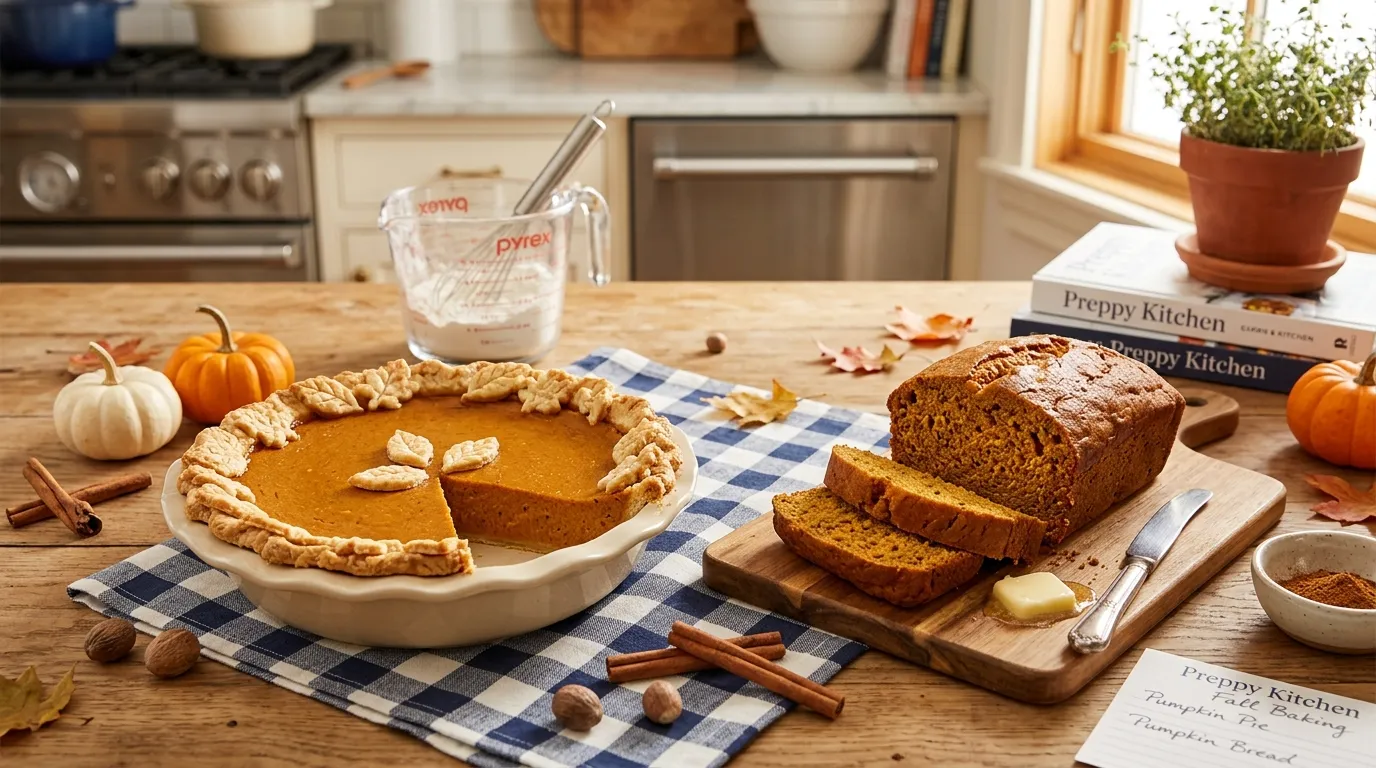
Preppy Kitchen Pumpkin Pie & Bread: Fall Baking Recipes You Will Love
There is something almost ceremonial about baking a pumpkin pie from scratch. The moment the spiced custard hits the oven, the whole house shifts into something warmer, something slower. If you have spent any time exploring fall baking recipes online, chances are you have landed somewhere in the orbit of the Preppy Kitchen universe. John Kanell’s approachable, polished style of teaching has made classic recipes like homemade pumpkin pie feel less intimidating and far more rewarding for everyday bakers.
This guide takes you through everything: the history behind this beloved Thanksgiving dessert, a full breakdown of ingredients, proven baking techniques, and the lesser-known tricks that separate a good pie from a genuinely unforgettable one.
What the Preppy Kitchen Approach to Pumpkin Pie Actually Means
Before diving into flour and filling, it helps to understand what “preppy kitchen” represents as a baking philosophy. It is not just an aesthetic. If you are curious about the broader lifestyle and design context the term carries, Preppyglow offers a thoughtful breakdown of what preppy style actually means in modern culture.
In the kitchen, the preppy approach prioritizes technique over shortcuts. It values a homemade pie crust over a store-bought one. It insists on real spices rather than a pre-mixed packet. And it treats a classic fall dessert recipe with the same respect a French pastry chef might give a tarte tatin. The result is a baked pumpkin pie that looks effortless but is built on a foundation of genuine culinary knowledge.
This is the tradition this article draws from. Whether you are making your first pie or your fifteenth, the details here will help you bake with more confidence.
A Brief History of Pumpkin Pie in American Baking
Pumpkin pie is not simply a Thanksgiving staple; it is one of the oldest desserts tied to American cuisine. Early colonial settlers encountered pumpkins as a native crop and quickly adapted them into sweet preparations. The first recorded pumpkin pie-like recipes appeared in English cookbooks as far back as the 17th century, describing a spiced pumpkin custard baked inside a pastry shell.
By the 19th century, the dish had become firmly embedded in the American holiday tradition. Sarah Josepha Hale, the woman often credited with lobbying for Thanksgiving as a national holiday, featured pumpkin pie in her writings as a symbol of autumn abundance. Over the following century, the recipe evolved from a loose, almost savory custard to the rich, creamy pumpkin filling we recognize today, thanks in large part to the widespread availability of evaporated milk and standardized spice blends.
The modern version, with its flaky crust, smooth pie filling, and gentle balance of cinnamon, nutmeg, ginger, and cloves, became a fixture on the festive dessert table. It is a classic American dessert in the most literal sense, shaped by generations of home bakers refining something that already worked beautifully.
Ingredients You Need for the Best Pumpkin Pie Recipe
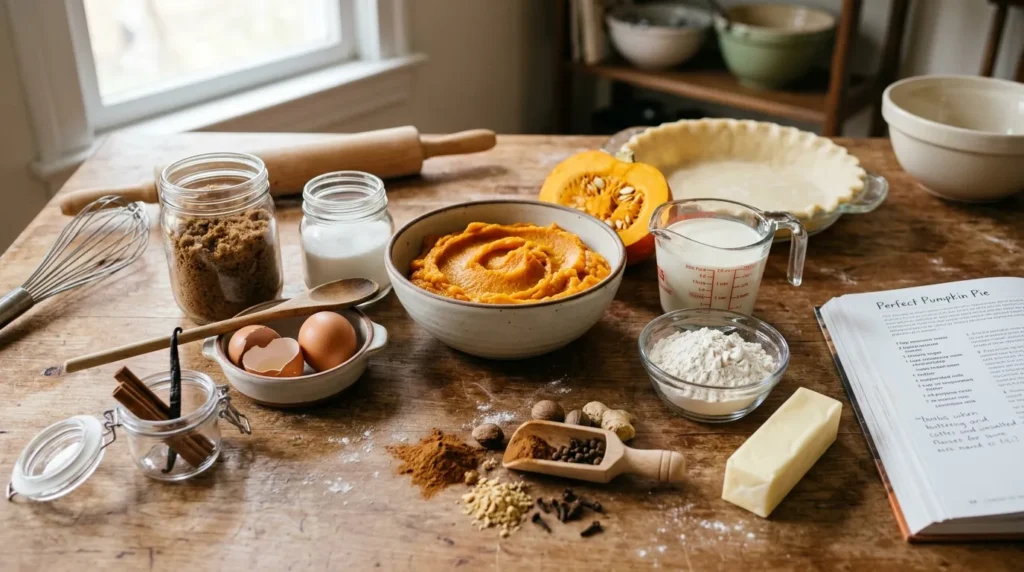
Getting your ingredient list right is where the baking really begins. Here is what goes into a proper homemade pumpkin pie, along with the reasoning behind each component.
The Filling Ingredients
Pumpkin Puree: The foundation of any great pumpkin spice dessert. You can use canned or homemade. If you go homemade, sugar pumpkins (also called pie pumpkins) produce a denser, less watery puree than decorative varieties. Drain homemade puree through cheesecloth to remove excess moisture before mixing.
Evaporated Milk: This is the classic choice for creamy Thanksgiving pie. It creates a silkier texture than regular milk because the water content has been reduced by about 60 percent. Some bakers swap in sweetened condensed milk for a richer, denser result, though it changes the sweetness balance.
Eggs: Two large eggs provide the structure that holds the custard pie together. They are what transform the liquid filling into a sliceable, set dessert after baking.
Brown Sugar and Granulated Sugar: Using both is a deliberate choice. Brown sugar adds depth and a subtle molasses note that pairs beautifully with the spiced pumpkin filling. Granulated sugar keeps the sweetness clean and balanced.
Vanilla Extract: Often overlooked in pumpkin baking recipes, vanilla rounds out the flavor and softens any raw edge from the spices.
Cinnamon, Nutmeg, Ginger, Cloves: These four spices are the backbone of the pumpkin spice flavor profile. Use freshly ground nutmeg if you can. The difference in aroma alone is noticeable. Ginger adds a faint warmth; cloves add depth without dominating.
Salt: A small amount, but it does the critical work of lifting all the other flavors. Without it, even the best spiced pumpkin filling tastes flat.
The Crust Ingredients
A homemade pie crust requires:
- All-purpose flour
- Cold unsalted butter (or a mix of butter and shortening)
- Ice water
- Salt
- A small amount of sugar (optional, for a slightly sweet pastry)
The cold butter is the non-negotiable element. When cold butter hits a hot oven, it releases steam and creates the layers that give a flaky crust its texture. Warm butter just makes a dense, crumbly shell.
How to Make Homemade Pumpkin Pie from Scratch
Making the Homemade Pie Crust
Start here, at least an hour before you plan to fill the pie. The dough needs to rest in the refrigerator.
- Combine flour and salt in a large bowl. Add cold butter cut into small cubes.
- Work the butter into the flour using your fingertips or a pastry cutter until the mixture resembles coarse crumbs with some pea-sized pieces remaining.
- Add ice water one tablespoon at a time, mixing gently with a fork, until the dough just comes together.
- Flatten into a disc, wrap in plastic, and refrigerate for at least one hour.
- Roll out on a lightly floured surface to about 12 inches in diameter, then fit into a 9-inch pie dish.
- Trim the edges and crimp as desired. Refrigerate the shell while you prepare the filling.
Preparing the Spiced Pumpkin Filling
This part is genuinely straightforward, which is part of what makes this holiday pie recipe so satisfying.
- Whisk together pumpkin puree, brown sugar, and granulated sugar until smooth.
- Add eggs one at a time, whisking after each addition.
- Pour in evaporated milk and vanilla extract.
- Add cinnamon, nutmeg, ginger, cloves, and salt. Whisk everything together until the filling is completely smooth and uniform in color.
The rich pumpkin custard should be pourable but not watery. If it looks too thin, your puree may have had excess moisture.
Baking the Pie
- Preheat your oven to 425°F (220°C).
- Pour the filling into the chilled pie shell.
- Bake at 425°F for 15 minutes. This initial high heat sets the crust edge quickly.
- Reduce the temperature to 350°F (175°C) and bake for an additional 40 to 50 minutes, until the edges are set but the center still has a slight jiggle.
- Remove from the oven and cool completely on a wire rack, at least 2 hours, before slicing.
The jiggle test is your most reliable tool here. A small wobble in the center is correct; it will firm up as the pie cools. An overly liquid center means more time in the oven. A completely firm, cracked surface means it has gone too far.
Pro Tips That Actually Change the Outcome
Blind Baking: When and Why It Matters
For a custard-heavy filling like this one, some bakers prefer to partially blind bake the crust before adding the filling. This prevents the bottom crust from becoming soggy. Line the shell with parchment, fill with pie weights or dried beans, bake at 375°F for about 15 minutes, remove the weights, then add your filling. Not everyone does this for pumpkin pie, but if your oven runs cool or your crust tends to turn out soft, it is worth the extra step.
Tempering the Eggs
If you are pouring warm pumpkin puree into beaten eggs, add the puree slowly while whisking constantly. This prevents the eggs from cooking unevenly and ensures a silky, smooth pie filling rather than one with scrambled bits suspended in it.
The Foil Trick
Pie crust edges brown faster than the filling sets. Loosely tent the edges with aluminum foil or use a pie shield ring after the first 15 minutes of baking. This keeps the sweet pastry edge from burning before the custard has had time to cook through properly.
Room Temperature Ingredients
Take your eggs and evaporated milk out of the refrigerator 30 minutes before mixing. Cold ingredients can cause the butter in your crust to firm up too fast when the filling is added, and they also integrate less smoothly into the custard. This is a small detail that consistently makes a noticeable difference in texture.
Cooling Is Non-Negotiable
Every experienced baker has made the mistake of slicing into a pie too soon. A baked pumpkin pie needs a full two hours at room temperature to set properly. Rushing this step results in a filling that looks underbaked and slices messily. For the cleanest cuts, chill the pie for an additional hour after it reaches room temperature.
Preppy Kitchen Pumpkin Bread: The Fall Baking Recipe That Belongs Beside the Pie
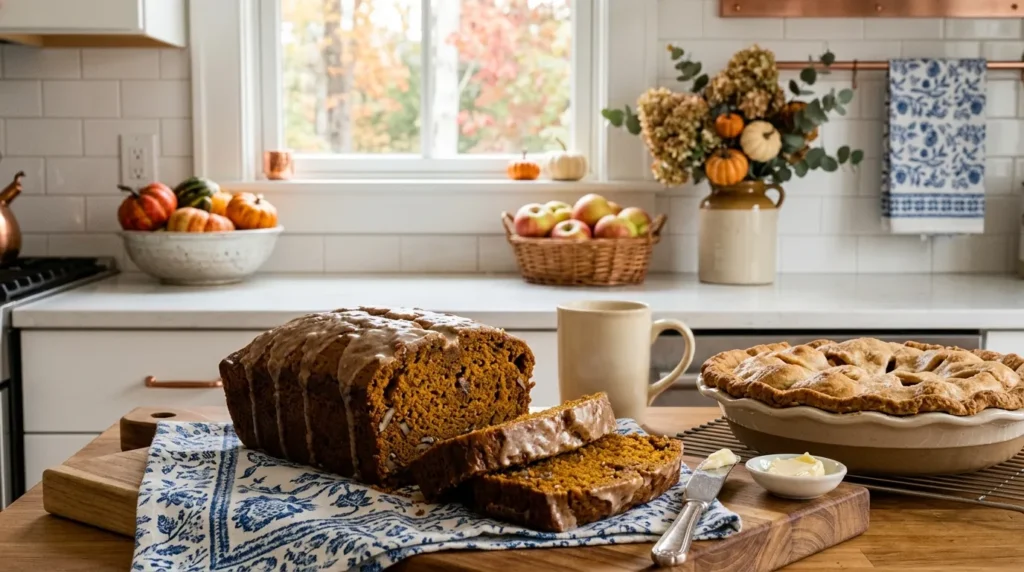
No fall baking spread is complete without pumpkin bread. Where the pie is delicate and custard-forward, pumpkin bread is dense, moist, and built for mornings. The same core flavors (cinnamon, nutmeg, ginger, pumpkin puree) work beautifully in a quick bread format.
The key differences:
- Pumpkin bread uses baking soda and baking powder instead of eggs for primary leavening
- The sugar ratio is higher for more browning and a firmer crumb
- Oil replaces butter for moisture that lasts several days after baking
- Add-ins like chopped walnuts, chocolate chips, or a cream cheese swirl are all common variations
The Preppy Kitchen approach to pumpkin bread emphasizes the same principle as the pie: do not rush the mixing, measure your pumpkin puree accurately, and let the loaf cool completely before slicing. The interior needs time to finish setting, exactly as the custard pie does.
Pumpkin Pie vs. Other Fall Custard Desserts: A Comparison
| Feature | Pumpkin Pie | Sweet Potato Pie | Butternut Squash Pie | Pumpkin Bread |
|---|---|---|---|---|
| Base | Pumpkin puree | Cooked sweet potato | Roasted squash puree | Pumpkin puree |
| Texture | Smooth, creamy custard | Slightly denser, earthier | Lighter, sweeter | Dense, moist crumb |
| Spice Profile | Cinnamon, nutmeg, ginger, cloves | Cinnamon, nutmeg, vanilla | Cinnamon, brown sugar | Cinnamon, ginger, nutmeg |
| Crust | Flaky pie crust | Flaky pie crust | Flaky pie crust | No crust (quick bread) |
| Baking Method | Oven baked, low-slow finish | Same | Same | Loaf pan, moderate heat |
| Best Served | Room temp with whipped cream | Warm, Southern style | Chilled with cream | Sliced, with butter |
| Occasion | Thanksgiving, holidays | Year-round, holidays | Autumn, fall gatherings | Breakfast, gifting |
Lesser-Known Insights About Pumpkin Pie Most Recipes Skip
Canned pumpkin is not always 100% pumpkin. The USDA permits manufacturers to label certain squash varieties as pumpkin. The leading canned varieties use Dickinson pumpkin, a pale tan squash that is denser and less stringy than the orange carving pumpkin most people picture. This is not a drawback; it actually produces a more consistent creamy pumpkin filling. But it explains why homemade puree from a carving pumpkin can taste different from what you expect.
Overmixing is a silent killer of custard texture. The more air you incorporate into an egg-based filling, the more it puffs and then deflates in the oven, resulting in cracking. Whisk just enough to bring the ingredients together. This is one area where less is genuinely more.
Pumpkin spice is not one spice. It is a blend, and the ratios vary considerably by brand and recipe. The classic American ratio leans heavily on cinnamon, with nutmeg and ginger as secondary notes and cloves used sparingly. European versions of similar spiced desserts often use more cardamom and less cinnamon, which produces a noticeably different result. If you enjoy exploring spice profiles, adjusting the ratios within your spiced pumpkin filling is one of the most rewarding forms of recipe personalization.
The pie’s history is tied to preservation, not celebration. Before refrigeration, pumpkins were one of the few vegetables that could be stored through winter. The spices served a practical purpose: masking any off-notes from long storage. The festive dessert table context came much later, once the recipe was already established as a comfort food.
Seasonal Baking Beyond Thanksgiving: When to Make Pumpkin Pie
While pumpkin pie is most associated with Thanksgiving, it works beautifully across the entire autumn season. Fresh sugar pumpkins are available from September through November at most farmers markets and grocery stores, making this a genuinely seasonal baking opportunity rather than a once-a-year event.
Occasions worth baking a classic fall flavors pie:
- Halloween dinner parties (guests always appreciate it)
- Friendsgiving gatherings earlier in November
- Holiday baking weekends in December alongside other festive desserts
- Potluck contributions where a homemade dessert stands out
- Weekend breakfasts paired with strong coffee (pumpkin bread works here too)
The baked fall dessert category is broader than most people give it credit for. Once you are comfortable with the core recipe, apple, pecan, and sweet potato variations use the same structural techniques.
Whipped Cream Topping and Serving Suggestions
A proper whipped cream topping is made fresh, not from a can. Heavy cream whipped to soft peaks with a small amount of powdered sugar and vanilla extract takes about three minutes with a hand mixer and elevates any slice of traditional pumpkin pie dramatically.
Additional serving ideas:
- A dusting of freshly grated nutmeg over the whipped cream
- A drizzle of salted caramel sauce for a richer dessert table presentation
- A scoop of vanilla bean ice cream for warm-pie situations
- A sprinkle of toasted pepitas for texture contrast
For a more elevated presentation, pipe the whipped cream around the edge of the pie before serving. This is the kind of small detail that makes a homemade Thanksgiving pie look as polished as something from a professional kitchen, which is very much in keeping with the preppy kitchen aesthetic.
Frequently Asked Questions
Can I use fresh pumpkin instead of canned pumpkin puree for a homemade pumpkin pie?
Yes, and many bakers prefer it. Roast a sugar pumpkin at 375°F, halved and face-down on a baking sheet, until tender (about 45 to 60 minutes). Scoop out the flesh and blend until smooth. Strain the puree through cheesecloth to remove excess moisture before using it in your easy pumpkin pie recipe. Fresh puree tends to have a lighter, more delicate flavor than canned.
Why did my pumpkin pie crack on top?
Cracking almost always means the pie was overbaked or cooled too quickly. The rich pumpkin custard should be removed from the oven while the center still has a gentle jiggle. Avoid placing a hot pie near a cold draft or in the refrigerator immediately after baking. Gradual cooling at room temperature prevents the surface from contracting faster than the interior.
How far in advance can I make a homemade pumpkin pie?
You can bake the pie up to two days before serving. Cover it loosely with plastic wrap once fully cooled and refrigerate. The flavors actually deepen overnight as the spices continue to meld with the creamy Thanksgiving pie filling. Bring it to room temperature for about 30 minutes before serving for the best texture.
Can I freeze pumpkin pie?
Yes. A fully baked and cooled pumpkin pie freezes well for up to one month. Wrap tightly in plastic wrap and then foil. Thaw overnight in the refrigerator. The texture holds up well, though the flaky crust may soften slightly. Do not freeze with whipped cream topping; add that fresh when serving.
What is the difference between using evaporated milk and sweetened condensed milk in a pumpkin pie recipe?
Evaporated milk is unsweetened and produces a lighter, more classic custard pie texture. Sweetened condensed milk contains added sugar and creates a denser, richer filling. If you substitute sweetened condensed milk, reduce or eliminate the granulated sugar in the recipe to avoid an overly sweet result. Both work, but they produce noticeably different pies. The traditional pumpkin pie recipe uses evaporated milk for a reason: it balances the spice blend without competing with it.
How do I know when my pumpkin pie is done baking?
The most reliable method is the jiggle test. Gently shake the pie dish. The outer two to three inches should be firmly set, while the center should still wobble like softly set gelatin. It will continue to firm up as it cools. A fully rigid center at the time of removal usually means the pie is overdone. An internal temperature of around 175°F at the center is another reliable indicator if you prefer using a thermometer.
Can I make the pie crust a day ahead?
Absolutely. The homemade pie crust dough can be prepared up to two days in advance and stored tightly wrapped in the refrigerator, or up to three months in the freezer. You can also roll it out, fit it into the pie dish, and refrigerate the unbaked shell overnight. This actually helps the crust hold its shape better during baking and reduces shrinkage around the edges.
