How to Find Your Size and Measurements for Indian Clothing When Shopping Online
Key Takeaways
- Indian clothing sizes typically differ from Western sizes, making self-measurements critical.
- Consult brand-specific charts and customer feedback before finalizing your purchase.
- Consulting customer support can help clarify which size will fit you best if you are unsure.
Shopping for Indian attire online unveils a captivating range of colors, patterns, and silhouettes. However, finding the ideal fit can be tricky due to inconsistent sizing across brands. Navigating this process becomes much smoother once you understand the essential steps for accurate size selection. If you are unsure where to buy Indian fashion online in the USA, finding reputable sites is a critical first step to ensuring quality and a positive shopping experience.
While Indian styles have distinct appeals, such as elegant sarees, salwar suits, and lehengas, their sizing rarely aligns with familiar Western standards. Shoppers should prioritize measuring themselves carefully and decoding brand-specific charts. Taking time to review sizing feedback and exploring retailer support services further boosts purchasing confidence.
The journey to that perfect ethnic outfit can be hassle-free. Whether you favor timeless elegance or modern trends, learning the basics of online fit ensures your next delivery is just right.
For those new to Indian clothing, understanding fabric qualities and sizing options can feel overwhelming.
Understanding Indian Sizing Standards
Sizing for Indian clothing differs significantly from Western fashion sizing. For instance, a size labeled “Medium” in India might correspond to “Small” or “Extra Small” in Europe or the U.S. Several Indian brands maintain their own size charts, leading to multiple interpretations and confusion for buyers. Instead of assuming an Indian size will match your usual size, always refer to the store’s specific measurement guide.
Label differences are especially pronounced in traditional garments such as kurtas and lehengas, compared to universally sized garments like t-shirts. As India lacks a nationalized clothing size standard, relying on numbers or letters can lead to disappointment. Avoid common mistakes by checking the product page for size guides and, when possible, choosing online retailers that offer detailed guidance and customer support.
Taking Accurate Body Measurements
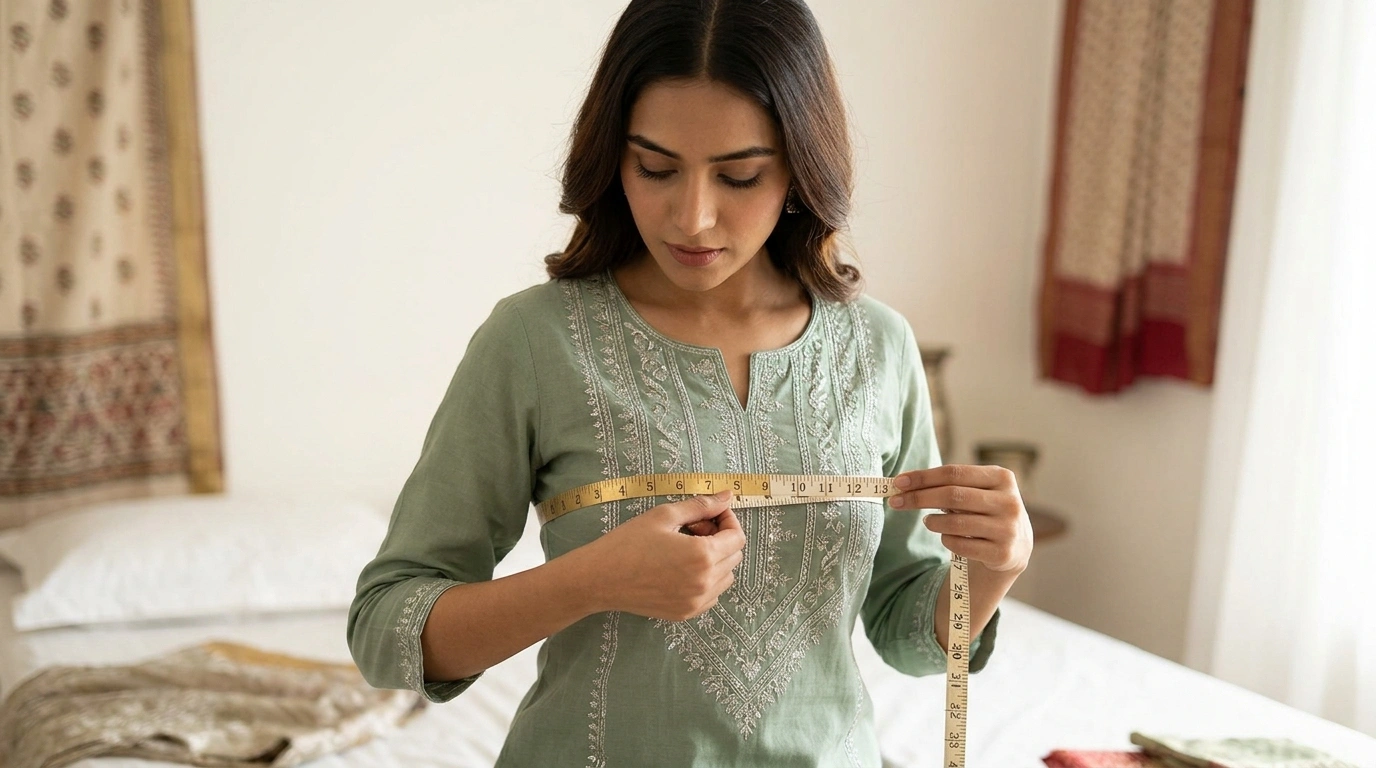
Capturing your measurements is the first step to a well-fitting look. All you need is a flexible tape measure, a notepad, and a mirror for accuracy. Here’s how to gather the most common metrics:
- Bust: Wrap the tape around the fullest part of your bust, parallel to the ground.
- Waist: Measure at the slimmest point of your natural waist, often just above the navel.
- Hips: Place the tape around the widest section of the hips and buttocks.
- Shoulder Width: Measure from the edge of one shoulder to the other across your back.
Write down your measurements in both inches and centimeters, as Indian stores may use either. When measuring, ensure the tape is snug but not tight against the body, because too much slack or tension may lead to errors. Encourage a friend or family member to help for maximum precision.
Interpreting Brand-Specific Size Charts
Each Indian brand is likely to post its own unique size chart. These typically list the required measurements for bust, waist, and hips with corresponding sizes. Always compare your results with the chart on the retail site you are browsing. If your numbers fall between two sizes, choose the larger size for comfort, especially if you are between sizes. Loose fits can often be tailored to be smaller, but there are limitations when letting out a garment.
Check whether the chart addresses fit preferences. Some stores offer slim, regular, or relaxed fits, which might affect which size you select. When in doubt, check the retailer’s FAQ for answers to common sizing questions or reach out directly to their service team.
Considering Fabric and Fit
The fabric composition of Indian attire can greatly influence how the garment fits and feels. For example, pure cotton sarees and kurtas are prone to slight shrinkage after the first wash, while silk and polyester blends tend to maintain their size and drape. It is a good idea to read the product details to understand if the style is naturally fitted or intended for a relaxed look.
Some ensembles, like straight-cut kurtas, are usually worn with a bit of room for movement. In comparison, fitted blouses or cholis will be less forgiving if you size down. Take this into account when finalizing your order to ensure comfort and style.
Reading Customer Reviews
Reviews from other buyers should never be overlooked. They often share decisive information, such as whether a garment runs smaller or larger than expected or whether it matches the site’s description. User feedback on aspects such as length, sleeve fit, and fabric stretch can fill the gaps left by size charts, making your decision more informed. Many shoppers say that if an alteration is required, reading a few reviews is ideal.
Consider checking review aggregator sites or forums focused on ethnic wear to see how brands measure up across different platforms. A detailed reviewer community can offer unexpected tips about colors, post-wash shape, and other considerations specific to Indian fabrics and tailoring.
Consulting Customer Support
Never hesitate to consult the online retailer’s customer support for fit-related questions. Many stores employ specialists who can interpret your measurements and recommend the best option. Provide your bust, waist, hip, and shoulder sizes. If you are buying for a special event, mention your timeline so we can determine whether custom tailoring or alteration services are available. Helpful support staff are a sign of a reputable business and are invested in getting your order right.
Understanding Return Policies
Before adding an item to your cart, carefully review the retailer’s return and exchange policy. Many Indian clothing retailers, especially those that ship internationally, have strict or complex return policies. Knowing in advance if returns are allowed, and if so, under what conditions, can save you frustration if the garment does not fit as expected. Look for clear instructions on return shipping costs, repackaging, and the timeline for submitting a claim.
Conclusion
Finding the perfect fit when shopping for Indian clothing online is about preparation and attention to detail. Understanding the differences in sizing, measuring yourself carefully, referencing brand-specific guides, considering the fabric and cut, using customer reviews, reaching out for support, and reading return policies all combine to ensure a rewarding online shopping experience. With patience and planning, you can confidently assemble a stunning collection of Indian attire ready for any celebration or casual outing.
