
How to Match Foundation: The Complete Undertone & Finish Guide 2026
If you’ve ever bought a “perfect” foundation shade in the store only to watch it turn orange by lunchtime, you’re not alone. Learning how to match foundation correctly comes down to three things most beauty counters rush through: your undertone, your skin’s real finish needs, and how a formula behaves once it hits your face. Get those three right, and you’ll stop guessing at foundation shade charts and start building a routine that looks like skin, not makeup.
Knowing how to find your correct foundation shade isn’t just a nice-to-have skill — it’s the difference between makeup that blends invisibly and makeup that sits on top of your skin. This guide walks through every piece of the puzzle — from figuring out foundation undertones for the first time, to choosing foundation for dry skin, oily skin, or anything in between, to finding the best foundation formula for your coverage goals. By the end, you’ll have a repeatable system you can use every time you shop, no counter consultation required.
What Is Skin Undertone (And Why It Matters More Than Shade Name)
Undertone is where most people go wrong when learning to match their foundation shade, so it’s worth slowing down here. Before you can determine your undertone, it helps to understand what undertone actually is. Your skin tone is the surface color you see — fair, medium, deep, and everything in between. Your Skin undertone is the subtle color underneath that surface, and it doesn’t change with a tan, a season, or your skincare routine. This is the single biggest reason foundation matching mistakes happen: people shop by skin tone alone and skip undertone entirely.
There are three main undertone categories, plus one that often gets left out of basic guides:
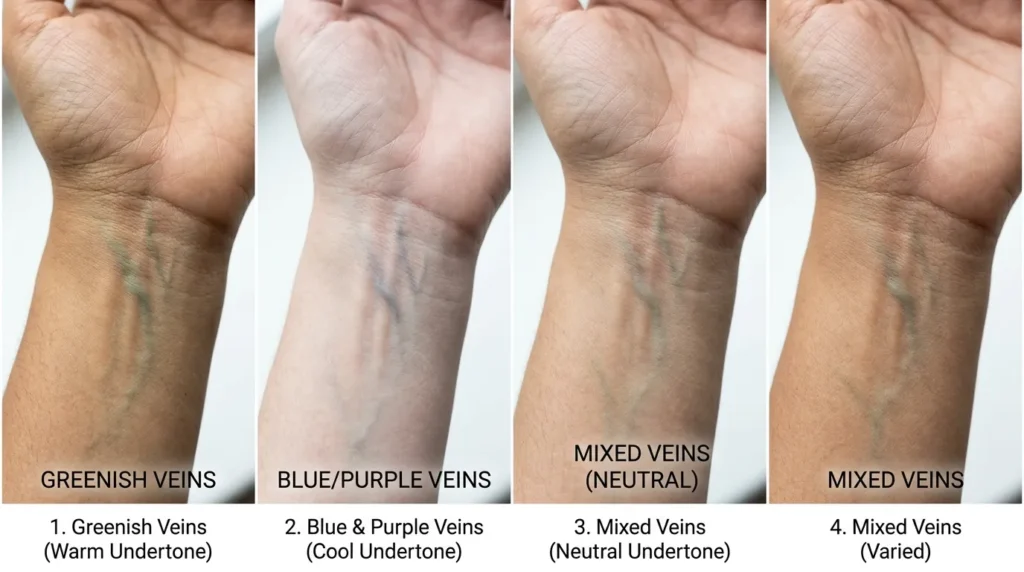
- Warm undertones — skin with golden, peachy, or yellow hues
- Cool undertones — skin with pink, red, or bluish hues
- Neutral undertones — an even mix of warm and cool, without either dominating
- Olive undertones — a green-gold cast that’s common in Mediterranean, Middle Eastern, Latin, and some Asian and mixed-heritage skin, and frequently misclassified as either warm or sallow
Foundation brands are increasingly building olive-specific shades because so many people were stuck choosing between a too-yellow warm shade and a too-pink cool one. If neither option has ever looked quite right on you, olive is worth testing first.
How to Find Your Undertone: Four Simple Tests
You don’t need a professional consultation to match your foundation shade to your undertone — a few simple at-home tests will get you there. Try a few of these tests together, since no single one is foolproof on its own.
The vein test. Look at the veins on the inside of your wrist in natural light. Green veins typically mean warm undertones. Blue or purple veins usually mean cool undertones. If you genuinely can’t tell whether they’re green or blue, you’re likely neutral.
The jewelry test. Think about which metal looks better against your skin. Gold jewelry flatters warm undertones. Silver flatters cool undertones. If both look equally good, that points to neutral.
The white paper test. Hold a plain white sheet of paper next to your bare face in daylight. If your skin looks yellow or golden by comparison, you’re warm. If it looks pink or rosy, you’re cool. If your skin looks slightly grayish or olive-green, that’s a sign of olive undertones.
The sun test. Think about how your skin reacts to sun exposure. Skin that tans easily and rarely burns tends to run warm or olive. Skin that burns before it tans tends to run cool.
If you’re still unsure after all four tests, neutral is a safe default — most foundation lines carry more neutral shades than any other category specifically because so many people fall into that middle ground.
Foundation Shade Matching: Getting the Depth Right Too
Once undertone is settled, the next step in matching foundation correctly is depth. Undertone only solves half the equation. The other half is depth — how light or dark the shade actually is compared to your skin. This is where most foundation shade finder tools online fall short, because a screen can’t accurately show you how a shade reads in person.
A few rules make this part far more reliable:
- Match to your neck and chest, not your face. Many people have slightly different pigmentation on their face from sun exposure, so testing only on the cheek can lead you to a shade that’s too dark or too light for the rest of your body.
- Test three shades in a row, not one. Swipe your best guess plus one shade lighter and one shade darker along your jawline. The one that seems to “disappear” is your match — if you can still see a clear line after it dries, it’s the wrong shade.
- Always check in natural light. Store lighting and phone cameras both distort color, usually making shades look warmer or more golden than they are. Step near a window or door before deciding.
- Wait ten minutes before deciding. This matters more than people expect, because of foundation oxidation.
Understanding Foundation Oxidation
No guide on how to match foundation is complete without covering oxidation. Foundation oxidation happens when a formula’s pigments react with oxygen and your skin’s natural oils after application, subtly shifting the color — almost always darker or more orange — over the first 10 to 20 minutes. This is a normal chemical process, not a manufacturing flaw, and it’s the reason a shade that looked flawless the moment you applied it can look off an hour later.
To avoid getting caught out by oxidation:
- Always test a foundation and wait at least ten minutes before judging the match
- Formulas with higher oil content and warmer pigment bases tend to oxidize more noticeably than water-based or silicone-based formulas
- If a foundation consistently oxidizes too dark on you, sizing down half a shade lighter than your natural test result can compensate
- Skin with more oil production, or skin worn on a warmer, more humid day, tends to intensify oxidation
Foundation Finish Guide: Matte vs. Dewy vs. Satin
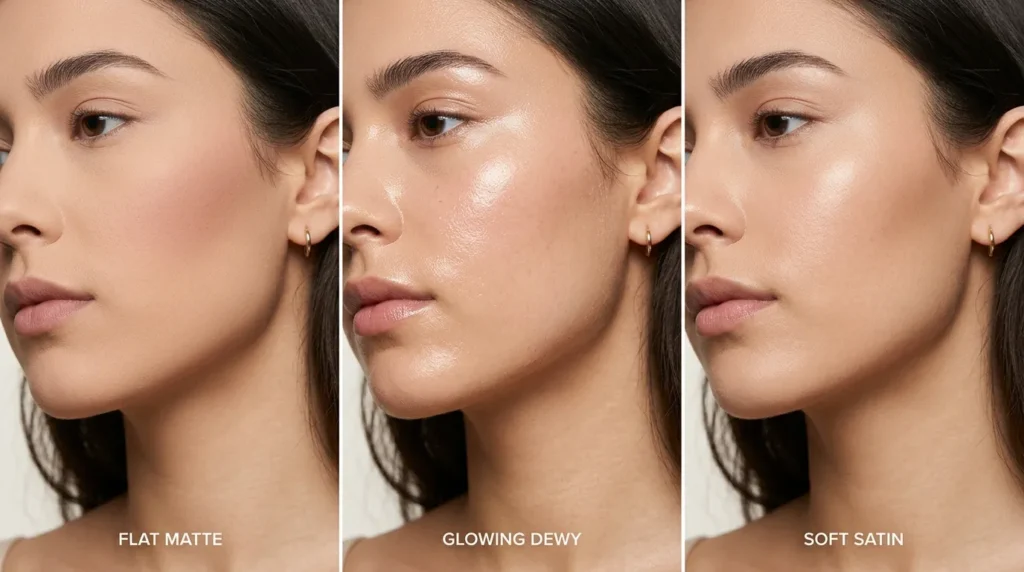
Color is only part of matching foundation successfully — finish matters just as much. Undertone and shade depth get you the right color. Finish determines whether that color actually looks good on your specific skin texture and type. This is the piece most foundation buying guide articles gloss over, but it’s often the difference between a foundation that looks like skin and one that looks like a mask.
| Finish | Best For | Look & Feel | Common Formulas | Watch Out For |
|---|---|---|---|---|
| Matte | Oily and combination skin | Blurred, shine-free, soft-focus | Powder foundation, oil-free liquid foundation | Can look flat or emphasize dry patches |
| Dewy | Dry and normal skin | Luminous, glass-skin glow | Cream foundation, liquid foundation with hydrating bases | Can slide on very oily skin, may look greasy by midday |
| Satin (natural finish) | Most skin types, including combination | Soft glow without shine, “your skin but better” | Lightweight liquid foundation, natural finish foundation | Fewer ultra-long-wear options than matte |
If you’re choosing between matte vs dewy foundation and you’re not sure which camp you fall into, a satin finish is the safest middle ground — it photographs well, wears comfortably, and doesn’t exaggerate texture the way a full matte can on dry patches, or shine the way dewy can on oily zones.
Foundation Coverage Levels Explained
Coverage is the third pillar of the foundation matching process, right alongside undertone and finish. Finish and coverage are two separate decisions, and mixing them up is a common foundation matching mistake. Coverage refers to how much of your natural skin — redness, texture, dark spots — gets concealed.
- Light coverage — sheers over skin like a tinted moisturizer; good for clear skin or minimal-makeup days
- Medium coverage — evens out tone and minor redness while still letting some skin texture show through; the most versatile everyday option
- Full coverage — conceals significant discoloration, scarring, or hyperpigmentation; best applied in thin, buildable layers rather than one heavy pass
A buildable medium coverage foundation gives you the most flexibility, since you can layer it toward full coverage where needed (like around the nose or chin) without over-applying everywhere else.
Best Foundation Formula by Skin Type
Skin type is the final variable in how to match foundation correctly. The “best” formula isn’t universal — it’s the one that works with your skin’s natural behavior rather than against it.
Foundation for Dry Skin
Dry skin does best with hydrating, dewy-leaning formulas. Look for cream foundation or liquid foundation with humectant ingredients like hyaluronic acid, which draws moisture into the skin, or niacinamide, which supports the skin barrier while evening tone. Avoid heavy matte or powder foundation, which tends to cling to flaky patches and emphasize dryness rather than smoothing it. Prepping with a hydrating primer beforehand makes an even bigger difference than the foundation choice itself.
Best Foundation for Oily Skin
Oily skin generally does better with oil-free, matte or satin formulas, often silicone-based, which help control shine through the day without feeling heavy. Powder foundation or long-wearing liquid formulas with a matte finish tend to hold up best. A mattifying primer underneath and a light dusting of setting powder in the T-zone extend wear significantly.
Best Foundation for Combination Skin
Combination skin — oily through the T-zone but normal or dry on the cheeks — usually looks most balanced in a satin or natural finish foundation. These formulas don’t over-mattify the drier areas or add extra shine to the oilier ones. Targeted powder in the T-zone only, rather than all over, keeps the balance without flattening the rest of the face.
Foundation for Sensitive Skin
Sensitive skin benefits from fragrance-free, minimal-ingredient formulas, ideally with soothing additions like Vitamin E. Water-based formulas are generally gentler than heavily silicone-based ones for reactive skin, and patch-testing any new foundation on the inner arm for 24 hours before applying it to the face is worth the extra step.
Foundation for Mature Skin
Mature skin tends to look most natural in hydrating, luminous formulas rather than heavy matte ones, which can settle into fine lines and emphasize texture. Lightweight, buildable formulas with a satin or dewy finish sit more smoothly, and skipping heavy powder (especially under the eyes) helps avoid a cakey, settled look.
Liquid, Powder, Cream, and Stick: Choosing a Format
Format is another factor people forget when learning to match their foundation shade. Formula type affects both application and longevity as much as finish does.
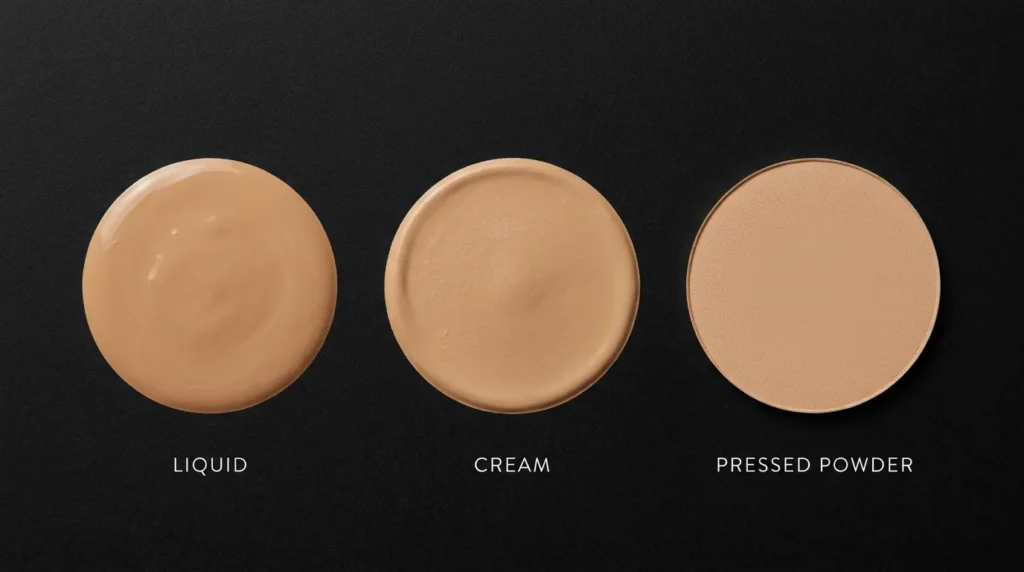
- Liquid foundation — the most versatile format, available across every finish and coverage level, and generally the easiest to build up or sheer out
- Powder foundation — quick to apply, naturally mattifying, and good for oily skin or quick touch-ups, though it can look dry on parched skin
- Cream foundation — richer and more emollient, ideal for dry or mature skin, but can feel heavy in hot or humid climates
- Stick foundation — portable and precise for targeted coverage or touch-ups, works well for full coverage in a compact format
- BB Cream and CC Cream — lighter, skincare-hybrid alternatives to traditional foundation, good for low-maintenance days or as a base layer under other complexion products
Foundation Application Tips for a Flawless Finish
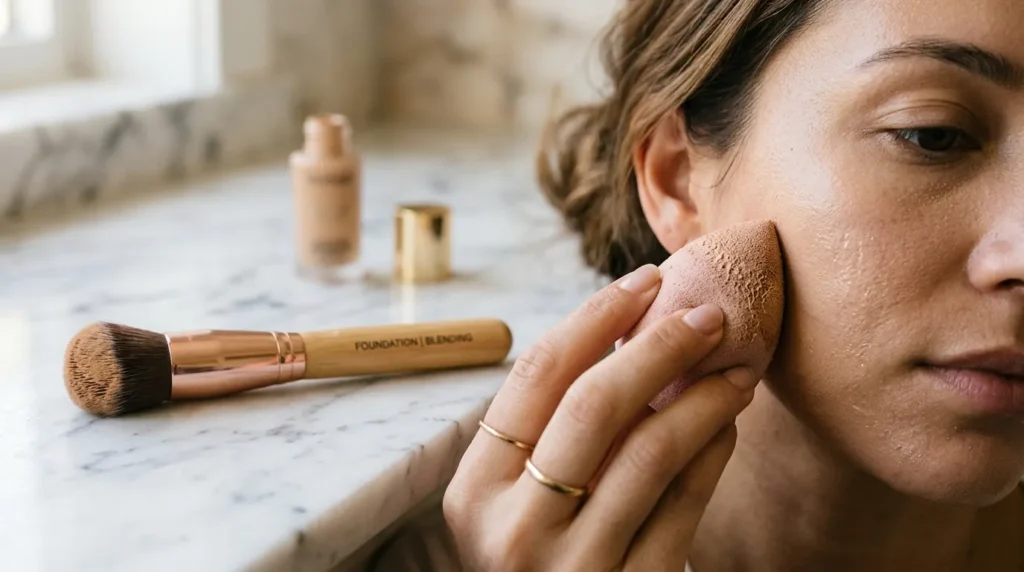
Knowing how to match foundation is only half the job — application decides how that match actually looks on your face. Even a perfectly matched shade can look wrong with the wrong application method. A few habits make a bigger visible difference than the product itself:
- Start with skincare, not makeup. Well-moisturized skin holds foundation more evenly and prevents it from clinging to dry patches. If you’re not sure how to sequence your routine, this guide to <a href=”/glow-skin-lab”>skincare before makeup</a> breaks down what to apply and in what order before you reach for a base product.
- Prime with intention. A primer suited to your skin type — hydrating for dry skin, mattifying for oily skin — helps foundation sit more evenly and last longer.
- Apply in thin layers. A makeup sponge dampened with water presses foundation into skin for a natural finish, while a foundation brush offers more control for full coverage areas.
- Blend into the neck. Stopping abruptly at the jawline is one of the most common visible foundation matching mistakes; a few light strokes down the neck prevent an obvious line.
- Set strategically, not everywhere. Applying setting powder only where you actually get oily preserves a natural finish. For a full walkthrough of when and where to lock in your base, see this guide on <a href=”/set-makeup”>how to set makeup</a> for all-day wear.
- Finish with setting spray. A setting spray melds foundation, concealer, and powder together and extends long-wear makeup performance, especially in humid conditions.
Building a Long-Lasting, Breathable Makeup Routine
A flawless foundation match is only as good as the routine around it. Layering a lightweight, breathable foundation over well-prepped skin — rather than relying on heavy product to compensate for skipped skincare steps — is what separates a long-wear look from one that needs touch-ups by noon. If you’re building your everyday face makeup essentials from the ground up, it’s worth reviewing <a href=”/makeup-for-skin-types”>foundation for your skin type</a> alongside this guide, since coverage and finish decisions should be made together, not separately. On lighter days, many people also reach for a <a href=”/tinted-moisturizer”>tinted moisturizer</a> as a lower-coverage alternative that still incorporates SPF and hydrating ingredients.
Seasonal Foundation Shade Matching
Skin tone shifts more than most people expect throughout the year, which means learning how to match foundation isn’t a one-time task. Sun exposure in spring and summer can deepen your complexion by half a shade or more, while reduced sun exposure during fall and winter often brings it back to its natural tone. Instead of replacing an entire bottle every season, the beauty experts at PreppyGlow recommend keeping two foundation shades in your makeup collection—your everyday match and one slightly deeper shade. Mixing the two in different ratios helps you achieve a seamless match year-round while saving money.
This is also where a buildable, medium-coverage formula has an advantage. It blends more naturally between two shades than a full-coverage, opaque foundation, making seasonal transitions much easier. If you’re still deciding on the best foundation formula, choose one that suits your skin type and finish preference, whether that’s a hydrating option for dry skin or a matte formula for oily skin.
At PreppyGlow, we also recommend reassessing your foundation undertones every few months, especially if you’ve significantly changed your skincare routine. Brightening ingredients like vitamin C, exfoliating acids, or retinol can improve skin clarity over time, making a foundation that once matched perfectly appear slightly too dark or too warm. Checking your shade in natural daylight and adjusting when needed ensures your foundation continues to blend seamlessly with your complexion throughout every season.
Foundation Matching for Beginners: A Simple Starting Checklist
If you’re still new to foundation shade matching and all of the above feels like a lot to absorb at once, this condensed checklist covers the essentials for a first-time foundation shopping trip:
- Run the vein, jewelry, and white paper tests to narrow down warm, cool, neutral, or olive undertone
- Pick a starting shade that matches your neck and chest, not just your face
- Choose a finish based on your skin type — matte for oily, dewy or satin for dry or normal skin, satin as the safest default for combination skin
- Decide on light, medium, or full coverage based on how much you want to conceal, favoring a buildable medium coverage formula if you’re unsure
- Test the shade on your jawline in a store or return-friendly format, and wait ten minutes before judging the color
- Prime, apply in thin layers, blend into the neck, and set only where needed
This sequence removes most of the guesswork that leads to a mismatched, oxidized, or wrong-finish foundation, and it’s the same process professional makeup artists use — just condensed for a quick shopping trip instead of a full studio session.
Foundation Matching Tips for Photos and Video Calls
Foundation that looks perfect in person can behave differently on camera, which matters increasingly for video calls and photos. Flash photography and studio lighting tend to wash out warm tones and can make a well-matched shade look slightly ashy, while blue-toned screen lighting from laptops and phones can do the opposite, adding a cool cast to skin.
A satin or natural finish generally photographs more evenly than a very matte or very dewy extreme, since heavy matte can look flat under flash and heavy dewy can create distracting highlights on camera. If foundation matching for photos specifically is a priority, testing a shade under a phone’s front camera in both natural light and indoor lighting before an event is a simple way to catch problems before they show up in photos.
Foundation Matching Mistakes to Avoid
Even with a solid process, small errors can throw off your foundation match. Here are the most common ones:
- Matching shade only under artificial store lighting instead of natural light
- Testing on the back of the hand instead of the jawline or neck
- Ignoring oxidation and judging the match immediately after application
- Choosing a finish based on trends rather than your actual skin type
- Skipping primer and skincare prep, then blaming the foundation for poor wear
- Assuming skin tone and skin undertone are the same thing
Frequently Asked Questions
These are the questions people ask most often about how to match foundation, answered directly.
How do I know if I’m warm, cool, or neutral undertone?
Combine the vein test, jewelry test, and white paper test rather than relying on just one. If gold jewelry and green veins both point the same direction, that’s a strong signal; if the tests conflict, you’re likely neutral or olive.
What foundation finish lasts the longest?
Matte, oil-free formulas generally offer the longest wear, especially on oily or combination skin, though a well-set satin finish can perform nearly as well with the right setting spray.
Why does my foundation look darker after a few hours?
This is almost always foundation oxidation — a normal reaction between the formula’s pigments, your skin’s natural oils, and oxygen exposure. Sizing down half a shade or choosing a formula with lower oil content can reduce the effect.
Can I mix two foundation shades together?
Yes. Many people with combination skin tones, or skin between two shade options, blend two foundations to custom-match their exact color, especially across seasonal tanning changes.
Is a full coverage foundation bad for everyday wear?
Not inherently, as long as it’s applied in thin, buildable layers rather than one heavy coat. A full coverage formula applied lightly can look just as natural as a medium coverage one applied heavily.
Does SPF in foundation provide enough sun protection?
Foundation with SPF offers some protection but typically isn’t applied in the thick, even layer needed to reach its labeled SPF value. A dedicated sunscreen underneath is still recommended for full coverage.
Conclusion

Learning how to match foundation well isn’t about finding one magic product — it’s a repeatable process: identify your undertone, confirm your depth in natural light, choose a finish and coverage level suited to your actual skin type, and give any new formula ten minutes before judging the color. Once you have that system down, foundation shopping stops being a guessing game and becomes something you can do confidently, in-store or online, every single time.
