
Omega-3 Rich Recipes for Glowing Skin (2026 Guide)
If your skin feels dull, tight, or flares up more than it should, the fix might not be sitting on your bathroom shelf — it might be sitting in your fridge. Omega-3 Rich Recipes for Glowing Skin are quietly becoming one of the most searched nutrition topics for a simple reason: what you eat shapes your skin barrier long before any serum can. In this guide, you’ll get a full omega-3 foods list, easy salmon recipes for skin health, an anti-inflammatory meal prep plan, and a week’s worth of skin-friendly meals you can start tonight — no nutrition degree required.
We’ll keep this practical. You’ll walk away knowing exactly which fatty fish, seeds, and oils to buy, how to turn them into real breakfasts, lunches, and dinners, and how to build a repeatable weekly rhythm so glowing skin becomes a habit, not a one-off smoothie. Whether you’re dealing with occasional dullness, acne-prone skin, or a skin barrier that just won’t cooperate no matter what you apply topically, this collection of Omega-3 Rich Recipes for Glowing Skin is designed to work with your normal routine, not against it. Every recipe below uses ingredients you can find at any regular grocery store, and every meal plan is built for people who don’t have hours to spend cooking.
Who This Skin Healing Diet Approach Is For
This isn’t a restrictive diet or a 30-day detox. It’s a flexible, food-first approach for anyone managing eczema, psoriasis, acne-prone skin, or simply persistent dryness who wants a skin healing diet that doesn’t require giving up entire food groups. If you already eat reasonably well but feel like something is missing, omega-3s are very often that missing piece.
Why Omega-3s Are the Missing Link in Your Skincare Routine
Most skincare conversations start and end with topical products, but skin is a living organ that’s rebuilt from the inside using the raw materials you eat. Omega-3 fatty acids — specifically EPA (Eicosapentaenoic Acid), DHA (Docosahexaenoic Acid), and ALA (Alpha-Linolenic Acid) — are essential fatty acids your body cannot produce on its own. That means every gram has to come from food, which is exactly why Omega-3 Rich Recipes for Glowing Skin matter so much more than another expensive cream.
How Omega-3s Actually Affect Your Skin Barrier
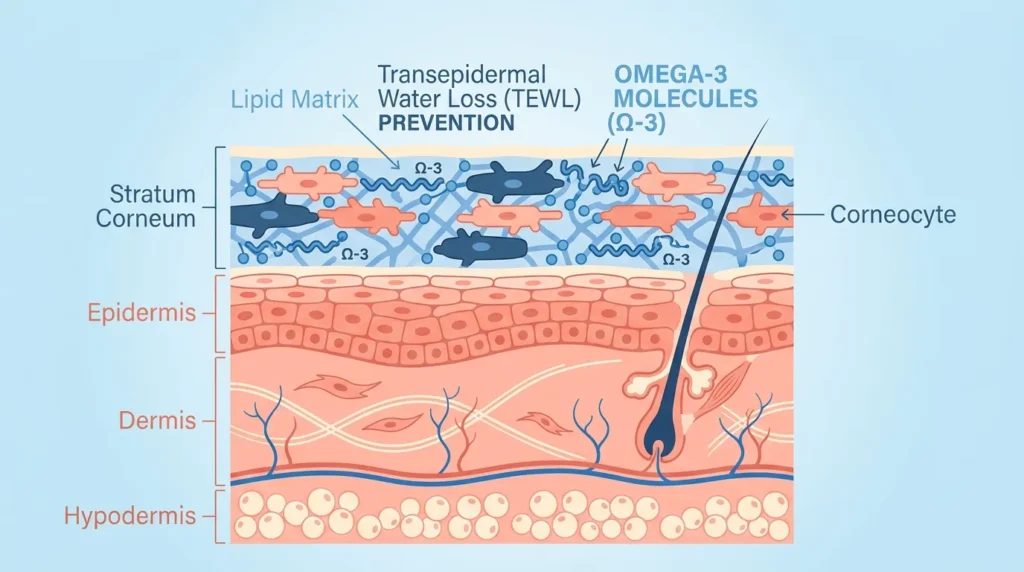
Your skin barrier is made largely of lipids, and omega-3s help keep that barrier flexible and well-sealed. A well-maintained barrier holds moisture in and keeps irritants out, which shows up as fewer flare-ups, less redness, and a more even texture. This is exactly the kind of barrier repair that consistent Omega-3 Rich Recipes for Glowing Skin are built to support. EPA in particular has been studied for its role in calming the inflammatory pathways linked to acne, eczema, and psoriasis, while DHA supports the structural integrity of cell membranes throughout the body, skin included.
The Omega-6 Balance Problem
Most modern diets are heavy in omega-6 fatty acids from processed oils and light on omega-3s, and that imbalance is associated with low-grade, chronic inflammation. The American Heart Association has long recommended regular oily fish intake partly for cardiovascular reasons, but the same anti-inflammatory mechanism that protects your heart also protects your skin. Shifting that ratio back toward omega-3 doesn’t require perfection — it requires consistency, which is where actual recipes come in rather than just knowing the theory.
Collagen, Antioxidants, and the Bigger Picture
Omega-3s don’t work alone. Vitamin C, Vitamin E, zinc, and selenium all support collagen production and protect skin cells from oxidative stress, so the best skin-nourishing meals usually pair fatty fish or seeds with colorful produce. That’s the logic behind every recipe category below.
The Ultimate Omega-3 Foods List for Skin Health
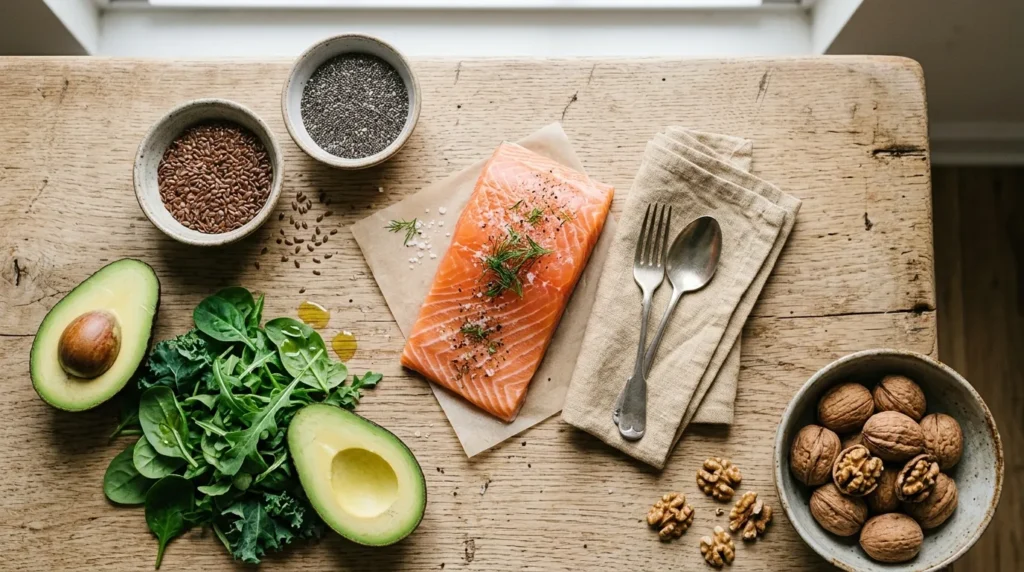
Before jumping into recipes, it helps to know exactly which ingredients to stock. Below is a comparison table of the most useful high-omega-3 foods, ranked by practicality for home cooking.
| Food | Type of Omega-3 | Approx. EPA+DHA (per 100g) | Best Used In |
|---|---|---|---|
| Wild salmon | EPA, DHA | 2,000–2,500 mg | Dinners, meal prep bowls |
| Mackerel | EPA, DHA | 2,500+ mg | Grilled dinners, salads |
| Sardines (tinned) | EPA, DHA | 1,500 mg | Quick lunches, toast |
| Trout | EPA, DHA | 1,000 mg | Baked dinners |
| Anchovies | EPA, DHA | 1,200 mg | Pastas, dressings |
| Flaxseeds (ground) | ALA | ~2,300 mg (ALA) | Breakfast bowls, smoothies |
| Chia seeds | ALA | ~5,000 mg (ALA) | Puddings, overnight oats |
| Walnuts | ALA | ~2,500 mg (ALA) | Snacks, salads |
| Hemp seeds | ALA | ~1,000 mg (ALA) | Smoothie bowls, yogurt |
Fatty Fish vs. Plant-Based Omega-3 Sources
Fatty fish like wild salmon, sardines, mackerel, herring, and trout deliver EPA and DHA directly, which your body can use immediately. Plant sources like flaxseeds, chia seeds, walnuts, and hemp seeds provide ALA, which the body converts to EPA and DHA at a fairly low rate. That doesn’t make plant sources useless — it means they work best as a daily baseline, with oily fish added two to three times a week for a stronger direct dose. Balancing both is the real secret behind effective Omega-3 Rich Recipes for Glowing Skin, rather than relying on just one source.
Supporting Ingredients Worth Stocking
Round out your kitchen with olive oil, avocado, leafy greens, berries, sweet potatoes, quinoa, brown rice, turmeric, ginger, garlic, and lemon. These aren’t filler — they’re the antioxidant and healthy-fat partners that make every recipe in this guide more effective for skin repair.
The Gut Health Connection Behind These Recipes
Skin health and gut health are closely linked, and many Omega-3 Rich Recipes for Glowing Skin double as gut-supportive meals. Fiber-rich additions like quinoa, brown rice, and leafy greens feed beneficial gut bacteria, while fermented pairings like plain yogurt alongside a salmon bowl can support the gut-skin axis that’s increasingly discussed in dermatology research. This is part of why a whole-foods, Mediterranean-style approach tends to outperform isolated supplements for long-term skin results.
Omega-3 Breakfast Ideas to Start Your Glow Journey
Mornings are the easiest place to build a habit, which is why omega-3 breakfast ideas deserve their own category inside any set of Omega-3 Rich Recipes for Glowing Skin.
Chia and Flaxseed Glow Pudding
Combine 3 tablespoons chia seeds, 1 tablespoon ground flaxseed, 1 cup unsweetened almond milk, and a handful of mixed berries. Stir, refrigerate overnight, and top with walnuts in the morning. This single bowl delivers ALA, antioxidants, and fiber that supports gut health — a factor increasingly linked to clearer skin.
Smoked Salmon and Avocado Toast
Layer mashed avocado, a squeeze of lemon, and smoked salmon over whole-grain toast, then finish with cracked pepper and a few capers. It takes under five minutes and delivers a direct EPA and DHA dose alongside vitamin E from the avocado.
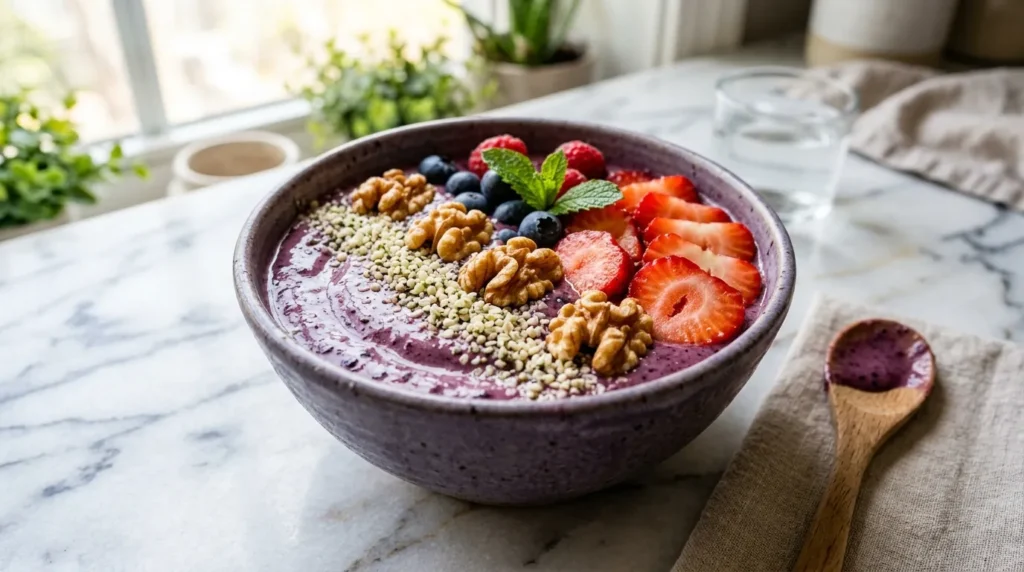
Hemp Seed Berry Smoothie Bowl
Blend frozen berries, banana, and Greek yogurt, then top with hemp seeds, walnuts, and a drizzle of olive oil-based granola. This works especially well for anyone managing acne-friendly foods since it’s low in refined sugar while still feeling indulgent.
Make-Ahead Options for Busy Mornings
Not every morning allows for fresh prep, which is why the best Omega-3 Rich Recipes for Glowing Skin are the ones you can batch. Chia pudding keeps for up to five days refrigerated, and hemp seed toppings can be pre-portioned into small jars so the smoothie bowl comes together in under two minutes on a rushed weekday.
Skin-Boosting Salmon Recipes for Lunch and Dinner
This is the core of any effective set of Omega-3 Rich Recipes for Glowing Skin, since lunch and dinner carry the most opportunity for a real EPA and DHA dose.
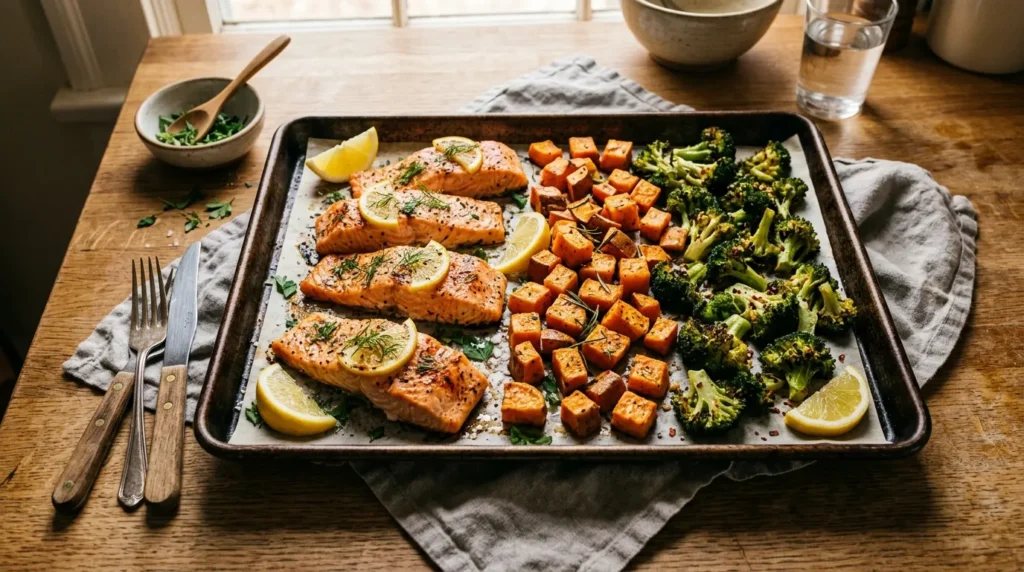
Easy Sheet-Pan Salmon with Sweet Potato and Broccoli
Toss cubed sweet potato with olive oil, salt, and turmeric, roast at 400°F for 15 minutes, then add salmon fillets and broccoli florets for a final 12–15 minutes. Finish with lemon juice. This is one of the easiest salmon recipes for skin health because it’s a single pan, minimal cleanup, and naturally anti-inflammatory thanks to the turmeric and ginger you can add to the marinade.
Mediterranean Sardine and Quinoa Bowl
Cook quinoa in vegetable broth, then top with tinned sardines, cherry tomatoes, cucumber, olives, and a garlic-lemon-olive oil dressing. It’s a genuinely quick omega-3 meal for busy people, ready in about 15 minutes, and it leans into Mediterranean diet principles that are consistently linked to lower inflammation markers.
Herb-Crusted Trout with Leafy Greens
Pan-sear trout fillets with a crust of chopped parsley, garlic, and lemon zest, and serve over sautéed leafy greens like spinach or kale. Trout is milder than salmon or mackerel, making this one of the more approachable skin-friendly meals for people who are new to oily fish.
Anchovy and Walnut Pasta
Sauté anchovies, garlic, and chili flakes in olive oil, toss with whole-grain pasta and a handful of crushed walnuts, and finish with lemon zest. It sounds unusual, but anchovies melt into the oil and deliver a concentrated EPA and DHA punch without tasting overly “fishy.”
7-Day Anti-Inflammatory Meal Prep Plan for Beginners
Recipes only work if they turn into a routine, so here’s a simple Anti-inflammatory Meal prep structure built around the recipes above.
How to Batch-Prep for the Week
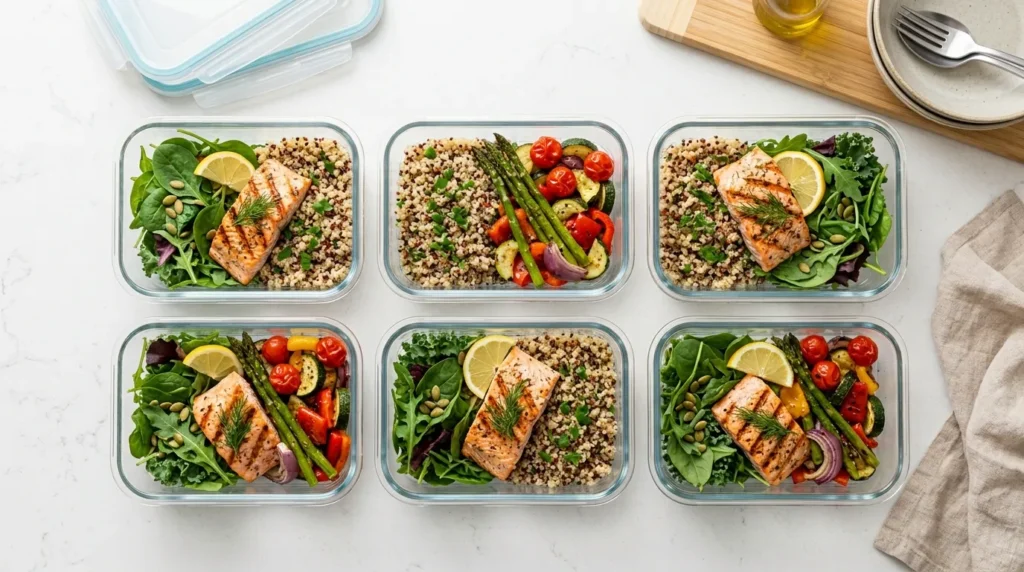
Roast a large tray of sweet potatoes and broccoli on Sunday, cook a batch of quinoa or brown rice, and portion two to three servings of salmon or sardines to rotate through the week. Keep a jar of garlic-lemon-olive oil dressing in the fridge so every bowl comes together in under two minutes.
| Day | Breakfast | Lunch | Dinner |
|---|---|---|---|
| Mon | Chia glow pudding | Sardine quinoa bowl | Sheet-pan salmon |
| Tue | Salmon avocado toast | Leftover salmon bowl | Herb-crusted trout |
| Wed | Hemp berry smoothie | Anchovy walnut pasta | Leftover trout + greens |
| Thu | Chia glow pudding | Sardine quinoa bowl | Sheet-pan salmon |
| Fri | Salmon avocado toast | Leftover pasta | Grilled mackerel + greens |
| Sat | Hemp berry smoothie | Leftover mackerel bowl | Flexible / dine out |
| Sun | Rest day / prep day | Meal prep for next week | Light soup + greens |
Tips for Staying Consistent
Buy fatty fish in bulk when it’s on sale and freeze individual portions. Keep flaxseeds and chia seeds pre-measured in small containers so breakfast never becomes a barrier. And don’t aim for perfection — three oily-fish meals a week plus daily seeds is enough to notice a difference in skin hydration and texture over several weeks.
Why a Weekly System Beats One-Off Recipes
Anyone can cook a single skin-friendly meal once. The real value of Omega-3 Rich Recipes for Glowing Skin shows up when they’re repeated weekly, because skin cell turnover happens over roughly four to six weeks. A meal prep system removes the daily decision-making, which is usually the actual reason healthy eating habits fall apart, rather than a lack of good recipes.
Shopping and Storage Tips for Fresh and Tinned Fish
Fresh fatty fish like salmon and trout stay best for one to two days in the fridge, so buy only what you’ll cook within that window, or freeze portions immediately in individual freezer bags. Tinned sardines, mackerel, and anchovies are a genuinely underrated pantry staple — they’re shelf-stable for years, already cooked, and often more affordable per serving of EPA and DHA than fresh fillets.
When shopping fresh, look for firm flesh, a mild ocean smell rather than a strong fishy odor, and skin that looks moist rather than dried out. For tinned options, fish packed in olive oil rather than vegetable oil or brine tends to pair better with the Mediterranean-style dressings used throughout this guide, and it avoids diluting the beneficial fat profile with lower-quality oils. If you enjoy building out a well-stocked, polished kitchen setup in general, Preppy Kitchen recipes at PreppyGlow offer a nice complementary read for anyone who likes their meal prep as put-together as their pantry.
Adjusting These Recipes for Dietary Needs
If you’re avoiding fish altogether, lean more heavily on ground flaxseed, chia seeds, hemp seeds, and walnuts, and consider an algae-based omega-3 supplement to help close the EPA and DHA gap that plant sources can’t fully cover. For anyone managing histamine sensitivity, freshly cooked fish tends to be better tolerated than aged or fermented fish products. And if budget is the main barrier, tinned sardines and mackerel are consistently the cheapest way to get a meaningful dose of omega-3s, often costing less per serving than a specialty smoothie ingredient.
Frequently Asked Questions About Omega-3 Recipes for Skin
What are the best omega-3 foods for skin?
Wild salmon, sardines, mackerel, and trout provide the most direct EPA and DHA, while flaxseeds, chia seeds, and walnuts offer plant-based ALA as a daily supplement to fish.
How often should I eat omega-3 rich meals for glowing skin?
Most nutrition guidance suggests two to three servings of oily fish per week, combined with daily plant-based sources like chia or flax, for noticeable skin benefits within four to eight weeks.
Can omega-3 recipes help with acne or eczema?
Omega-3s support the skin barrier and calm inflammatory pathways associated with acne, eczema, and psoriasis, but they work best alongside a broader anti-inflammatory diet rather than as a standalone fix.
Are plant-based omega-3 sources as effective as fish?
Plant sources like flaxseed and walnuts contain ALA, which converts to EPA and DHA at a low rate, so they’re a helpful daily baseline but shouldn’t fully replace fatty fish for anyone able to eat it.
What’s a quick omega-3 meal for busy people?
Tinned sardines over toast with avocado, or a five-minute salmon-avocado bowl, deliver a strong EPA and DHA dose without any real cooking time.
How long before I see results from an omega-3 diet plan?
Skin cells turn over roughly every four to six weeks, so most people following consistent Omega-3 Rich Recipes for Glowing Skin notice improved hydration and fewer breakouts within that same window, provided intake stays consistent.
Do I need supplements, or is food enough?
Whole food sources are generally preferable because they arrive with supporting nutrients like vitamin E, zinc, and antioxidants, which supplements alone don’t provide. Fish oil supplements can help fill gaps, but they work best as an addition to, not a replacement for, real meals.
Conclusion: Building a Sustainable Glow From the Inside Out
Glowing skin isn’t the result of one miracle ingredient — it’s the outcome of steady, repeatable habits. Working Omega-3 Rich Recipes for Glowing Skin into your normal week, from a five-minute breakfast to a sheet-pan dinner, gives your skin barrier the raw materials it needs to stay hydrated, calm, and resilient. Start with two or three recipes from this guide, build them into your meal prep rhythm, and let consistency do the rest.
