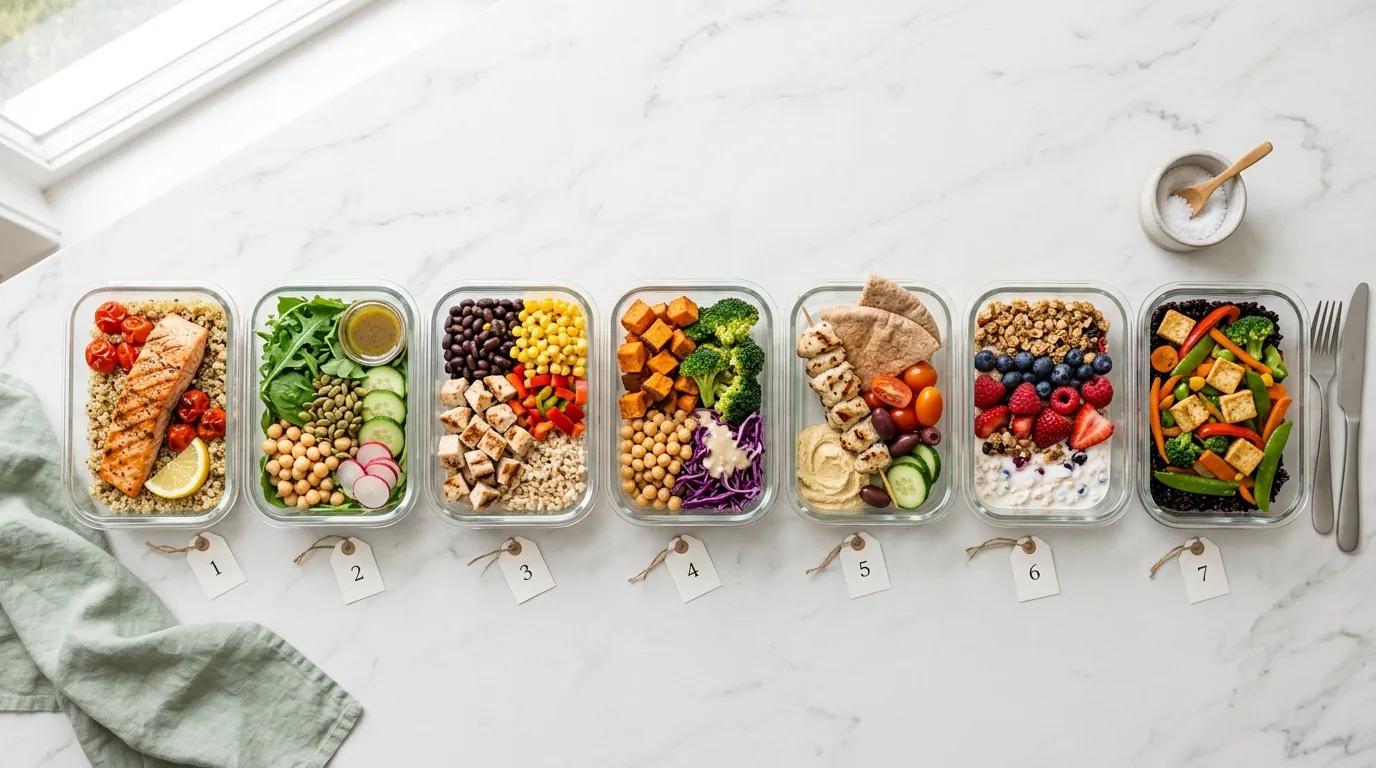
The 7-Day Glow-Up Meal Plan: Skin-First Eating Made Simple
Your skin is the last organ to get fed and the first one to show it. When your plate is missing key nutrients, skin is often where the deficit shows up first — as dullness, breakouts, or a tired-looking complexion. That’s the idea behind this 7-Day Glow-Up Meal Plan: a full week of skin-first eating built around real food, real science, and zero guesswork.
This isn’t a juice cleanse or a 3-day “detox.” The 7-Day Glow-Up Meal Plan is a practical, grocery-list-ready framework you can actually keep up with — one that treats your skin as a reflection of your gut, your blood sugar, and your inflammation levels, not just what you put on top of it. By the end of this guide, you’ll have a full week of breakfasts, lunches, dinners, and snacks mapped out, plus the “why” behind every ingredient.
If you’ve already read our guide on building a skincare routine that actually works, think of this article as the inside-out companion to that outside-in routine. Great skin is rarely one or the other — it’s both working together.
Why Food Shows Up on Your Face First
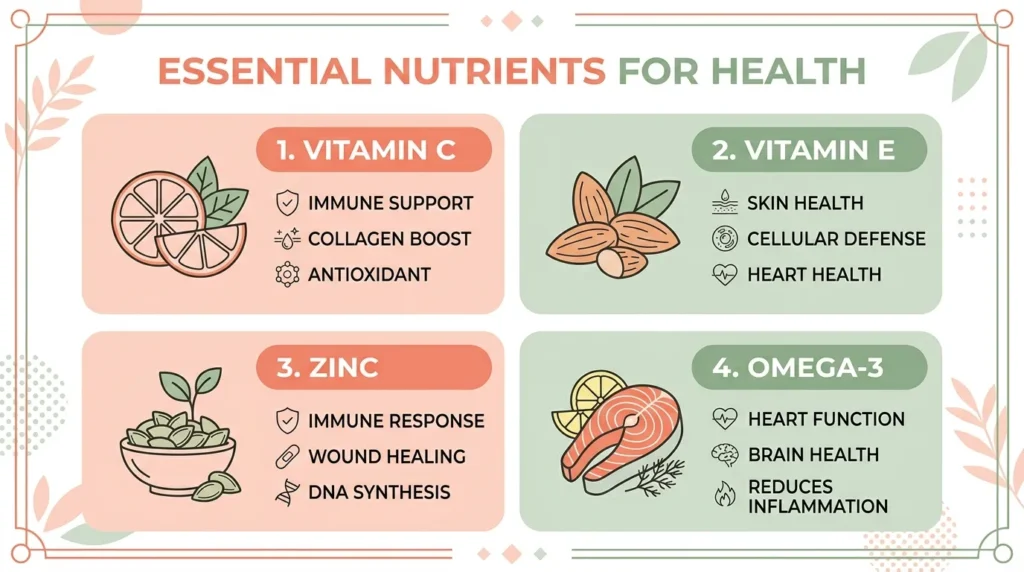
Skin cells turn over every 28 days or so, and that process is fueled entirely by what’s circulating in your bloodstream. Four systems drive most of what people call “glow”:
- Inflammation — Chronic low-grade inflammation is linked to breakouts, redness, and premature fine lines. Diets high in refined sugar and processed oils tend to spike inflammatory markers.
- Blood sugar balance — Sharp glucose spikes trigger insulin surges, which can increase oil (sebum) production and worsen acne, especially along the jawline and chin.
- Gut health — An imbalanced gut microbiome is increasingly tied to skin conditions like acne and eczema through what researchers call the gut-skin axis.
- Micronutrient status — Vitamin C, vitamin E, zinc, and omega-3 fatty acids are directly involved in collagen production, skin barrier repair, and wound healing.
The 7-Day Glow-Up Meal Plan is built to hit all four levers at once, rather than isolating a single “superfood” and hoping for the best.
The Skin Nutrients Worth Knowing
- Vitamin C — Found in citrus fruits, bell peppers, and berries; essential for collagen synthesis and brightening dull skin.
- Vitamin E — An antioxidant in nuts, seeds, and avocado that helps protect the skin barrier from oxidative stress.
- Zinc — Present in pumpkin seeds, chickpeas, and lean meats; supports oil regulation and wound healing, which is why it’s often recommended in acne-friendly eating plans.
- Omega-3 fatty acids — Found in salmon, walnuts, and chia seeds; help calm inflammation and support the skin’s natural barrier.
- Probiotics — In Greek yogurt and fermented foods; support the gut-skin axis and may reduce breakout frequency over time.
The Glow Nutrition Kitchen Philosophy
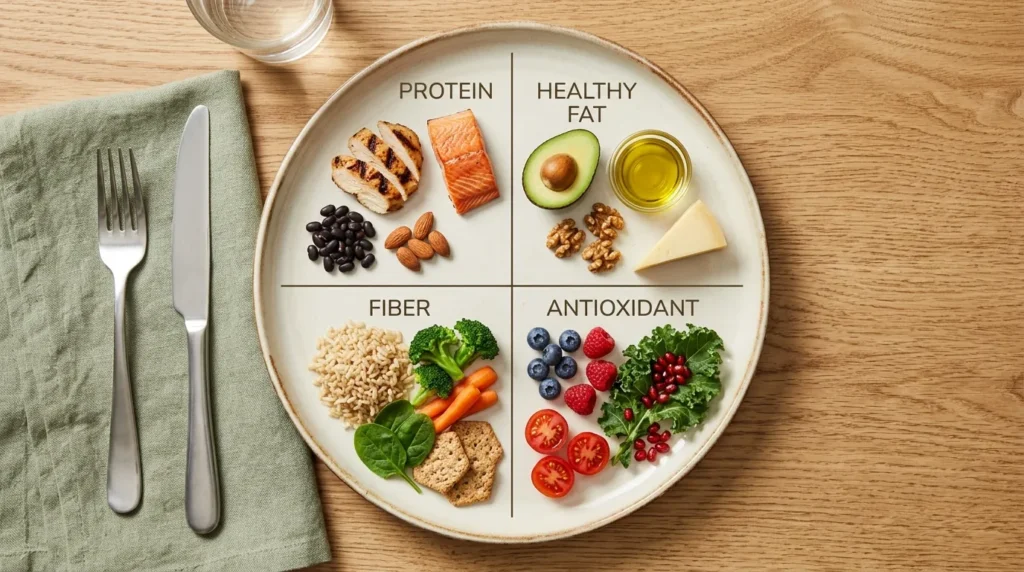
Every recipe in this plan follows what we call the Glow Nutrition Kitchen approach — a simple filter for building a skin-supportive plate without overcomplicating it. Instead of counting calories or eliminating entire food groups, Glow Nutrition Kitchen asks one question at every meal: does this plate include a protein, a healthy fat, a fiber source, and at least one antioxidant-rich food?
That four-part checklist is the backbone of this plan, and it’s designed so you’re not starting from scratch every day. Once you understand the Glow Nutrition Kitchen framework, you can rebuild these meals indefinitely with whatever produce is in season or on sale, which is what makes this more sustainable than a rigid “diet.”
The Glow Nutrition Kitchen approach also leans heavily on the Mediterranean diet, which has the strongest research base of any eating pattern for skin and long-term health, borrowing its emphasis on olive oil, fish, legumes, whole grains, and vegetables at nearly every meal.
The 7-Day Glow-Up Meal Plan, Day by Day
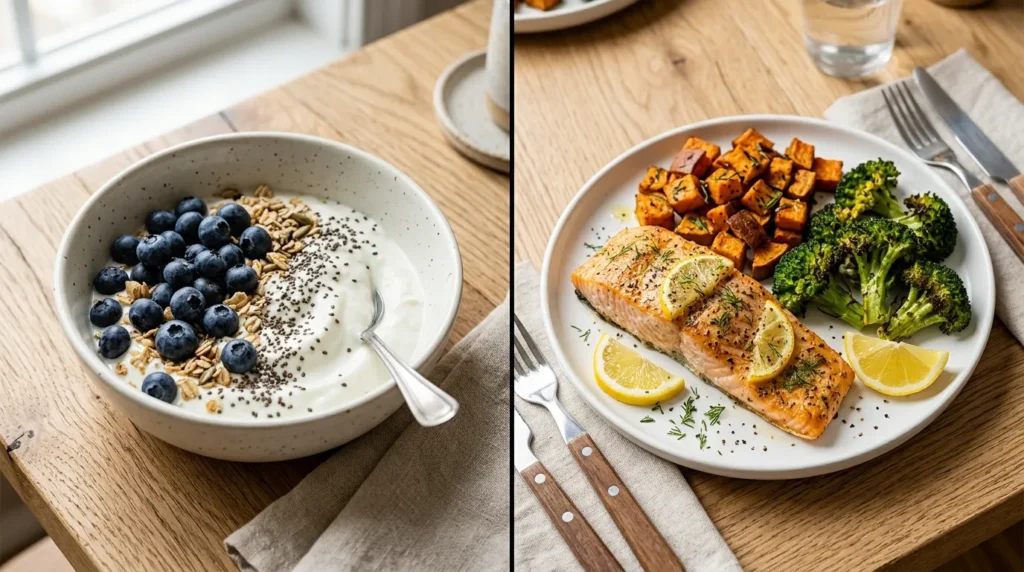
Below is the full 7-Day Glow-Up Meal Plan, with a breakfast, lunch, dinner, and snack for each day. Portion sizes are flexible — the goal is the pattern, not perfection.
Day 1: Reset and Rehydrate
- Breakfast: Greek yogurt with blueberries, chia seeds, and a drizzle of honey
- Lunch: Spinach salad with grilled chicken, avocado, and citrus vinaigrette
- Dinner: Baked salmon, roasted sweet potatoes, and steamed broccoli
- Snack: Sliced cucumber with hummus
Day 2: Antioxidant Focus
- Breakfast: Oatmeal topped with walnuts, cinnamon, and pomegranate seeds
- Lunch: Quinoa bowl with chickpeas, roasted peppers, and tahini dressing
- Dinner: Turkey and vegetable stir-fry with brown rice
- Snack: A handful of mixed berries
Day 3: Gut-Health Day
- Breakfast: Smoothie with kefir, spinach, banana, and flaxseed
- Lunch: Lentil soup with a side of whole-grain bread
- Dinner: Grilled shrimp tacos on corn tortillas with cabbage slaw
- Snack: Kimchi or sauerkraut with a small portion of brown rice crackers
Day 4: Omega-3 Boost
- Breakfast: Chia pudding made with almond milk and topped with kiwi
- Lunch: Tuna salad over mixed greens with olive oil and lemon
- Dinner: Baked cod with sautéed kale and quinoa
- Snack: A small handful of walnuts
Day 5: Blood Sugar Balance
- Breakfast: Veggie omelet with spinach, tomatoes, and feta
- Lunch: Grilled chicken wrap with hummus and shredded carrots
- Dinner: Beef and vegetable skewers with a side salad
- Snack: Apple slices with almond butter
Day 6: Collagen Support
- Breakfast: Bone broth-based soup or a collagen-boosted smoothie with berries
- Lunch: Chickpea and roasted vegetable Buddha bowl
- Dinner: Grilled salmon with asparagus and wild rice
- Snack: Orange slices and a few almonds
Day 7: Maintenance and Meal Prep
- Breakfast: Overnight oats with chia seeds and sliced almonds
- Lunch: Leftover grain bowl using whatever vegetables are left in the fridge
- Dinner: Sheet-pan chicken with a rainbow of roasted vegetables
- Snack: Greek yogurt with a spoon of honey
By Day 7, most people following the 7-Day Glow-Up Meal Plan find they’ve naturally built a rotation of three or four go-to meals — which is exactly the point. The plan is a starting scaffold, not a script you need to follow forever.
Glow-Up Meal Plan vs. Other Skin Diets
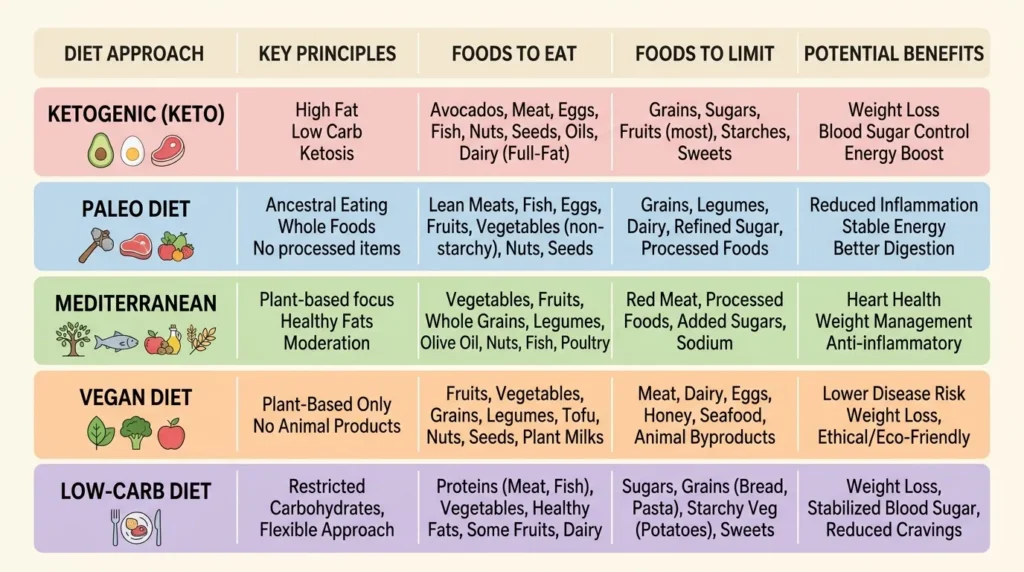
There’s no shortage of “eat for clear skin” advice online, and it helps to see how this approach compares to other common frameworks side by side.
| Approach | Primary Focus | Restriction Level | Best For |
|---|---|---|---|
| 7-Day Glow-Up Meal Plan | Balanced antioxidants, omega-3s, gut health, blood sugar | Low — no food groups eliminated | People wanting a sustainable, whole-food reset |
| Strict Anti-Acne Elimination Diet | Removing dairy, sugar, and gluten entirely | High | Those with suspected specific food triggers, ideally under medical guidance |
| Standard Mediterranean Diet | Long-term heart and metabolic health | Low | General long-term wellness, not skin-specific |
| Juice Cleanse / Detox | Short-term calorie and toxin reduction | Very high | Not recommended for sustained skin health |
| Low-Glycemic Diet | Managing blood sugar spikes | Moderate | People with insulin-related acne patterns |
The 7-Day Glow-Up Meal Plan sits in a practical middle ground: strict enough to shift inflammation and blood sugar patterns within a week, but flexible enough that you’re not eliminating entire food groups without guidance from a dietitian.
How to Meal Prep the Glow Nutrition Kitchen Way
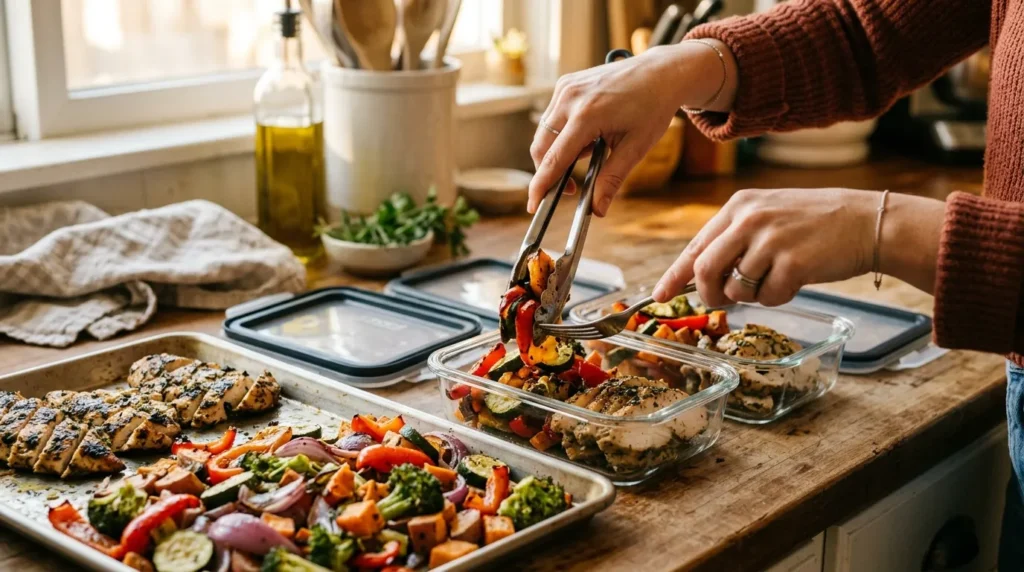
Meal prep is where most skin-nutrition plans fall apart — not because the food is hard to make, but because there’s no system. Here’s how to prep for the full week in about two hours:
- Batch-cook your proteins. Bake a tray of salmon or grilled chicken, and cook a pot of chickpeas or lentils, at the start of the week.
- Roast a big tray of vegetables. Sweet potatoes, broccoli, and peppers roast well together and reheat without getting soggy.
- Pre-portion your antioxidants. Wash and portion berries and citrus into grab-and-go containers so they don’t get skipped when you’re busy.
- Make one grain in bulk. Quinoa, brown rice, or farro can be cooked once and used across three or four different meals.
- Keep snacks visible. Put pre-cut cucumbers, nuts, and yogurt cups at eye level in the fridge — visibility drives what actually gets eaten.
This is the operational core of the Glow Nutrition Kitchen method: fewer decisions during the week, and more consistency in what actually ends up on your plate.
Foods That Work Against Your Glow-Up
While the 7-Day Glow-Up Meal Plan doesn’t require full elimination of any food group, a few categories are worth minimizing:
- High-glycemic refined carbs — White bread, sugary cereals, and pastries can spike blood sugar and worsen acne in sensitive individuals.
- Excess dairy, especially skim milk — Some research links high dairy intake, particularly skim milk, to increased acne severity, likely through hormonal pathways.
- Fried and heavily processed foods — These tend to be high in inflammatory omega-6 fats without the balancing omega-3s.
- Excess added sugar — Beyond blood sugar spikes, sugar can contribute to glycation, a process that can degrade collagen over time.
None of this means these foods are permanently off-limits — the Glow Nutrition Kitchen philosophy is about ratio and frequency, not perfection.
Hydration and Sleep: The Two Free Upgrades
Food gets most of the attention in any skin-nutrition conversation, but two free variables shape how well that food actually gets used by your body: hydration and sleep.
Water is involved in nearly every metabolic process that supports skin repair, from nutrient transport to flushing out waste products through the kidneys and lymphatic system. A simple, sustainable target is to sip water steadily throughout the day rather than trying to chug a large amount all at once, and to pay attention to thirst cues rather than rigid ounce counts. Herbal teas, sparkling water, and water-rich foods like cucumber and watermelon all count toward the total.
Sleep is where a lot of the actual repair work happens. Growth hormone release, which plays a role in collagen production and cell turnover, peaks during deep sleep. Pairing consistent, high-quality sleep with the meals in this plan gives your body the window it needs to actually use the nutrients you’re feeding it. Most adults do best somewhere in the seven-to-nine-hour range, and a consistent bedtime tends to matter as much as total hours.
Neither of these costs anything extra beyond the plan itself, but skipping them is one of the most common reasons people don’t see the results they expect from a nutrition change alone.
Adjusting the Plan for Your Life
No single week of meals fits everyone perfectly, and that’s by design. A few common adjustments people make:
- Busy schedules: Lean harder on the Day 7 “maintenance” structure — a rotating grain bowl — for three or four days instead of one, and save the more involved recipes (like the shrimp tacos) for a weekend.
- Smaller households: Halve the batch-cooking quantities in the meal prep section, or freeze extra portions of soups and stews for a future week.
- Food sensitivities: If dairy is a known trigger, swap Greek yogurt for a coconut or oat-based yogurt with added protein; if shellfish doesn’t agree with you, substitute the shrimp tacos with grilled chicken or extra-firm tofu.
- Budget constraints: Frozen berries, frozen fish fillets, and canned chickpeas or lentils carry nearly identical nutrient profiles to fresh versions and cost significantly less.
The goal of any of these swaps is the same: keep the four-part Glow Nutrition Kitchen structure — protein, healthy fat, fiber, antioxidant — intact, even if the specific ingredients change.

Frequently Asked Questions
How fast will I see results from the 7-Day Glow-Up Meal Plan?
Most people notice less puffiness, better hydration, and slightly calmer skin within the first week, though visible changes to acne or texture typically take three to four weeks, since that’s roughly how long a full skin-cell turnover cycle takes.
Can I follow this meal plan if I have acne-prone skin specifically?
Yes. The plan already emphasizes low-glycemic carbohydrates, zinc-rich foods, and anti-inflammatory fats, all of which are commonly recommended in acne-friendly eating patterns, though anyone with persistent or cystic acne should also talk to a dermatologist.
Is this meal plan vegetarian or vegan-friendly?
It can be adapted easily. Swap salmon and chicken for tofu, tempeh, or additional legumes, and lean on flaxseed or walnuts in place of fish-based omega-3 sources.
Do I need supplements alongside this plan?
Not necessarily. The plan is designed to deliver key nutrients through whole foods first. A dietitian may still recommend a supplement for specific deficiencies, but it isn’t a requirement to follow the plan.
What should I drink on this plan besides water?
Green tea is a natural fit — it’s rich in antioxidants called catechins that support skin health, and it pairs well with the plan’s emphasis on anti-inflammatory foods.
Can I repeat this plan indefinitely?
Yes. Many people cycle through it every few weeks, rotating in seasonal produce, since the underlying Glow Nutrition Kitchen framework is meant to be reused rather than followed exactly once.
Conclusion: Making the Glow-Up Stick
Skin doesn’t respond to a single meal — it responds to patterns held over weeks and months. The 7-Day Glow-Up Meal Plan gives you a low-friction way to start that pattern: a week of meals built around antioxidants, omega-3s, gut-friendly foods, and steady blood sugar, all organized so you’re not reinventing your grocery list every single day.
If you pair this kind of skin-first eating with a simple, consistent topical routine — like the one outlined in our guide to building an effective skincare routine — you’re addressing both sides of the glow equation at once. And once you’ve got a handle on the Glow Nutrition Kitchen framework, the plan stops being a one-time challenge and starts being just how you eat.
