
What Is Old Money Style? History, Wardrobe & How to Get the Look 2026
So, what is old money style, really? If you’ve typed that exact question into a search bar, you’ve probably scrolled through dozens of outfit round-ups without getting a straight answer. This guide is different — it’s built to actually answer what is old money style from the ground up: where it came from, what separates it from lookalike trends, and exactly which wardrobe pieces define it for both women and men.
Old money style isn’t a trend you can buy off a rack overnight. It’s a philosophy of dressing built on heritage, restraint, and craftsmanship that has quietly outlasted every fast-fashion cycle since the 1950s. By the time you finish this article, you won’t just know what is old money style in theory — you’ll know how to build it into your own closet.
If you want the shorter version focused purely on logo-free dressing, our quiet luxury guide breaks that specific angle down in more depth — but here, we’re covering the full picture, starting with the question everyone asks first: what is old money style, exactly, and why has it stuck around for so long?
Old money style rewards patience over impulse buys, and by the end of this article, you’ll know exactly which pieces are worth that patience.
What Is Old Money Style? (Origins & History)
To properly answer what is Old Money style, you have to start with where it came from. Old money style refers to the understated, tailored way of dressing historically associated with multigenerational wealth — families whose fortunes were established decades or centuries ago rather than made recently. Unlike “new money” dressing, which often leans into visible logos and statement pieces to signal status, old money style deliberately avoids anything that looks like it’s trying too hard.
The aesthetic draws heavily from East Coast American prep schools, British aristocracy, and country club culture. Think Newport summer estates, Hamptons weekends, and the kind of wardrobe that could move seamlessly from a sailing club to a dinner party without changing outfits. This is really the heart of what is old money style at its core — clothing built for a lifestyle, not for attention.
Ivy League Roots and the Birth of Preppy Fashion
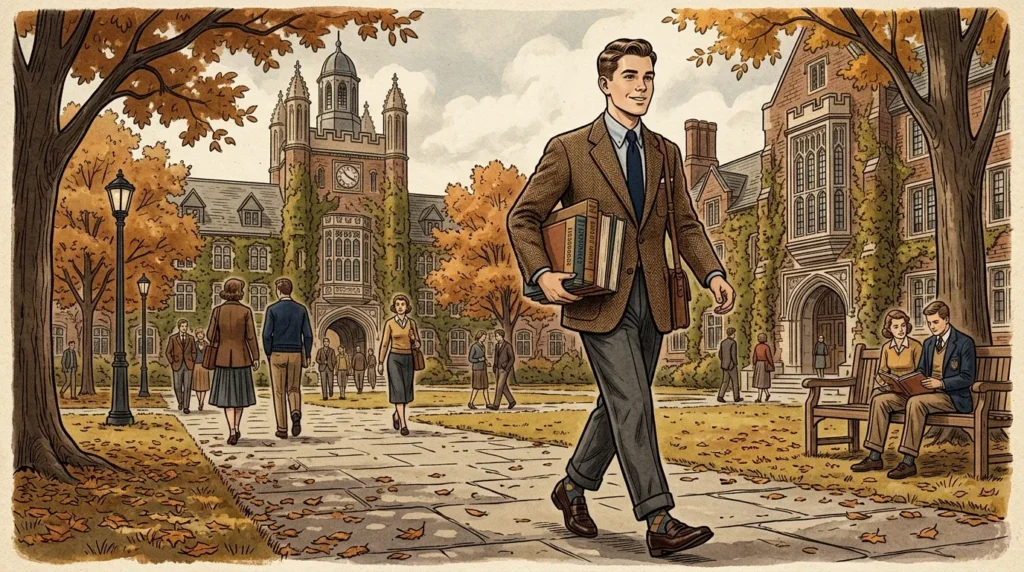
Much of today’s old money aesthetic traces back to Ivy League campuses in the early-to-mid 20th century. Students at institutions like Harvard, Yale, and Princeton developed a uniform of tweed jackets, Oxford shirts, and penny loafers that prioritized function and tradition over flash. This became the foundation of what’s now known as preppy fashion — a related but distinct style category.
Brands like Brooks Brothers and later Ralph Lauren built entire identities around codifying this Ivy League wardrobe into something replicable. The look spread from campuses to boardrooms to golf courses, cementing itself as the visual shorthand for old, established wealth.
From Aristocracy to Quiet Luxury
On the European side, old money style absorbed influences from British aristocracy and equestrian culture — think tweed hunting jackets, silk scarves, and heirloom jewelry passed down rather than purchased. Houses like Hermès and Burberry emerged from this world, originally serving practical purposes (equestrian gear, weatherproof coats) before becoming status symbols in their own right.
This lineage is also where the modern “quiet luxury” movement gets its DNA — garments built from exceptional materials with almost no visible branding, meant to be recognized only by those who already know what they’re looking at. Understanding this history is essential if you want the complete picture behind this aesthetic and its modern offshoots.
Old Money Style vs. Quiet Luxury vs. Preppy: What’s the Difference?
A big part of understanding what is old money style is knowing what it isn’t. These three terms get used interchangeably online, but they’re not identical. Understanding the distinctions will help you shop smarter and avoid mixing signals in your wardrobe. For a much deeper breakdown of preppy versus classic dressing specifically, see our full preppy vs classic comparison.

| Style | Core Identity | Color Palette | Signature Pieces | Vibe |
|---|---|---|---|---|
| Old Money Style | Inherited wealth aesthetic | Neutrals, navy, cream, camel | Cashmere sweaters, trench coats, pearls | Timeless, understated |
| Quiet Luxury | Logo-free premium minimalism | Black, white, grey, beige | Unbranded tailoring, luxury basics | Modern, minimal |
| Preppy Style | Ivy League collegiate look | Navy, red, kelly green, white | Polos, blazers, plaid, boat shoes | Youthful, collegiate |
The simplest way to think about it: preppy is the youthful entry point, old money is the mature, heritage-driven evolution of preppy, and quiet luxury is the stripped-down, adult, logo-free execution of both. They overlap heavily, but old money style is the only one of the three with a genuinely traceable, decades-long history behind it rather than a recent marketing label. This distinction alone clears up most of the confusion people have when comparing these three aesthetics.
Core Principles of the Old Money Aesthetic
Before shopping for a single item, it helps to understand the four rules that govern old money dressing. Skip these and you’ll end up with pieces that look expensive individually but don’t cohere as an outfit. These four principles are really the practical answer to what is old money style when you strip away the history and get down to how it actually looks on a body.
Quality Over Quantity
Old money wardrobes are intentionally small. A handful of well-made cashmere sweaters, a couple of tailored blazers, and one exceptional wool coat will outperform a closet full of trend pieces. The goal is a capsule wardrobe where nearly everything can be mixed and matched.
A Restrained, Neutral Color Palette
Navy, cream, camel, white, hunter green, and burgundy dominate this aesthetic. Bright, trend-driven colors are rare. The idea is that clothing should never compete for attention — it should recede quietly into the background of a well-lived life.
Investment in Luxury Fabrics
Cashmere, wool, linen, and silk aren’t just comfortable — they age well, hold their shape, and photograph as “expensive” without any logo required. This is a major reason old money style leans so heavily on natural fibers over synthetic blends.
Classic Tailoring Over Trend Silhouettes
Structured shoulders, proper trouser breaks, and clothes that fit the body rather than following a viral silhouette are non-negotiable. Tailoring is arguably the single biggest differentiator between an old money outfit and a fast-fashion imitation of one.
Building an Old Money Wardrobe: Essential Pieces for Women

Once you understand the aesthetic on a conceptual level, the next step is translating it into an actual closet. If you’re starting from scratch, these are the pieces that do the most work across the widest range of occasions.
Outerwear Staples
A camel or navy wool coat and a classic trench coat cover roughly 80% of old money outerwear needs. Both should hit at or below the knee and avoid trendy oversized cuts.
Tops and Knitwear
Cashmere sweaters in cream, navy, and grey form the backbone of the look. Crisp button-down Oxford shirts (worn alone or layered under a sweater) are equally essential.
Bottoms
Tailored trousers with a clean pleat, knee-length skirts in wool or tweed, and dark, straight-leg denim (for casual days) round out the lower half of the wardrobe.
Accessories and Jewelry
Pearl earrings or a simple pearl necklace, a structured leather handbag in black or camel, a silk scarf, and gold or silver minimalist jewelry finish the look without shouting for attention.
Footwear
Penny loafers, ballet flats, and a single pair of quality leather riding boots cover nearly every scenario, from the office to a weekend country outing.
Building an Old Money Wardrobe: Essential Pieces for Men

The men’s version of the wardrobe follows the same principles with a slightly different mix of pieces, but the underlying philosophy stays consistent across genders: restraint, quality, and tailoring above all else.
Outerwear Staples
A navy or camel wool overcoat and a tan trench coat are the two most versatile outer layers. A tweed sport coat is a strong third option for cooler months.
Shirts and Knitwear
Oxford cloth button-down shirts in white, light blue, and pale pink are wardrobe workhorses. Layer a crewneck or V-neck cashmere sweater over them for cooler weather.
Bottoms
Pleated wool trousers, chino trousers in khaki or navy, and one well-fitted pair of dark denim round out the lower half.
Accessories
A leather belt in brown or black, a simple analog watch, and a silk pocket square for more formal occasions are the accessory essentials.
Footwear
Penny loafers, brogues, and a single pair of leather boat shoes for warmer months will cover almost every situation the old money wardrobe calls for.
How to Get the Old Money Look on Any Budget

A common follow-up question to what is old money style is whether it’s actually affordable — and the answer is yes. You don’t need a Brunello Cucinelli or Loro Piana budget to build this wardrobe. Here’s how to approach it at different price points.
Start With a True Capsule Wardrobe
Pick a base palette (navy, cream, camel, white) and buy fewer, better pieces within it. A 15–20 item capsule wardrobe in old money neutrals will mix and match into dozens of outfits.
Prioritize Fabric and Fit Over Brand Name
A well-tailored wool blazer from a mid-range retailer will read as more “old money” than a designer piece that fits poorly. Tailoring alterations are one of the best money-per-dollar investments you can make in this style.
Shop Secondhand for Heritage Brands
Old money style is one of the few aesthetics where secondhand and vintage shopping actually helps authenticity rather than hurting it. Look for pre-owned Ralph Lauren, Burberry, and Brooks Brothers pieces, which are widely available on resale platforms at a fraction of retail price.
Save for the High-Impact Investment Pieces
If you’re going to splurge anywhere, put the budget toward a wool coat, a leather handbag, or a pair of quality loafers — the pieces that get worn most often and are hardest to fake in cheaper materials.
How to Style Old Money Outfits for Different Occasions
Understanding what is old money style in theory is one thing — wearing it correctly across a real week of casual days, office hours, and formal events is another. Here’s how the aesthetic adapts without ever breaking its own rules.
Casual, Everyday Looks
For weekends or errands, pair a crewneck cashmere sweater with straight-leg denim and penny loafers. Add a trench coat if the weather calls for it. The goal is polished comfort — nothing overly dressed up, but nothing sloppy either.
Office and Workwear
Tailored trousers, a crisp Oxford shirt, and a wool blazer form the backbone of an old money-appropriate office outfit. Keep jewelry minimal — a single pair of pearl or gold studs is enough — and finish with loafers or simple leather flats.
Formal and Evening Events
For dinners or formal occasions, a wool or silk dress in a neutral tone, paired with a structured handbag and simple jewelry, keeps things elegant without veering into overly trendy eveningwear. Men can rely on a tweed or wool blazer, tailored trousers, and a silk pocket square for the same effect.
Weekend and Country-Club Style
Equestrian and tennis-inspired pieces — polo shirts, pleated skirts, and loafers — work well for country club or outdoor social settings, tying the wardrobe back to its aristocratic and Ivy League roots.
No matter the occasion, the practical answer to old money dressing always comes back to the same principles: neutral colors, quality fabric, and clothing that fits properly rather than clothing that chases a trend.
Frequently Asked Questions
What is old money style?
Old money style is a timeless, understated dressing philosophy associated with multigenerational wealth, built on neutral colors, quality fabrics, classic tailoring, and a deliberate avoidance of visible logos or trend pieces.
What is this style called in fashion circles?
It’s most commonly referred to simply as “old money style” or “old money aesthetic,” and it’s closely related to (but distinct from) preppy fashion and quiet luxury.
Is old money style the same as quiet luxury?
No. Quiet luxury refers specifically to logo-free, minimalist premium fashion, while old money style is a broader, historically rooted aesthetic that includes preppy and equestrian influences quiet luxury doesn’t necessarily draw from.
What colors are associated with old money style?
Navy, cream, camel, white, hunter green, and burgundy are the dominant colors, chosen for their timelessness rather than trend relevance.
Can old money style be affordable?
Yes. The look depends far more on fit, fabric choice, and a restrained color palette than on brand price tags, which makes it achievable at nearly any budget with the right shopping strategy.
What brands represent old money style?
Ralph Lauren, Brooks Brothers, Burberry, and J.Crew are commonly cited entry points, while Hermès, Chanel, Brunello Cucinelli, and Loro Piana represent the aesthetic at a luxury price point.
Is old money style only for older people?
No. While it draws on heritage dressing, the aesthetic is worn across all age groups and has seen a significant resurgence among younger audiences online in recent years.
Conclusion: Building a Wardrobe That Lasts
By now, the question of what is old money style should feel fully answered — it’s a heritage-rooted, tailored approach to dressing that prioritizes longevity over trend-chasing. It endures because it was never built around fast fashion cycles in the first place; it was built around longevity, quality materials, and restraint.
Whether you were drawn here simply curious about what is old money style, or you’re ready to actually build the wardrobe, the formula stays the same: fewer pieces, better fabric, classic tailoring, and a neutral palette you can wear for the next decade, not just the next season.
If you want to go deeper into the logo-free side of this aesthetic, our quiet luxury guide is the natural next read. And if preppy fashion is more your starting point, our preppy style hub has the full breakdown of that adjacent look.
