
Winter Skincare Guide: Stop Dry, Flaky Skin Fast 2026
Cold air, indoor heating, and hot showers can strip your skin of moisture faster than you realize — and that’s exactly why a solid winter skincare guide 2026 matters more in December than in June. If your face feels tight, flaky, or dull the moment temperatures drop, you’re not imagining it. Winter changes the way your skin behaves at a biological level, and without the right routine, dryness, redness, and irritation can take over.
This Winter Skincare Guide 2026 walks you through exactly why winter damages skin, what ingredients actually work, how to build a step-by-step routine for your specific skin type, and how to fix chapped, cracked skin before it gets worse. It’s part of our Seasonal Glow Hub, a resource built to help you adjust your skincare with the seasons instead of fighting against them. By the end, you’ll have a practical, dermatologist-informed plan you can start using today.
Why Winter Wreaks Havoc on Your Skin
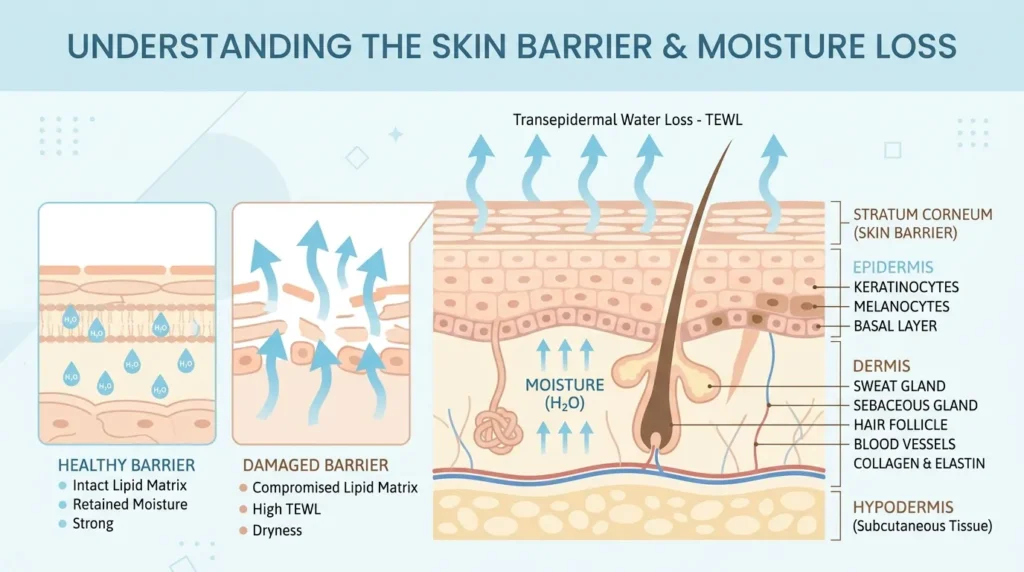
Understanding why skin suffers in winter is the foundation of any effective Winter Skincare Guide 2026 because treating symptoms without understanding causes rarely works long-term.
Cold Air and Low Humidity
Outdoor air in winter holds far less moisture than in warmer months. Low humidity pulls water directly out of your skin’s outer layer through a process called transepidermal water loss (TEWL). The drier the air, the faster your skin loses hydration, leaving it tight, rough, and prone to flaking.
Indoor Heating Makes It Worse
Ironically, the heated indoor air you rely on to stay warm is often even drier than the air outside. Central heating and space heaters reduce indoor humidity significantly, which continues stripping moisture from your skin even when you’re not outdoors. This is one reason a humidifier is frequently recommended alongside topical skincare.
Hot Showers and Skin Barrier Damage
Long, hot showers feel comforting in winter, but hot water breaks down the lipids that make up your skin barrier. Once that barrier is compromised, your skin loses its ability to retain moisture and defend against irritants, which explains why so many people notice dry, itchy skin specifically after bathing in colder months.
The Skin Barrier: The Real Story Behind Winter Dryness
Your skin barrier — the outermost layer made of skin cells and lipids like ceramides — acts like a brick wall that keeps water in and irritants out. Cold weather, hot water, and harsh cleansers all weaken this barrier. Once it’s damaged, dry winter skin, sensitivity, and even breakouts can follow, since a compromised barrier lets irritants penetrate more easily while moisture escapes faster.
Wind, Temperature Swings, and Skin Stress
Moving between freezing outdoor air and heated indoor rooms multiple times a day puts extra stress on skin that never gets a chance to stabilize. Each temperature swing forces blood vessels near the surface to constrict and dilate rapidly, which can show up as redness, sensitivity, or a stinging feeling on the cheeks and nose. Wind adds another layer of stress by physically stripping the thin layer of natural oils that normally sits on top of skin, leaving it more exposed to the drying effects of cold air.
Why Dryness Often Feels Worse Year After Year
Many people notice their skin reacts more strongly to winter as they get older, and there’s a simple explanation: natural oil production tends to slow down over time, and the skin barrier becomes slightly less efficient at holding onto moisture. This doesn’t mean winter dryness is inevitable — it simply means the routine that worked well a few years ago may need slightly richer textures now, which is exactly the kind of adjustment this winter skincare guide is designed to help with.
Building a Winter Skincare Guide 2026 Step by Step
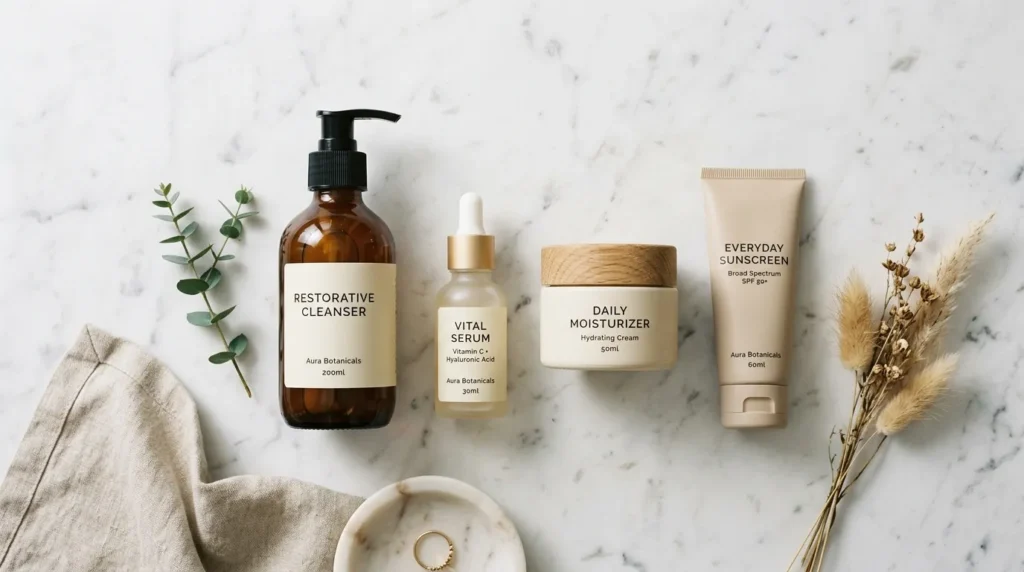
A well-structured winter skincare guide 2026 isn’t complete without a clear, repeatable routine. Here’s a step-by-step winter face care routine that supports the skin barrier rather than fighting it.
Step 1: Switch to a Gentle, Hydrating Cleanser
Foaming or sulfate-based cleansers can strip natural oils your skin needs in winter. Choose a cream or gel cleanser that cleans without disrupting the skin barrier. Cleansing should never leave skin feeling tight afterward — that tightness is a sign of over-cleansing.
Step 2: Apply a Hydrating Serum While Skin Is Damp
A face serum with humectant ingredients works best applied to slightly damp skin, since humectants draw in the water already present on the surface. This step is often skipped, but it significantly boosts how much hydration your moisturizer can lock in afterward.
Step 3: Layer On a Rich Moisturizer
This is the step most people associate with a winter skincare guide 2026 and for good reason — a heavier moisturizer than you use in summer helps replace lipids lost to cold air and hot water. Look for one of the best winter moisturizers formulated with occlusive and emollient ingredients rather than lightweight, gel-based formulas.
Step 4: Never Skip Sunscreen
Winter sun and snow glare can be just as damaging as summer sun, and cold wind increases skin sensitivity to UV exposure. A broad-spectrum sunscreen with SPF 30+ should be part of every morning routine, regardless of season or cloud cover.
Step 5: Treat Lips and Hands Separately
Lips and hands have thinner skin and fewer oil glands, making them especially vulnerable to winter dryness. A thick lip balm and a hand cream with occlusive ingredients should be applied throughout the day, not just once in the morning.
Step 6: Rebuild at Night
Nighttime is when skin repairs itself, so this is the ideal time for richer creams, facial oils, or barrier-repair balms. A slightly heavier night routine complements your daytime winter skincare guide 2026 steps by giving your skin uninterrupted time to recover.
How Often Should You Adjust the Routine
Skin doesn’t change overnight, so it helps to reassess your routine every few weeks rather than switching products constantly. If skin still feels tight an hour after moisturizing, that’s usually a sign to size up to a richer texture rather than layering on more product. On the other hand, if skin starts feeling congested or breakouts appear, it may be a sign the routine has become heavier than what your skin actually needs, and a slightly lighter formula could work better.
Common Mistakes That Undo a Good Routine
Even a well-planned winter face care routine can fall short if a few small habits get in the way. Over-exfoliating, skipping moisturizer on days skin looks less dry, using hot water to rinse off cleanser, and forgetting sunscreen on cloudy days are some of the most common slip-ups. Being consistent with the basics tends to matter more than adding extra products to the mix.
Best Winter Moisturizers and the Ingredients That Actually Work
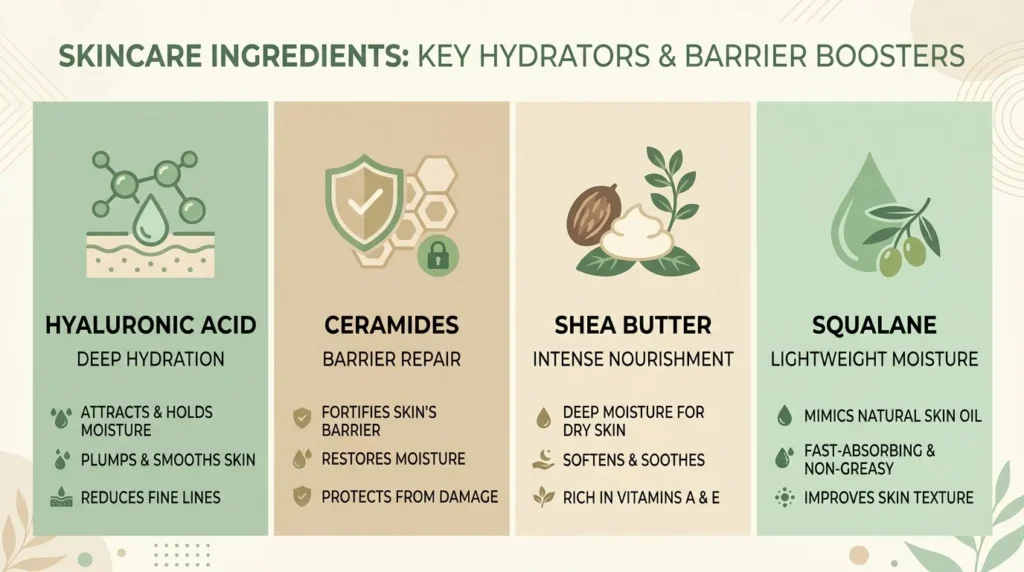
Not all moisturizers are created equal, and understanding ingredients is central to any useful winter skincare guide 2026. Below is a breakdown of the ingredients dermatologists most often recommend for winter skin hydration.
Humectants: Ingredients That Attract Water
- Hyaluronic Acid – holds up to 1,000 times its weight in water, making it a staple in hydrating skincare
- Glycerin – a budget-friendly, highly effective humectant found in many drugstore formulas
Emollients: Ingredients That Smooth and Soften
- Shea Butter – rich in fatty acids that soften rough, flaky patches
- Squalane – lightweight yet deeply nourishing, ideal for a winter moisturizer for face use that won’t feel greasy
Occlusives: Ingredients That Seal Moisture In
- Petrolatum – one of the most effective occlusives for sealing in hydration and preventing water loss
- Ceramides – restore the skin barrier directly by replacing lipids that cold weather strips away
Skin-Supporting Actives
- Niacinamide – strengthens the skin barrier while calming redness common in cold weather skincare
- Vitamin E – supports skin repair and helps soothe irritation
- Aloe Vera – calms inflamed or wind-burned skin
- Oatmeal – a classic remedy for itchy, irritated winter skin, often used in soothing masks and cleansers
Comparison Table: Winter Moisturizer Ingredients at a Glance
| Ingredient | Type | Best For | Texture Feel |
|---|---|---|---|
| Hyaluronic Acid | Humectant | Dehydrated, dull skin | Lightweight |
| Glycerin | Humectant | All skin types | Lightweight |
| Ceramides | Barrier repair | Compromised skin barrier | Medium |
| Shea Butter | Emollient | Very dry, flaky skin | Rich |
| Squalane | Emollient | Combination or sensitive skin | Lightweight-medium |
| Petrolatum | Occlusive | Severely dry or cracked skin | Heavy |
| Niacinamide | Active | Redness and sensitivity | Lightweight |
When comparing the best winter moisturizers, look for products that combine at least one ingredient from each category — humectant, emollient, and occlusive — rather than relying on a single ingredient alone.
Reading Ingredient Labels Like a Pro
Ingredient lists are ordered by concentration, so the first five ingredients after water tend to have the biggest impact on how a product performs. If ceramides, glycerin, or shea butter are buried near the end of a long list, the product may not deliver as much hydration as the front-of-label marketing suggests. Choosing a winter moisturizer for face use based on this order, rather than packaging claims alone, tends to lead to better results.
Texture Matters as Much as Ingredients
Two products with almost identical ingredient lists can feel completely different on skin depending on formulation. A rich cream, a lightweight lotion, and a facial oil can all technically contain ceramides, but the right texture depends on your skin type, the local climate, and even how much time you spend outdoors. Testing a small amount on the jawline for a few days is a simple way to judge whether a formula feels right before committing to a full-size product.
Winter Face Care Routine by Skin Type
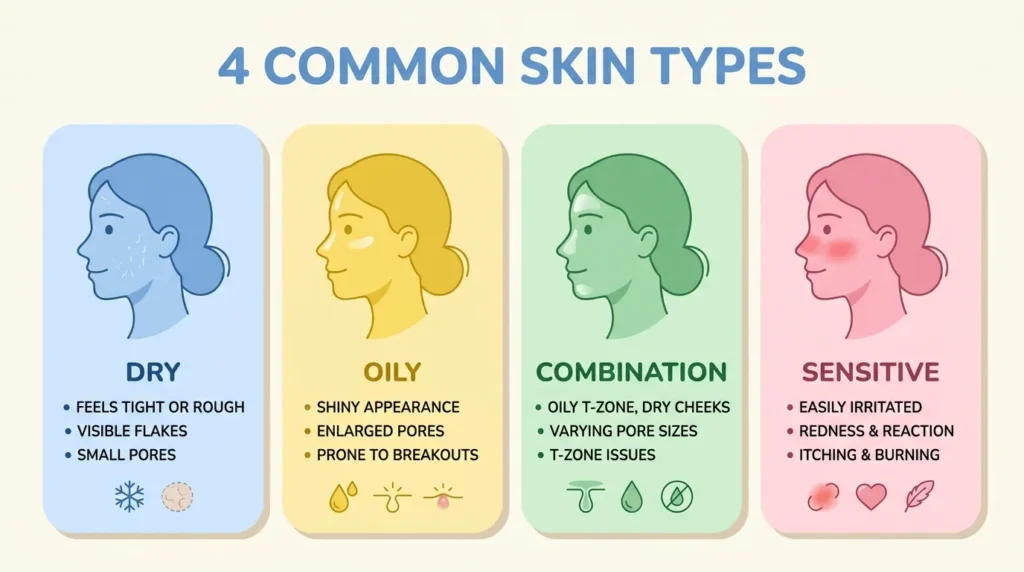
A one-size-fits-all approach rarely works, so this section of the winter skincare guide 2026 breaks down adjustments by skin type.
Winter Skincare Guide 2026 for Dry Skin
Dry skin needs the richest textures: cream cleansers, layered hydrating serums, and occlusive-heavy moisturizers. Facial oils applied before a moisturizer can add an extra sealing layer for skin that feels tight by midday.
Winter Skincare Guide 2026 for Oily Skin
Oily skin still gets dehydrated in winter, even if it doesn’t feel dry. The fix isn’t skipping moisturizer — it’s choosing lightweight, non-comedogenic formulas with squalane or hyaluronic acid instead of heavy butters, which can feel too greasy without adding real benefit.
Winter Skincare Guide 2026 for Combination Skin
Combination skin often needs a hybrid approach: richer cream on the cheeks where dryness shows first, and a lighter gel-cream on the T-zone. Adjusting product thickness by area is more effective than using one uniform texture across the whole face.
Winter Skincare Guide 2026 for Sensitive Skin
Sensitive skin reacts faster to cold wind and harsh products alike. Fragrance-free formulas with ceramides, niacinamide, and oat-derived ingredients tend to calm rather than trigger irritation, making them the safer starting point for anyone unsure which products suit them.
Adjusting for Mature Skin in Winter
Mature skin tends to lose lipids faster and often benefits from richer creams and facial oils layered underneath a moisturizer rather than relying on a single product. Ingredients like squalane and ceramides help replace lost lipids without feeling heavy, while gentle, infrequent exfoliation keeps skin looking brighter without compromising an already thinner barrier.
Adjusting for Acne-Prone Skin in Winter
Acne-prone skin can still get dehydrated in winter, and skipping moisturizer to avoid breakouts often backfires by triggering the skin to overproduce oil. Non-comedogenic, oil-free moisturizers with hyaluronic acid or niacinamide provide hydration without clogging pores, allowing acne treatments to work as intended instead of fighting against dry, irritated skin.
Chapped Skin Remedies and Skin Barrier Repair
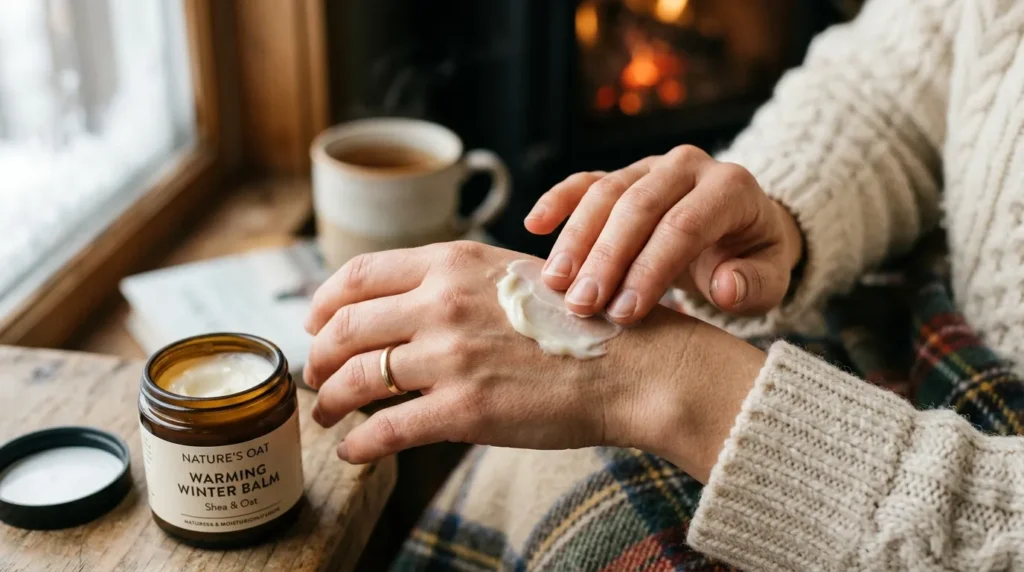
When dryness has already progressed to cracking or chapping, prevention alone isn’t enough — this part of the winter skincare guide 2026 focuses on repair.
Fast Relief for Chapped Skin
Apply a thick, fragrance-free balm containing petrolatum or shea butter directly to chapped areas several times a day. Avoid exfoliation on already-cracked skin, since it can worsen irritation instead of helping.
How to Repair Skin Barrier Damage in Winter
Barrier repair takes time and consistency rather than a single product. Simplifying your routine — fewer active ingredients, more ceramides, and skipping harsh exfoliants for a week or two — gives the barrier space to rebuild. Once skin feels calmer, actives like gentle exfoliation can be reintroduced gradually.
When to See a Dermatologist
If chapped skin cracks, bleeds, or doesn’t improve within one to two weeks of consistent care, it’s worth seeing a dermatologist. Persistent redness, itching that disrupts sleep, or signs of infection are also reasons to seek professional input rather than continuing to self-treat.
Winter Beauty Tips for Healthy, Glowing Skin
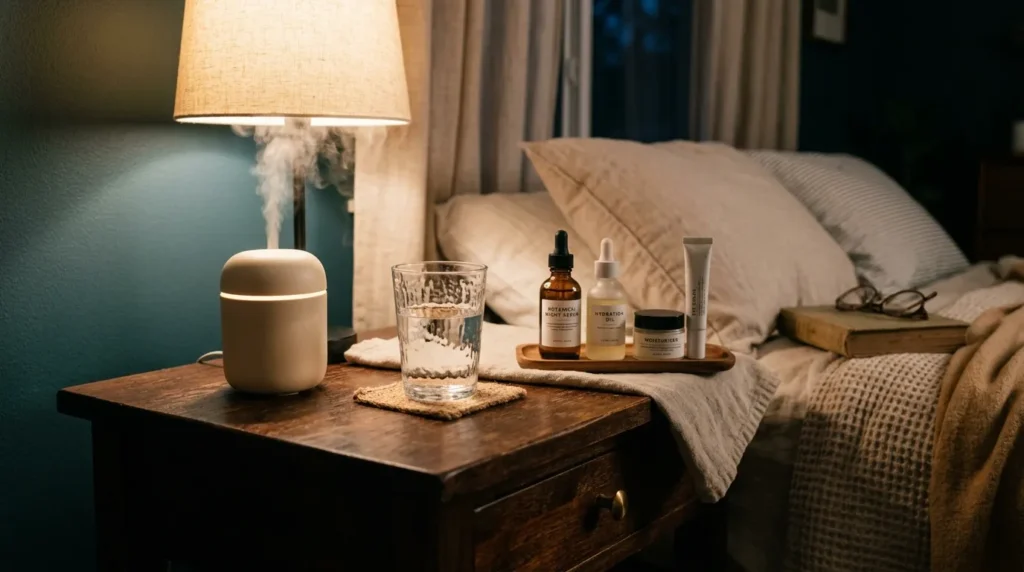
Beyond products, small daily habits make a measurable difference — a detail many shorter guides skip, but one this winter skincare guide treats as essential.
Use a Humidifier Indoors
Running a humidifier in your bedroom or main living space helps counteract the drying effect of indoor heating, supporting everything your topical routine is already doing.
Shorten and Cool Down Showers
Lowering water temperature slightly and keeping showers under ten minutes reduces the damage hot water does to your skin barrier over time.
Don’t Skip Gentle Exfoliation
Flaky skin can look worse when dead skin cells build up, but exfoliation should be gentle and infrequent in winter — once or twice a week at most — to avoid further weakening the barrier.
Stay Hydrated and Eat Barrier-Supporting Foods
Internal hydration and foods rich in essential fatty acids support the skin barrier from the inside, complementing whatever topical routine you follow.
Protect Skin From Cold Weather Outdoors
Scarves, and skin-covering layers reduce direct exposure to wind and cold, which is often the first trigger for chapped cheeks and lips during winter months.
Switch to a Silk or Satin Pillowcase
Cotton pillowcases can absorb moisture from skin overnight and create slight friction that irritates already-sensitive winter skin. A silk or satin pillowcase reduces that friction and helps skin retain the hydration applied in a nighttime routine, making it a small but noticeable addition to any winter beauty tips list.
Don’t Neglect Body Skin
Most winter skincare guide advice focuses on the face, but arms, legs, and hands are just as prone to dryness. A body lotion or cream applied right after showering, while skin is still slightly damp, helps lock in moisture across the whole body, not just the face.
Frequently Asked Questions
How do I prevent dry skin in winter naturally?
Layer a hydrating serum under a rich moisturizer, use a humidifier indoors, and avoid long hot showers, which strip natural oils faster than cold air alone.
What is the best winter face care routine for glowing skin?
A routine combining a gentle cleanser, hydrating serum, barrier-repairing moisturizer, and daily sunscreen tends to produce the most consistent glow through winter months.
What is the best moisturizer for winter dry skin?
Look for formulas combining ceramides, shea butter, and an occlusive like petrolatum, since these work together to both repair and seal in moisture.
How can I repair my skin barrier in winter?
Simplify your routine, prioritize ceramide-rich moisturizers, avoid over-exfoliating, and give your skin one to two weeks of consistent, gentle care.
How do I stop flaky skin in winter?
Combine gentle exfoliation once weekly with a rich moisturizer and occlusive balm, and avoid skipping moisturizer even on days skin feels less dry.
Is a winter skincare routine different for combination skin?
Yes — combination skin often benefits from applying richer cream on drier areas like the cheeks and a lighter formula on the T-zone.
Do I still need sunscreen in winter?
Yes — a broad-spectrum sunscreen with SPF 30+ is still necessary in winter, since UV rays pass through clouds and reflect off snow, and cold wind can make skin more sensitive to sun exposure.
Can a humidifier really make a difference for winter skin?
Yes — running a humidifier restores moisture to indoor air that heating systems remove, which reduces how much water your skin loses passively throughout the day and night.
Conclusion
Winter skin doesn’t have to mean flaking, tightness, or constant discomfort. With the right winter skincare guide 2026 in hand one that accounts for cold air, indoor heating, and your specific skin type — you can maintain healthy, glowing skin all season long. Focus on rebuilding your skin barrier, layering hydration correctly, and adjusting your routine as conditions change, and dry winter skin becomes far easier to manage than it feels on the coldest days. Small, consistent habits, repeated daily, are what carry skin comfortably through to spring.
