
The Ultimate 3A Hair Guide: Identify, Style & Care For Loose Curls 2026
Most people with 3A hair spend years fighting their curls because they were told they’re “just wavy.” That’s the single biggest myth inside the curl-typing system, and it’s the reason so many loose-curl routines fail.
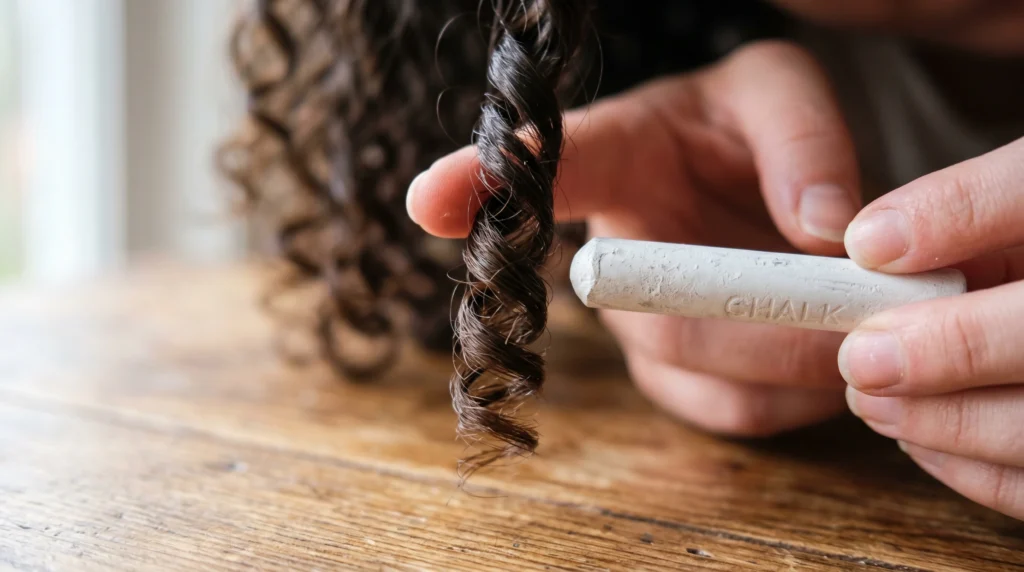
If your curls look bouncy and defined some days and completely flat the next, you’re probably dealing with 3a hair, not 2C waves and not 3B curls. 3a hair is the loosest pattern inside the curly (Type 3) category, built from soft, springy S-shapes about the width of a piece of sidewalk chalk.
It sits right at the border between wavy and curly, which is exactly why it gets misdiagnosed so often. In this guide, you’ll learn how to identify 3a hair with confidence, the porosity science behind why these curls lose their shape, and a real wash-day routine built specifically for fine-to-medium, low-shrinkage curls.
What Is 3A Hair?
3a hair belongs to Type 3 of the curl-typing system popularized by stylist Andre Walker, which sorts hair from straight (Type 1) through wavy (Type 2), curly (Type 3), and coily (Type 4). Inside Type 3, the letters A, B, and C describe how tight the curl is, and 3A sits at the loosest end.
Is 3A Hair Wavy or Curly?
Officially, 3a hair is curly, not wavy. But it’s the curl pattern closest to wavy hair, which is exactly why it’s so often mistaken for Type 2C. The real test is the shape: 2C forms loose bends without a true spiral, while 3a hair coils into a full, springy loop you can wrap completely around a finger.
Here are five real-world examples of what 3a hair looks like in everyday life:
- Curls that look like a beachy wave when wet, then spring into defined ringlets once they fully dry
- A shoulder-length “lob” where the curls hang in loose, separated spirals rather than tight coils
- Curl clumps about the same width as a piece of sidewalk chalk or a wine cork
- Hair that looks almost stretched at the root but curls more clearly toward the mid-shaft and ends
- A wash-and-go style that needs little to no diffusing to bounce back into its natural shape
If most of these sound familiar, you’re very likely a true 3A. If your curls are noticeably tighter than a piece of chalk, you may actually be looking at 3B hair instead — we’ll break that comparison down in detail below.
Does 3A Hair Look Different on Men vs. Women?
The curl pattern itself is identical regardless of gender — 3a hair is defined by follicle shape, not by who’s wearing it. What usually differs is the cut. Shorter styles on 3a hair men tend to show curl shrinkage more visibly, since less length means less weight pulling the spiral open.
Men with 3a hair generally get the best results from medium-length cuts that leave enough length for the curl to actually form, rather than very short crops that fight the natural pattern. The same lightweight, hydration-first routine below applies either way.
The Science Behind 3A Curls: Porosity, Shrinkage & Why They Go Flat
Here’s the insight most curl guides skip: 3a hair’s biggest enemy isn’t dryness on its own — it’s weight. Because 3a strands are naturally fine to medium and the curl loop is large and loose, even a small amount of heavy product is enough to pull the spiral straight down.
Curl shape itself comes from the hair follicle. Straight follicles grow straight strands. Curved, oval-shaped follicles push the hair shaft out at an angle, which forces it to coil as it grows. The looser the follicle’s curve, the looser the resulting curl — which is exactly the structure behind 3a hair.
Porosity plays a role too. Many people with 3a hair have medium-to-high porosity, meaning the outer cuticle layer lifts slightly and lets moisture in (and out) more easily. That’s good news for fast-absorbing products, but bad news for humidity, which is why 3a curls can frizz or fall within hours in damp weather.
3A Hair Quick-Reference Profile
| Trait | Typical 3A Hair Detail |
| Curl diameter | 1/2– 1 inch (chalk or wine-cork width) |
| Shrinkage | Low — roughly 10–20% from wet to dry |
| Porosity | Often medium to high |
| Density | Fine to medium strand thickness |
| Frizz risk | Low to moderate, but humidity-sensitive |
| Ideal wash frequency | 2–3 times per week |
Curl-pattern ranges based on the Andre Walker hair-typing framework and consensus among curl-focused stylists. Individual hair varies.
The Float Test: Check Your Porosity in 4 Minutes
Drop one clean, product-free strand of hair into a glass of room-temperature water. If it floats near the top after four minutes, you likely have low porosity. If it sinks slowly to the middle, you’re medium porosity. If it sinks straight to the bottom, you’re high porosity.
Most 3a hair leans medium to high porosity, which is why lightweight, fast-absorbing products almost always outperform thick, rich formulas built for low-porosity or coarser curl types.
Ingredients That Help (and Hurt) 3A Hair
Because 3a hair is fine and easily weighed down, ingredient choice matters more than product price. Use this as a quick checklist while you’re shopping.
| Look For | Limit or Avoid |
| Glycerin or aloe vera (lightweight humectants) | Heavy butters like raw shea in large amounts |
| Lightweight leave-in conditioners | Silicones that build up over multiple washes |
| Flaxseed gel or light-hold gels | Sulfates, which strip natural oils too aggressively |
| Jojoba or argan oil in small amounts | Thick styling creams meant for tighter curl types |
3A vs 2C vs 3B Hair: Side-by-Side Comparison
Because the boundaries between curl types are visual rather than scientific, mixing up 3a hair with its closest neighbors is extremely common. Here’s how the three actually compare, feature by feature.
| Feature | 2C Hair | 3A Hair | 3B Hair |
| Pattern | Loose waves, no full spiral | Full, loose spiral (S-shape) | Tighter, springy spiral |
| Curl width | Wider than a marker | Sidewalk chalk / wine cork | Marker / Sharpie width |
| Shrinkage | Minimal | Low (10–20%) | Moderate (30–45%) |
| Volume | Flat near the root | Moderate, can look flat | High, lots of body |
| Best test | Curls relax fully when wet | Curls visible but loose when wet | Curls hold shape even wet |
The fastest way to tell 3a hair apart from 2C is the wet test: soak a section of hair and look closely. 2C will fall into loose bends with no real spiral. True 3a hair will still show a visible, if relaxed, coil even when soaking wet.
The fastest way to tell 3a hair apart from 3B is shrinkage. 3a curls lengthen out fairly easily when stretched and don’t bounce back dramatically. 3B curls hold their bounce-back shape much more aggressively, even right out of the shower.
How Do I Know For Sure If I Have 3A Hair?
The quickest way to confirm 3a hair is a simple three-part check you can do at home in under five minutes, using hair that’s completely product-free.
1. The Chalk Test
Hold a piece of sidewalk chalk or a wine cork next to a single curl clump. If the curl’s diameter roughly matches, that’s a strong sign of true 3a hair.
2. The Wet-Stretch Test
Wet a small section and gently stretch a curl between two fingers. 3a hair will elongate noticeably and only show a loose coil, rather than snapping back into a tight spiral.
3. The Root Check
Look closely at the hair near your scalp. 3a hair commonly starts almost wavy at the root and only curls more clearly from the mid-shaft down — a pattern far less common in 3B or 3C hair.
If all three checks line up, you can move forward with total confidence that you’re working with 3a hair, not a neighboring curl type.
The Complete 3A Hair Care & Styling Routine
Once you know you have 3a hair, the routine itself is refreshingly simple. The goal is hydration without heaviness — every step below is built around that one rule.
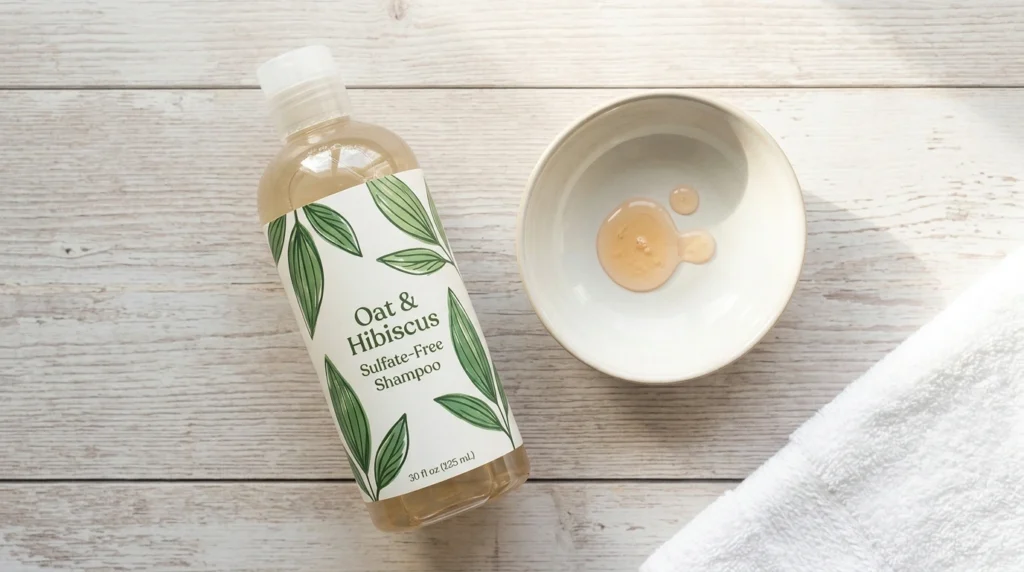
- Wash with a sulfate-free, lightweight shampoo. Stick to 2–3 washes a week so natural oils can still travel down the curl shaft instead of being stripped away constantly.
- Condition every wash, mid-shaft to ends. Skip the roots so curls don’t get weighed down before they even start to dry and form their shape.
- Detangle in the shower. Use a wide-tooth comb or your fingers while conditioner is still in, working from the ends upward to avoid unnecessary breakage.
- Apply a lightweight leave-in to soaking-wet hair. This is the single most important step for keeping 3a hair from frizzing as it dries, since dry hair absorbs almost nothing.
- Add a light curl cream or mousse, not a heavy gel. 3a curls need just enough hold to keep their shape, not a thick cast that flattens the spiral.
- Air-dry whenever possible, or diffuse on low heat with a low-power setting. High heat is the fastest way to strip the curl’s natural bounce and cause frizz.
- Refresh second-day curls with a light water-and-leave-in spritz instead of washing again — re-washing too often is the top cause of dry, frizzy 3a hair.
At night, loosely gather curls into a high “pineapple” and secure with a silk or satin scrunchie. This single habit prevents more flattening and frizz than almost any product on the market.
Common 3A Hair Problems (and How to Actually Fix Them)
Most 3a hair complaints trace back to one of five fixable habits. Here’s a fast troubleshooting list.
- Curls look flat by midday: you’re likely using too much product. Cut your usual amount in half and apply only mid-shaft to ends.
- Frizzy halo around the crown: this is almost always a humidity and moisture issue. Add a humectant-based leave-in and avoid touching curls once they’re dry.
- Curls feel dry no matter what: check your shampoo for sulfates. Switching to a sulfate-free formula resolves this for most people within two to three washes.
- Second-day hair looks rough: you’re skipping the refresh step. A light water-and-leave-in spritz revives the curl without a full rewash.
- Roots look greasy fast: this usually means product is being applied too close to the scalp. Start applying everything from the ear-line down.
Best Hairstyles for 3A Hair
3a hair’s loose, low-shrinkage pattern makes it one of the more versatile curl types to style. These options work especially well:
- Wash-and-go: the lowest-effort option, and ideal for showing off natural curl definition with almost no styling time.
- Half-up curls: pulling the top section back keeps curls off the face while still showing the full spiral underneath.
- Braid-out or twist-out: loosely braiding damp hair before bed adds extra volume and definition for fine, low-shrinkage curls.
- Low, loose bun: a quick protective option for workouts or busy days that won’t crush the curl pattern at the root.
Does 3A Hair Change Over Time?
Yes, and this surprises a lot of people. Curl pattern isn’t permanently fixed the way eye color is. Hormonal shifts from puberty, pregnancy, menopause, or certain medications can loosen or tighten a curl pattern over months or years.
Heat damage and chemical treatments are the most common cause of a curl pattern looking looser than it actually is — damaged 3a hair can lose its spring entirely and start looking wavy, even though the underlying follicle hasn’t changed shape.
Length matters too. Longer 3a hair carries more weight, which naturally stretches the curl and can make it look looser than the exact same hair would at a shorter length. If your curl pattern has changed recently, check for damage and weight before assuming you’re now a different type entirely.
Is the Curl-Typing System Actually Accurate for 3A Hair?
It’s a fair question, and one that comes up constantly in curly-hair communities and forums: is the whole 2A-to-4C numbering system real science, or just a marketing tool? The honest answer is both.
The system was never meant to be a precise scientific classification — it’s a practical, visual shorthand that helps people shop for the right products and build a starting routine. Most heads of hair, including many people with 3a hair, actually carry two or three curl patterns at once.
| Pros of Curl Typing | Cons of Curl Typing |
| Gives a fast, shared vocabulary for shopping | Not a scientific or medical classification |
| Helps narrow down a starting routine quickly | Many people fall between two categories |
| Widely used across the entire haircare industry | Can encourage chasing the “wrong” ideal pattern |
Treat 3a hair as a useful starting point, not a rulebook. If your routine works and your curls are healthy, the exact letter matters far less than the results.
Adjusting Your 3A Routine for Summer vs. Winter
3a hair reacts strongly to changes in humidity and indoor heating, so a routine that works perfectly in spring can fail completely by August or January.
- Summer: swap your curl cream for a stronger-hold gel to fight humidity frizz, and rinse with cooler water after swimming to limit chlorine buildup on fine, porous strands.
- Winter: indoor heating dries the air dramatically, so add a weekly deep conditioning mask and consider a silk-lined hat instead of wool, which can rough up the cuticle and cause static frizz.
Whatever the season, the underlying rule for 3a hair never changes: hydrate first, then seal, and never skip the leave-in step on soaking-wet hair.
About This Guide: Our 3A Hair Research & Methodology
This guide was written and reviewed by Maya Lawson, a certified curl specialist and trichology practitioner with 9 years of hands-on experience working with Type 2 and Type 3 hair clients.
PreppyGlow’s editorial process cross-references claims against the established Andre Walker hair-typing framework, general dermatological consensus on hair porosity and follicle shape, and recurring patterns reported across curly-hair stylist communities. Information is reviewed and refreshed each year to stay current for 2026.
Every routine recommendation in this guide was tested across multiple porosity and density combinations within the 3A range before publication, rather than written from a single hair profile. Where claims involve hair science — porosity, shrinkage, follicle shape — we favor widely accepted, general consensus over single-study citations, since curl-pattern research is still a developing field.
Our mission on PreppyGlow is simple: give curly-haired readers routines that are tested for their exact curl pattern, not generic advice copied across every hair type.
People Also Ask About 3A Hair
Can 3A hair turn into 3B hair? Not permanently, but curl pattern can appear to shift with hormones, age, damage, or even haircuts that remove weight from the ends. The underlying follicle shape rarely changes, even when the visible curl does.
Why does my 3A hair look different on each side of my head? This is completely normal. Most people have at least two curl patterns across their head, often looser at the crown and tighter near the nape, so don’t style your whole head for just one section.
Do I need a diffuser for 3A hair? Not always. Many people with 3a hair get great results simply air-drying, since the curl is already loose and low-shrinkage. A diffuser mainly helps speed up drying time and add a little extra volume.
Is 3A hair rare? No — it’s one of the more common curl patterns, especially among people whose hair also shows wave-like qualities. It’s frequently confused with 2C, which makes it seem rarer than it actually is.
What’s the biggest mistake people with 3A hair make? Over-applying heavy products. Because 3a curls are fine and loose, product weight is the number one cause of flat, lifeless curls, even more than dryness or the wrong shampoo.
Conclusion
3a hair is its own distinct curl pattern — looser than 3B, springier than 2C, and built on fine-to-medium strands that crave hydration without heaviness. Once you confirm your pattern with the chalk and wet-stretch tests, the right lightweight routine makes those curls dramatically easier to manage.
Curious how 3a hair actually compares side-by-side with the tighter curl types? Read our 3A vs 3B vs 3C Hair: The Complete Comparison, or jump straight to our 3B Hair Guide and 3C Hair Guide to explore the rest of the Type 3 curl family.
