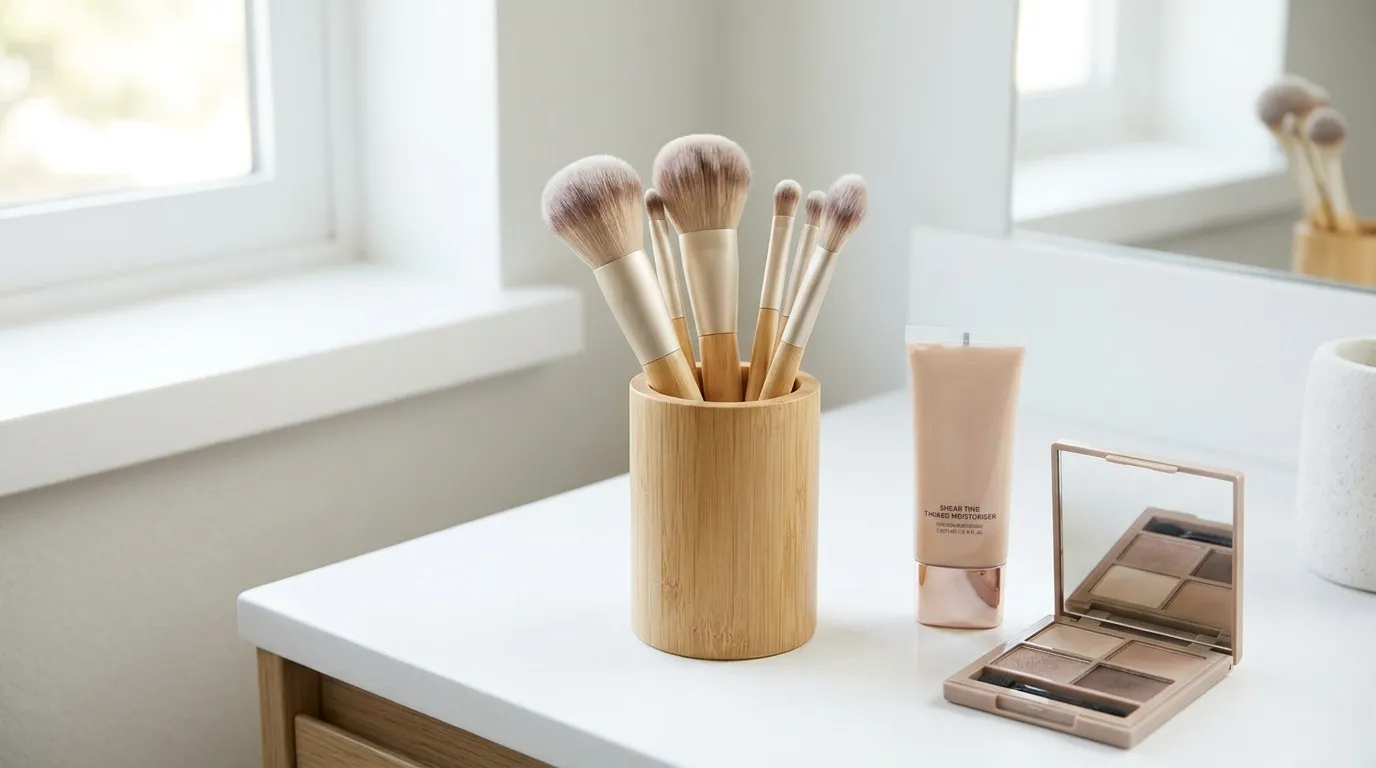
Best Makeup Brushes for Beginners: What You Actually Need
Standing in front of a wall of bristles at Sephora, you don’t need twenty tools — you need the right five. That’s the entire idea behind this guide to the best makeup brushes for beginners: fewer brushes, better technique, and no guesswork about which one goes where. By the end, you’ll know exactly which face makeup brushes and eye makeup brushes to buy first, how to use a foundation brush without streaking your skin, and how to keep everything clean so it lasts.
This isn’t a list of fifty products you’ll never use. It’s a practical, beginner-first breakdown of makeup brush names, makeup brush uses, and the handful of makeup tools for beginners that actually earn a spot in your bag — the same short list we’d recommend as the best beginner makeup brushes, no matter your budget.
For a broader look at building your everyday routine from the ground up, our pillar guide, Glow Beauty Lab, walks through the full beginner beauty roadmap — brushes, skincare prep, and application order — in one place.
Why the Right Makeup Brushes for Beginners Actually Matter
It’s tempting to think a brush is just a stick with fibers on the end. In practice, the shape, density, and fiber type of a brush changes how a product sits on your skin almost as much as the product itself. A liquid foundation applied with a stiff, flat brush looks completely different from the same foundation blended with a dense, rounded one. This is why so many people blame their foundation shade or formula when the real problem is the tool.
For someone just starting out, the goal isn’t to own every specialty brush a professional artist carries. It’s to understand the small set of essential makeup brushes that cover 90% of a normal routine: base, color, and eyes. Once you know what each brush is built to do, makeup application stops feeling like trial and error and starts feeling like a repeatable, five-minute process.
This is also where budget matters. A beginner beauty tools kit doesn’t need to cost a fortune — brands like Real Techniques, EcoTools, e.l.f. Cosmetics, and Sigma Beauty all make dependable, affordable options that perform close to prestige brands costing three or four times as much. Knowing what to prioritize means you spend money on the two or three brushes you’ll use daily, not on a 24-piece set where half the tools sit untouched.

Types of Makeup Brushes for Beginners: Names, Shapes, and Uses
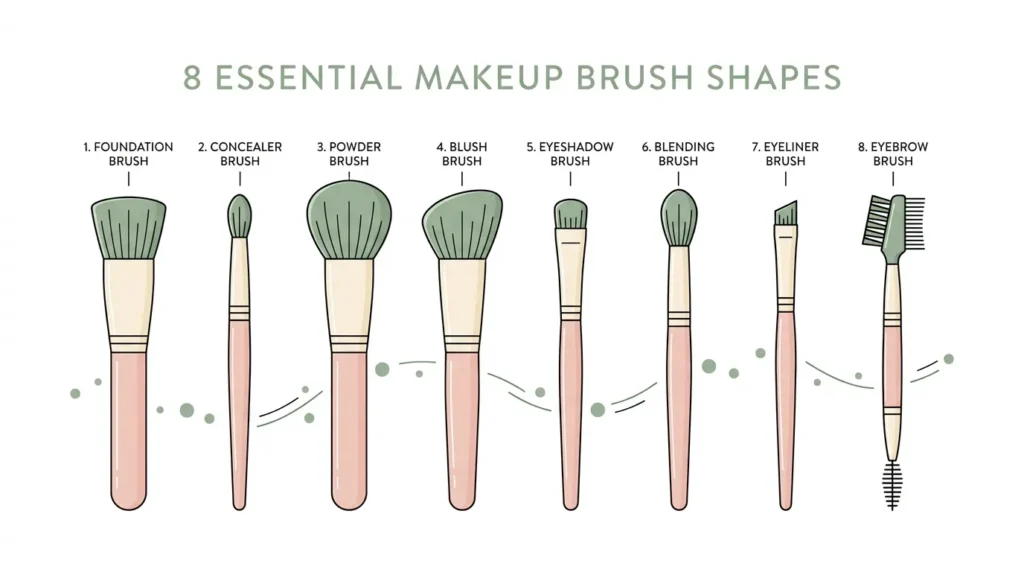
Before buying anything, it helps to actually understand the types of Makeup Brushes on the market and what separates one from another. Most confusion around makeup brush names comes from the fact that similar-looking brushes are meant for very different products.
Face Makeup Brushes Every Beginner Needs
Face makeup brushes handle your base — the layer that evens out skin tone before any color goes on.
- Foundation Brush: Flat, dense, and slightly tapered. Built for liquid foundation, this brush buffs product into the skin for a smooth, second-skin finish. It’s the most-used tool in any beginner beauty tools collection.
- Concealer Brush: Smaller and more tapered than a foundation brush, with a pointed tip that reaches into the inner corners of the eyes and around the nose.
- Powder Brush: Large, fluffy, and full. Designed to dust setting powder or powder foundation evenly without disturbing the liquid layers underneath.
- Kabuki Brush: Short-handled and densely packed, ideal for buffing in powder foundation or mineral makeup with circular motions.
- Blush Brush: Rounded and slightly smaller than a powder brush, made for placing color precisely on the apples of the cheeks.
- Contour Brush: Angled with a firmer edge, built to define hollows of the cheekbones or jawline without over-blending the product away entirely.
- Highlighter Brush: Small, dense, and often fan-shaped or tapered, used to place a concentrated pop of shimmer exactly where light naturally hits the face.
Eye Makeup Brushes for a Simple Beginner Routine
Eye makeup brushes are smaller and require more precision, but a beginner really only needs three to start.
- Eyeshadow Brush (Flat/Packing Brush): Used to pat color onto the lid for maximum pigment payoff.
- Blending Brush (Fluffy Brush): Soft and rounded, used in the crease to diffuse harsh lines — this is the brush that makes eyeshadow look “professional.”
- Crease Brush: Slightly denser than a blending brush, used to define the crease with more shape and definition.
- Angled Brush: Works for both eyeliner (with gel or powder product) and filling in eyebrows.
- Eyeliner Brush: A thin, precise brush for gel or cream liner application.
- Lip Brush: Optional, but useful for precise lipstick application, especially with darker or matte shades.
A quick note on materials: synthetic makeup brushes (nylon or polyester bristles) are best for liquid and cream products like foundation, concealer, and cream blush, since the fibers don’t absorb product. Natural makeup brushes (animal hair) tend to grip and blend powder products — like powder foundation, bronzer, and eyeshadow — more softly. If you’re building a small, cruelty-free, beginner-friendly kit, most modern synthetic makeup brushes now perform just as well as natural hair for nearly every task, including powder.
What Order Should You Use Your Makeup Brushes In?
One question that trips up almost everyone new to a brush routine — and one of the most common searches for beginner makeup brushes — is the order of operations: which tool comes first, and which comes last. A simple, repeatable sequence looks like this:
- Foundation brush — apply and buff your base first, while skin is bare.
- Concealer brush — layer concealer only where you need extra coverage, once the base is even.
- Powder brush — set everything with a light dusting of powder.
- Contour brush, then blush brush, then highlighter brush — build cheek color from the most structural product (contour) to the most reflective (highlighter).
- Eyeshadow, crease, and blending brushes — do eyes after the base is set so any fallout doesn’t sit on top of wet foundation.
- Angled brush and eyeliner brush — finish with brows and liner, since these are the most precise, detail-oriented steps.
Following this order isn’t a hard rule, but it does prevent the most common beginner mistake: doing eye makeup first, then dragging eyeshadow fallout through freshly applied foundation.
How to Use a Foundation Brush: A Beginner’s Guide to a Flawless Base
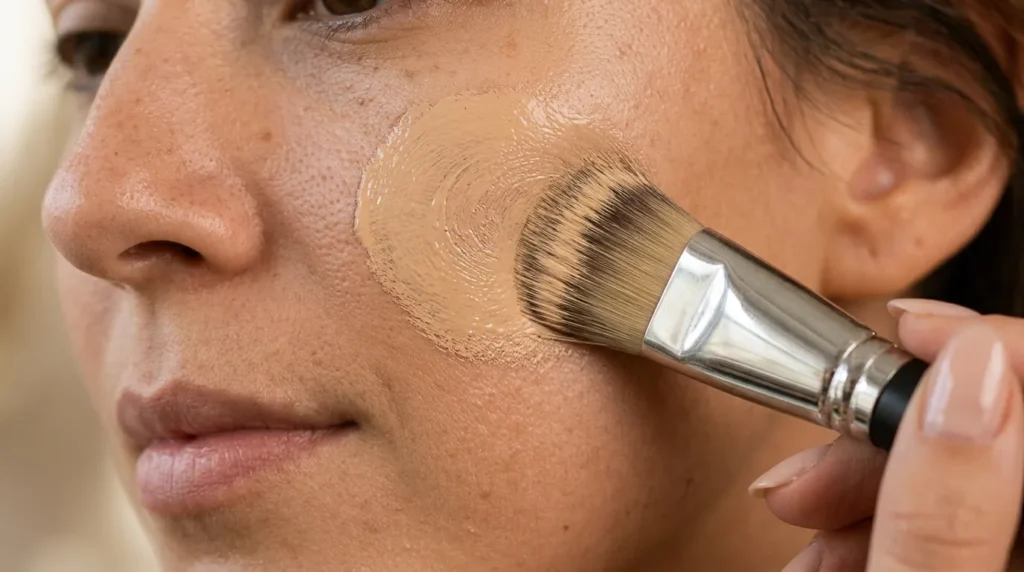
Of all the makeup brushes for beginners, the foundation brush causes the most frustration — usually because of technique, not the tool itself. Here’s the method that avoids streaking, patchiness, and that “cakey” look:
- Start with a pea-sized amount. Dot foundation on your forehead, cheeks, nose, and chin rather than loading the brush directly.
- Use a stippling, buffing motion. Small circular or back-and-forth strokes push product into the skin instead of dragging it across the surface, which is what causes streaks.
- Work in sections. Blend one area fully before moving to the next so the product doesn’t dry unevenly.
- Go from center to edges. Your face needs less coverage near the hairline and jaw, so pull excess product outward rather than adding more there.
- Set with powder using a fluffy powder brush. This locks the base in place and softens any remaining brush marks.
If your foundation still looks patchy, the issue is often one of two things: too little product blended for too long (which causes it to look streaky as it dries), or a brush that’s overdue for a wash — product buildup inside the bristles will drag rather than glide. A quick makeup sponge vs. brush comparison is useful here too: sponges tend to sheer out coverage for a more “your skin, but better” look, while brushes build coverage faster, which is often what beginners actually want for evening out redness or discoloration.
Best Affordable Makeup Brush Sets for Beginners (Comparison Table)
Choosing a beginner makeup brush set is usually easier than buying brushes individually, since a well-curated affordable makeup brush kit already covers face and eyes without gaps. Here’s how some of the most recommended affordable options compare:
| Brand / Set | Brush Count | Bristle Type | Best For | Approx. Price Range |
|---|---|---|---|---|
| Real Techniques Everyday Essentials | 5 | Synthetic | First-time buyers, face-focused routine | $ |
| EcoTools Signature Set | 6–8 | Synthetic (recycled materials) | Eco-conscious beginners, face + eye basics | $ |
| e.l.f. Cosmetics Brush Set | 4–5 | Synthetic | Ultra-budget starter kit | $ |
| Morphe Vegan Brush Set | 6–10 | Synthetic | Beginners who also want eye-detail brushes | $$ |
| Sigma Beauty Essential Kit | 5–6 | Synthetic | Slightly more premium finish, longer bristle lifespan | $$ |
As a rule, an affordable makeup brush kit in the 5–8 brush range is the sweet spot for most people: enough to cover foundation, powder, blush, contour, and eyeshadow application, without ending up with duplicate tools you never touch. If you already own a beauty blender or makeup sponge, pairing it with just two or three key brushes — foundation, powder, and blending — often covers a complete beginner makeup routine on its own.
If you travel often, it’s worth looking for a compact travel makeup brush set in addition to your main collection. These smaller-handled versions of the same core brushes — foundation, powder, and blending — usually come with a protective case or roll, which keeps bristles from bending in a suitcase and means you’re not tempted to pack your full-size, more expensive set. A travel set doesn’t need to be a separate purchase either; some of the affordable makeup brush kit options above already include a compact pouch that works for both home storage and travel.
When comparing sets, pay attention to handle length and bristle density as much as brush count. A 12-piece set with thin, sparse bristles is often a worse buy than a tightly curated 5-piece set with dense, well-shaped brushes — more pieces don’t automatically mean better quality, and for a beginner makeup brush set, consistency across the few brushes you’ll actually reach for matters far more than sheer quantity.

Makeup Brush Cleaning and Maintenance for Beginners
A beginner makeup brush set is only as good as its upkeep. Bacteria, oil, and old product build up in bristles fast, which can lead to breakouts, uneven application, and bristles that shed prematurely.
- How often to wash makeup brushes: Face brushes (foundation, concealer, powder) should be washed once a week since they touch skin and liquid product directly. Eye brushes can go two weeks between washes if used with powder shadows, but should be cleaned weekly if used with cream or gel products.
- Deep cleaning: Use a gentle brush cleanser or a mix of mild shampoo and lukewarm water. Swirl bristles in your palm, rinse until water runs clear, reshape the bristles, and lay flat to dry — never upright, since water can loosen the glue holding bristles to the handle.
- Quick daily cleaning: A spray-on brush cleaner between uses removes surface oil and product without a full wash, useful if you’re switching foundation shades or sharing brushes.
- Storage: Keep brushes upright in a cup or holder once dry, and avoid stacking them in a closed makeup bag while damp, which encourages bacteria growth.
Good brush maintenance also extends the life of your kit significantly — a well-cared-for set of synthetic makeup brushes can easily last two to three years, which makes the upfront cost of a quality beginner makeup brush set a genuinely good investment rather than a recurring expense.
For a deeper skincare-adjacent routine that pairs well with brush hygiene, our related piece, Preppy Glow: Your Everyday Skin Prep Routine, covers how clean tools and clean skin work together for a longer-lasting, smoother makeup finish.

FAQs and Final Thoughts on Choosing Beginner Makeup Brushes
What are the 5 basic makeup brushes I need as a beginner?
A foundation brush, powder brush, blush brush, contour or angled brush, and a fluffy eyeshadow blending brush cover almost every basic look.
Are expensive makeup brushes really better than affordable ones?
Not necessarily. Many affordable makeup brush kit options from brands like e.l.f. Cosmetics or EcoTools use quality synthetic bristles that perform very close to premium lines — the biggest differences at higher price points are usually handle materials and bristle density, not application quality.
Should beginners use a makeup sponge or brushes first?
Both have a place. Brushes tend to build coverage faster and are easier to control with precision, while sponges (like a beauty blender) sheer product out for a lighter, more natural finish. Many people end up using both — a brush for base makeup and a sponge to blend edges.
How do I know which brush is for eyes versus face?
Face brushes are noticeably larger, since they need to cover more surface area, while eye brushes are smaller and more tapered for precise placement on and around the eyelid.
Do natural or synthetic bristles work better for beginners?
Synthetic bristles are generally the easier starting point, since they work well with both liquid and powder products, don’t absorb as much product, and are simpler to clean.
How many makeup brushes does a true beginner actually need?
Five to six is plenty to start: foundation, powder, blush, contour, a fluffy eyeshadow brush, and a blending brush. You can always add a highlighter or lip brush later once you know your routine well enough to notice the gaps.
Is it okay to use the same brush for cream and powder products?
It’s better not to. Cream and liquid products cling to bristles differently than powders, and mixing them on one brush can make powder products look patchy or cause cream products to apply unevenly. Keeping at least two brushes — one dedicated to cream/liquid and one to powder — solves this without needing a huge collection.
Choosing the best makeup brushes for beginners really comes down to three things: understanding what each brush is actually built to do, picking a small, affordable set that covers face and eyes without overbuying, and keeping those brushes clean so your makeup keeps looking smooth. You don’t need a professional artist’s kit to get a flawless, everyday look — you need five or six reliable tools, used the right way, again and again.
