Beauty Water Recipes 2026: How to Hydrate Skin from the Inside Out
Learning how to hydrate skin from the inside out is often the missing piece. If your skin feels dull no matter how many serums you layer on, the problem might not be what you’re putting on your face — it might be what you’re (not) drinking. These skin-glow water recipes are simple, ingredient-packed infusions designed to hydrate skin, deliver antioxidants, and support collagen production from the inside out. In this guide, you’ll find easy, tested recipes, a breakdown of exactly how much water your skin actually needs, and a repeatable routine you can build into your week — no fancy equipment or expensive powders required.
This isn’t another “just drink more water” article. It’s a practical, ingredient-by-ingredient breakdown of which combinations actually support skin hydration, elasticity, and a radiant complexion, and why.
Quick answer on how to hydrate skin from the inside out: The best skin-hydrating infused water blends combine plain water with a vitamin C source (citrus or berries), an electrolyte source (a pinch of salt or coconut water), and an antioxidant-rich herb or fruit. If you’re wondering how to hydrate skin from the inside out, this simple combination is one of the most effective places to start. Cucumber lemon water is the easiest option for beginners, while DIY collagen water is the most targeted choice if your main goal is supporting skin elasticity and anti-aging.
Why Hydration Is the Foundation of Glowing Skin

Understanding how to hydrate skin from the inside out starts with the basics: skin is your body’s largest organ, and it’s roughly 64% water by weight. When you’re even mildly dehydrated, skin loses plumpness first — fine lines look deeper, the complexion looks tired, and skin barrier function weakens, making it easier for irritants and free radicals to cause damage. Proper hydration supports skin elasticity, helps flush out toxins that contribute to breakouts and dullness, and gives topical skincare products (like hyaluronic acid serums) something to actually hold onto — hyaluronic acid binds water, so if there isn’t enough water in the body, it has less to work with.
How Much Water for Glowing Skin, Really?
The generic “eight glasses a day” rule isn’t wrong, but it isn’t personalized either. A more useful baseline:
- General adults: roughly half your body weight (in pounds) in ounces of water daily. A 150-lb person would aim for about 75 ounces (roughly 9 cups).
- Active lifestyles or hot climates: add 12–20 ounces to replace what’s lost through sweat.
- Skin-focused goals: consistency matters more than volume. Steady hydration throughout the day — rather than chugging a liter at once — keeps skin cells better supported.
These infused Water Drinks help here in two ways: they make hydration more appealing (so you actually drink more), and they add functional ingredients — vitamin C, antioxidants, electrolytes — that plain water doesn’t provide.
How to Hydrate Skin from the Inside Out: The Skin Barrier Connection
Your skin barrier—the outermost layer, called the stratum corneum—relies on a mix of water and natural lipids to stay intact. When internal hydration drops, the body prioritizes water for vital organs first, which means skin is often one of the last places to receive it. Learning how to hydrate skin from the inside out helps you understand why dehydration often shows up on your face before you consciously feel “thirsty”: dullness, tightness, and more visible fine lines are early external signs of an internal hydration deficit.
This is also why topical moisturizers alone can only do so much. A rich cream can lock existing moisture into the skin, but it can’t manufacture water the skin doesn’t have. Internal hydration and topical skincare work together, not as substitutes for each other — this is one of the most overlooked points in most skincare content, and it’s the core reason a DIY hydration drink habit is worth building into a routine rather than treating as a trend.
Electrolytes: The Overlooked Piece in How to Hydrate Skin from the Inside Out
Plain water without electrolytes can, in some cases, pass through the body faster than it’s absorbed—especially after sweating, alcohol, or high caffeine intake. Sodium, potassium, and magnesium all play a role in moving water into cells rather than just through the digestive tract. Understanding how to hydrate skin from the inside out starts with proper hydration and electrolyte balance. That’s exactly why several of the recipes below include a pinch of salt or coconut water: it’s not about taste, it’s about absorption efficiency.
What Is Beauty Water, Exactly?
If you’re wondering how to hydrate skin from the inside out without a complicated routine, this is where to start. It’s simply water infused with skin-supporting ingredients: fruits, vegetables, herbs, and sometimes functional additions like collagen peptides or coconut water. Unlike sugary “detox teas” or juice cleanses, this kind of infused water is built around whole ingredients steeped or blended into water, keeping calories low while maximizing micronutrient content.
Core ingredient categories to know:
- Vitamin C sources (citrus, berries) — supports collagen synthesis and helps neutralize free radicals
- Electrolyte sources (coconut water, a pinch of sea salt) — improve cellular hydration, not just water intake
- Antioxidant-rich additions (berries, mint, rosemary) — help combat oxidative stress linked to premature skin aging
- Skin-soothing botanicals (aloe vera, cucumber) — anti-inflammatory and cooling, often used for redness-prone skin
- Collagen support (collagen peptides, bone broth-derived powders) — provide amino acids the body uses to rebuild skin structure
Ingredients Glossary: How to Hydrate Skin from the Inside Out, Ingredient by Ingredient
Understanding what each ingredient contributes makes it easy to swap ingredients based on what’s on hand without losing the intended benefit:
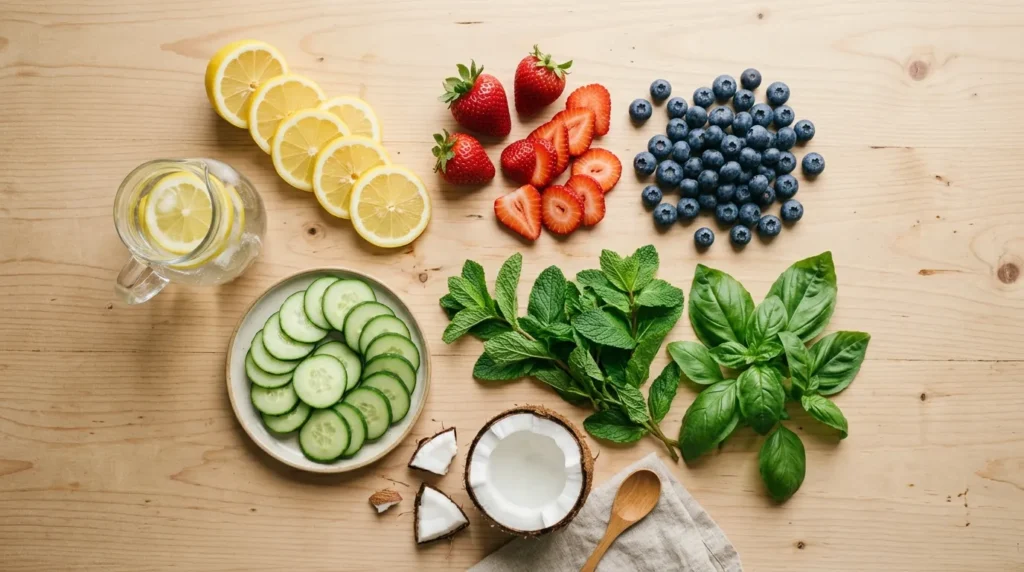
- Cucumber: High water content plus silica, a trace mineral linked to connective tissue support. Also has a mild diuretic effect, which can help reduce water-retention puffiness.
- Lemon and orange: Primary vitamin C sources. Vitamin C is a required cofactor for collagen synthesis — without enough of it, the body can’t efficiently build new collagen even when other inputs are available.
- Strawberries and blueberries: Rich in polyphenols and anthocyanins, plant compounds studied for antioxidant activity against oxidative stress, a contributor to premature skin aging.
- Mint and basil: Beyond flavor, both contain their own antioxidant compounds and can support digestion, which indirectly affects skin clarity by reducing bloating and inflammation.
- Rosemary: Contains rosmarinic acid, a compound studied for both antioxidant and anti-inflammatory properties.
- Aloe vera (food-grade): Traditionally used for soothing, anti-inflammatory properties, both topically and when ingested in appropriate food-grade forms.
- Coconut water: A natural source of potassium and other electrolytes that support cellular hydration rather than just fluid volume.
- Collagen peptides: Hydrolyzed collagen broken into amino acids (glycine, proline, hydroxyproline) the body uses as raw material for its own collagen production.
Best Beauty Water Recipes for Glowing Skin
These six recipes are the most practical way to put “how to hydrate skin from the inside out” into daily practice. Below are six tested skin-hydration drink recipes, ranging from beginner-friendly to more targeted formulas. Each can be made in a pitcher for easy daily sipping.
1. Cucumber Lemon Infused Water (The Classic)
This is the most searched-for combination for good reason — it’s simple, refreshing, and genuinely effective.
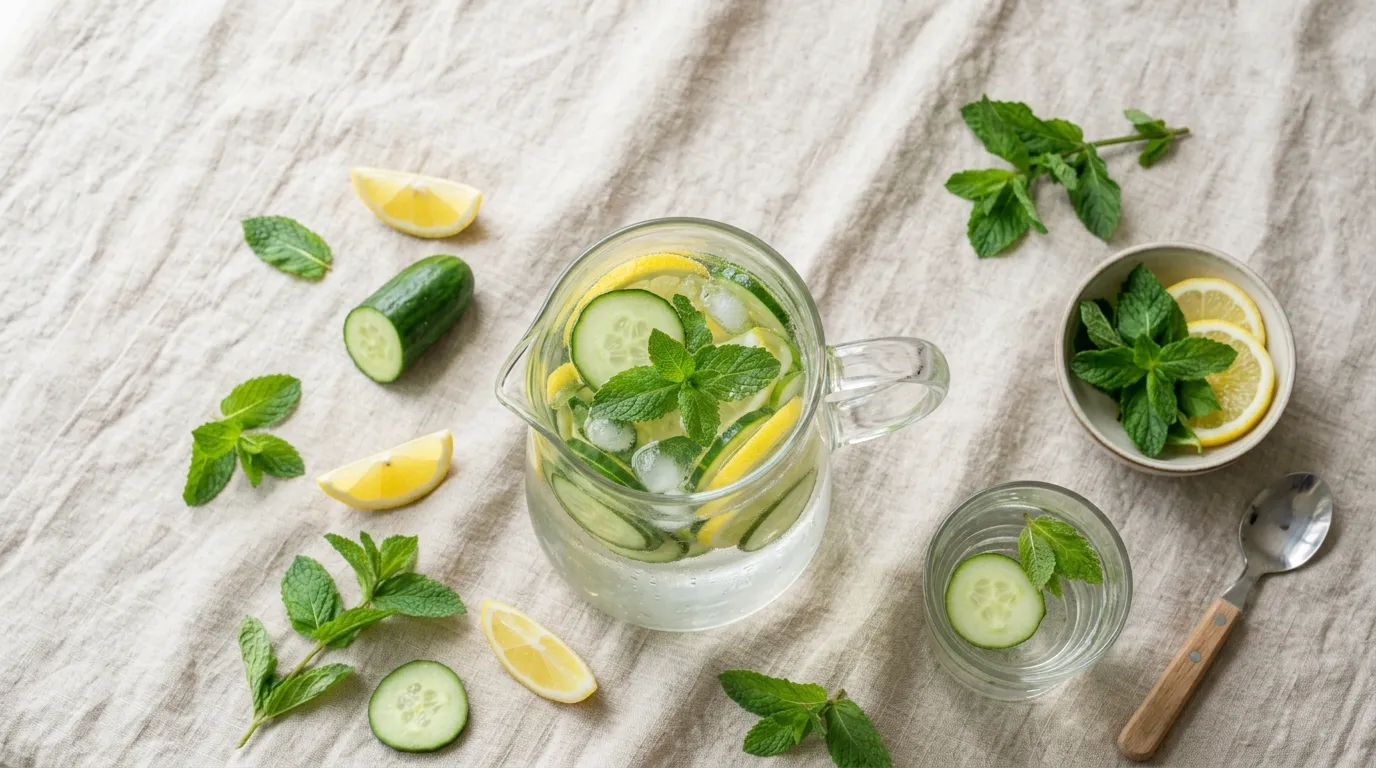
Ingredients: 1 sliced cucumber, 1 sliced lemon, 8 mint leaves, 1 liter filtered water
Why it works: Cucumber is roughly 95% water and contains silica, which supports skin elasticity. Lemon adds vitamin C for collagen support, and mint aids digestion, which indirectly supports clearer skin by reducing bloating-related puffiness.
How to make it: Slice cucumber and lemon thinly, bruise the mint leaves lightly to release oils, and let everything steep in water for at least 2 hours (overnight in the fridge is ideal). Strain or drink as-is.
2. Strawberry Mint Infused Water for Skin
Ingredients: 1 cup sliced strawberries, 10 mint leaves, 1 liter water
Why it works: Strawberries are rich in vitamin C and ellagic acid, an antioxidant linked to protecting collagen from UV-related breakdown. Mint adds a cooling, refreshing quality that makes this one easy to drink consistently — consistency is what actually moves the needle for skin hydration.
3. Antioxidant Berry & Basil Water
Ingredients: ½ cup blueberries, ½ cup raspberries, 6 basil leaves, 1 liter water
Why it works: Blueberries are among the highest antioxidant fruits by volume, helping combat free radical damage that accelerates visible skin aging. Basil contributes additional polyphenols and a subtly peppery note that balances the sweetness of the berries.
4. DIY Collagen-Infused Water Recipe
Ingredients: 1 scoop unflavored collagen peptides, juice of half a lemon, 1 cup warm water, pinch of sea salt
Why it works: Collagen peptides supply the amino acids (glycine, proline, hydroxyproline) your body uses to synthesize new collagen. Pairing it with vitamin C from lemon is important — vitamin C is a required cofactor in collagen synthesis, so drinking collagen without it is less effective. The pinch of sea salt improves absorption by supporting sodium-glucose cotransport in the gut.
Note: Collagen peptides typically dissolve better in warm water than cold; stir well before drinking.
5. Citrus Aloe Vera Glow Water
Ingredients: ¼ cup pure aloe vera juice (food-grade), 1 orange (sliced), 1 liter water
Why it works: Aloe vera has documented anti-inflammatory properties and is traditionally used both topically and internally for skin soothing. Orange rounds out the flavor and adds another vitamin C source. Only use food-grade aloe vera juice intended for consumption — cosmetic aloe gel is not the same product and shouldn’t be ingested.
6. Coconut Electrolyte Infused Water
Ingredients: 2 cups coconut water, 1 cup filtered water, a few slices of orange, pinch of Himalayan salt
Why it works: Coconut water naturally contains potassium and other electrolytes, which help water move into cells rather than simply passing through the body. This is especially useful after exercise or in hot weather, when plain water alone may not rehydrate as efficiently.
Beauty Water Recipes Compared

| Recipe | Best For | Key Nutrient | Prep Time | Shelf Life (Fridge) |
|---|---|---|---|---|
| Cucumber Lemon | Everyday hydration | Vitamin C, Silica | 5 min + 2 hr steep | 2–3 days |
| Strawberry Mint | Antioxidant boost | Vitamin C, Ellagic Acid | 5 min + 1 hr steep | 1–2 days |
| Antioxidant Berry & Basil | Anti-aging support | Polyphenols | 5 min + 1 hr steep | 1–2 days |
| DIY Collagen Water | Collagen production | Amino Acids + Vitamin C | 3 min | Same day |
| Citrus Aloe Vera | Redness-prone / sensitive skin | Aloe Compounds | 5 min | 1 day |
| Coconut Electrolyte | Post-workout hydration | Potassium, Electrolytes | 3 min | Same day |
How to Hydrate Skin from the Inside Out: Building a Daily Routine
Recipes alone won’t move the needle without consistency. Here’s a simple framework:
- Morning: Start with plain water or citrus aloe water to rehydrate after sleep, before coffee or tea.
- Midday: Sip cucumber lemon or berry-based infused water alongside meals — the vitamin C also improves iron absorption from food.
- Post-workout or afternoon slump: Reach for coconut electrolyte water to replace lost minerals.
- Evening: DIY collagen water works well here, since collagen synthesis largely happens overnight during tissue repair.
Aim for one full pitcher (roughly 1 liter) of this infused hydration drink per day, in addition to — not instead of — your regular water intake. Rotate recipes weekly to avoid palate fatigue and to vary the micronutrients you’re getting.
Common Mistakes to Avoid
- Over-relying on fruit for sweetness while under-hydrating overall — infused water still needs to be finished, not just sipped occasionally.
- Using cosmetic-grade aloe instead of food-grade — always check the label before drinking any aloe product.
- Expecting overnight results — skin hydration and collagen support build over weeks of consistent intake, not days.
- Skipping electrolytes on hot days or after intense exercise, which can actually leave skin looking more dehydrated despite high water intake.
Frequently Asked Questions

How to hydrate skin from the inside out — does beauty water actually improve skin, or is it just hype?
Consistent hydration paired with vitamin C and antioxidant-rich ingredients does support skin function — better barrier hydration, more cofactors for collagen synthesis, and reduced oxidative stress. It’s not a replacement for a full skincare routine, but it’s a legitimate supporting habit.
How long should I infuse fruit in water before drinking it?
Most fruit and herb combinations taste best after 1–4 hours of steeping, refrigerated. Delicate herbs like mint release flavor faster than firmer ingredients like cucumber, which benefits from longer steeping or an overnight rest.
Can I drink this infused water every day?
Yes, for most people daily infused water is safe and beneficial. If you’re adding collagen peptides or aloe vera juice, check with a healthcare provider first if you’re pregnant, nursing, or managing a medical condition.
What’s the best infused water for acne-prone skin?
Cucumber lemon and citrus aloe vera water are both good starting points — cucumber has cooling, anti-inflammatory properties, and aloe vera is traditionally used to calm irritated skin. Avoid adding excess natural sugar from juices, which some people find aggravates breakouts.
Is collagen water actually absorbed by the skin?
Ingested collagen peptides are broken down into amino acids during digestion and used throughout the body, including in skin tissue — they aren’t absorbed by skin directly the way a topical product would be, but they supply raw materials the body uses for its own collagen production.
Can this hydration drink replace my moisturizer or serum?
No. It supports hydration and nutrient supply from within, but it doesn’t replace a topical routine. Moisturizers and serums work by sealing in moisture and delivering actives directly to skin cells — internal hydration and topical care address different parts of the same problem and work best together.
What’s the difference between this and regular detox water?
The terms overlap significantly, but this style of drink typically refers to combinations chosen specifically for skin-supporting nutrients (vitamin C, antioxidants, collagen-supporting cofactors), while “detox water” is often marketed more generally around digestion and cleansing. In practice, many recipes fit both categories.
A Note on Consistency Over Quick Fixes
It’s worth being direct about something most articles on this topic skip: no single glass of infused water will visibly change your skin overnight. If you’re wondering how to hydrate skin from the inside out, the answer lies in consistency rather than quick fixes.
What actually moves the needle is treating this hydration habit as a daily ritual—a pitcher prepped a few times a week, consistently swapped in for sugary drinks or plain black coffee—instead of relying on a one-time remedy. Skin cell turnover and collagen remodeling both happen over weeks, not hours, so the realistic expectation is gradual improvement in tone and texture over four to eight weeks of consistent intake, alongside sleep, sun protection, and a balanced diet.
Conclusion
If you take one thing from this guide on how to hydrate skin from the inside out, let it be this: beauty water recipes aren’t a shortcut around a solid skincare routine — they’re a low-effort, high-consistency habit that helps you hydrate skin from the inside out so it can actually use everything else you’re doing for it. Start with one recipe that fits your taste (cucumber lemon is the easiest entry point), build it into a daily pitcher habit, and rotate in antioxidant or collagen-focused versions as your goals shift. Small, repeatable habits — not sporadic effort — are what show up in your skin over time.
