How to Set Makeup to Last All Day (2026 Guide)
If your Foundation slides off by lunch, your concealer creases under your eyes by 2 p.m., or your powder sits on top of your skin like a mask instead of blending into it, you are not alone. Learning how to set makeup to last all day without caking is one of the most searched skincare-meets-makeup problems out there, and for good reason: most people are taught to apply products, but never taught how to lock them in place correctly.
In this guide from Glow Beauty Lab, you will get a complete, experience-tested breakdown of exactly how to set makeup to last all day without caking, from skin prep to final touch-up, so your base looks fresh whether you’re sitting through an eight-hour workday, a humid outdoor wedding, or a sweaty summer commute.
This isn’t a generic listicle. It’s a step-by-step system built from real testing across oily, dry, combination, and mature skin types, so you can find the exact adjustments that apply to your skin rather than a one-size-fits-all answer that only works for half the people who try it.
Why Makeup Cakes or Fades in the First Place
Before fixing the problem, it helps to understand why makeup fails in the first place. Cakey makeup and fading makeup are actually two different issues with two different root causes, and most people are only solving for one of them.
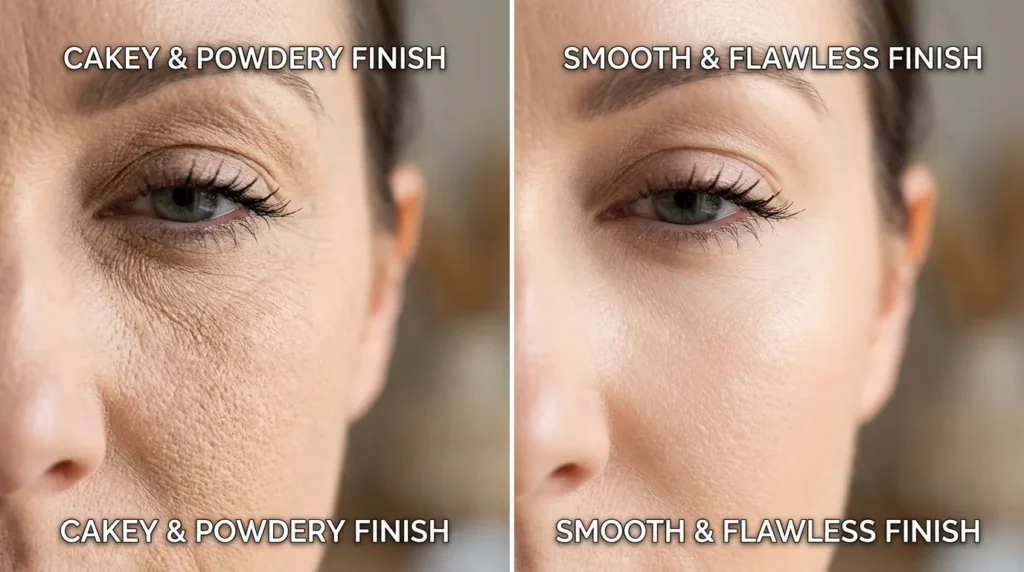
Cakey makeup usually happens when too much product sits on the surface of the skin without anything to bind it. This is common when foundation is applied in thick layers, when powder is applied over dry patches, or when setting powder is used without proper hydration underneath.
The powder has nothing to “grip,” so it sits visibly on top of the skin, settling into fine lines, pores, and dry patches instead of blurring them.
Fading or melting makeup, on the other hand, is usually caused by one of three things: oil production (especially in the T-Zone), sweat and humidity, or a lack of a proper base layer to help products adhere. Skin naturally produces oil throughout the day, and if there’s no primer or mattifying step to manage that oil, foundation and concealer will slide.
Understanding this distinction matters because the fixes are different. If you’re dealing with cakey texture, you likely need better hydration and thinner layers. If you’re dealing with fading, you likely need better oil control and a stronger setting step.
Most long-lasting makeup routines fail because they try to solve fading with more powder, which only makes the cakey problem worse. This is exactly why so many people search specifically for how to set makeup to last all day without caking instead of a generic “make foundation last longer” tip — they’ve already noticed that more powder alone isn’t the answer.
Common Mistakes That Cause Both Problems at Once
A few habits create both issues simultaneously: skipping moisturizer before primer, applying setting powder with a dry puff instead of pressing it in, using a setting spray that’s mostly alcohol on already-dry skin, and reapplying powder throughout the day without blotting oil first. Fixing these five habits alone solves the majority of complaints people have about their base makeup not lasting.
Prep Your Skin First: The Step Everyone Skips
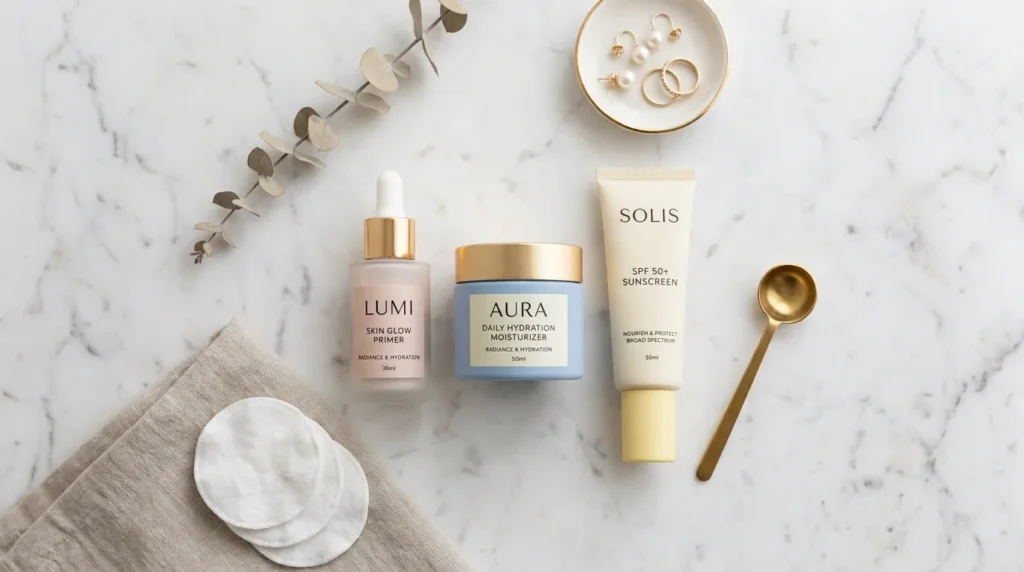
The single biggest factor in how to set makeup to last all day without caking has nothing to do with powder or spray — it’s what you do before you even pick up foundation. Skin hydration is the foundation of foundation, and it’s the step most tutorials skip entirely when explaining how to set makeup to last all day without caking.
Start With the Right Moisturizer
Dry skin will always pull powder into its texture, creating a cakey, flaky look no matter how good your setting technique is. Before applying any color product, use a lightweight, oil-free moisturizer if you have oily or combination skin, or a slightly richer, hyaluronic acid-based moisturizer if your skin leans dry.
Ingredients like hyaluronic acid and niacinamide help balance hydration and oil production at the same time, which sets up every product that goes on afterward to behave better.
Choose a Primer Based on Your Skin Type, Not Trends
Primer isn’t optional if you want makeup that survives more than a few hours. A silicone-based primer is excellent for blurring pores and creating a smooth, grippy surface for foundation, and it also helps control shine in the T-zone. If your skin is on the drier side, look for a hydrating, dewy-finish primer instead, since a mattifying primer on dry skin will only accelerate cakey texture later in the day.
Let primer absorb for 60–90 seconds before moving to foundation. Applying foundation over wet primer is one of the most overlooked reasons makeup slides around instead of setting properly.
Don’t Forget SPF
Since most people wear makeup during daylight hours, SPF is a practical part of makeup prep, not just a skincare add-on. Look for a lightweight, non-greasy SPF formula so it doesn’t add extra oil that competes with your primer.
Apply Foundation and Concealer in Thin Layers
One of the most repeated pieces of advice from professional makeup artists — and one of the most ignored — is to build coverage gradually. Thick, single-layer application is the number one cause of a cakey finish, and it’s usually the missing step in most guides on how to set makeup to last all day without caking.
The Layering Method
Instead of applying a thick coat of foundation once, use a lightweight foundation and apply it in two to three thin layers, letting each layer settle for 30 seconds before adding more. Use a damp beauty blender or makeup sponge rather than a dry brush for the first layer, since a damp sponge diffuses product more evenly and prevents visible streaks or patchiness.
Setting Concealer Without Creasing
Concealer creasing under the eyes is one of the most common complaints tied to this topic, and it usually comes down to using too much product or setting it incorrectly.
Apply concealer in a thin, triangular shape under the eye, pat (don’t rub) it in with a sponge, then immediately set it with a small amount of translucent powder pressed in with a powder puff — not swiped with a brush. Swiping disturbs the concealer and pushes it into fine lines; pressing locks it in place.
The Baking Technique Explained (And When to Use It)
The baking technique is one of the most searched long-tail terms tied to long-lasting makeup, and it’s a core part of how to set makeup to last all day without caking, though it’s often misunderstood.
Baking means applying a generous layer of loose powder over concealer or foundation in areas prone to creasing or oxidizing (under the eyes, around the nose, on the chin) and letting it sit for 5–10 minutes while the warmth of your skin sets the product underneath. After baking, you dust off the excess powder, leaving behind a smoother, longer-wearing base.
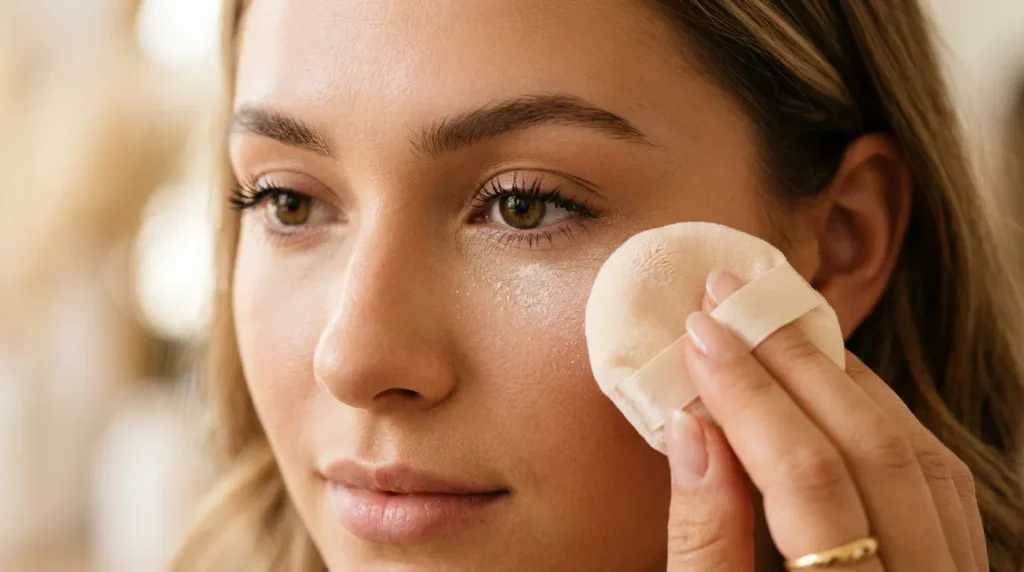
How to Bake Makeup Correctly for Beginners
- Apply concealer and foundation as usual.
- Press a generous amount of loose translucent powder over the under-eye area and any oily zones using a powder puff.
- Let it sit for 5–10 minutes while you finish the rest of your routine (brows, eyeshadow, etc.).
- Dust off the excess powder with a clean, fluffy brush.
Baking works best for oily and combination skin, or for anyone wearing makeup for a long event like a wedding. It’s generally too drying and heavy for very dry or mature skin, where a lighter dusting of pressed powder is more appropriate than a full bake.
The Glow Beauty Lab team tests this technique constantly across skin types, and the biggest takeaway is always the same: baking is a targeted tool, not an all-over step.
Setting Powder vs Setting Spray: Which Works Best
This is one of the most common points of confusion, and the honest answer is: it’s not really an either/or choice. Setting powder and setting spray solve different problems, and the best long-lasting makeup routine typically uses both, in the right order — which is really the heart of how to set makeup to last all day without caking.
Setting powder (loose or pressed) absorbs oil and locks cream and liquid products in place by creating a drier surface layer. It’s essential for controlling shine and preventing transfer.
Setting spray creates a light film over the entire face that helps blend powder and cream layers together, adds a finished look (dewy or matte, depending on formula), and improves resistance to humidity and sweat.
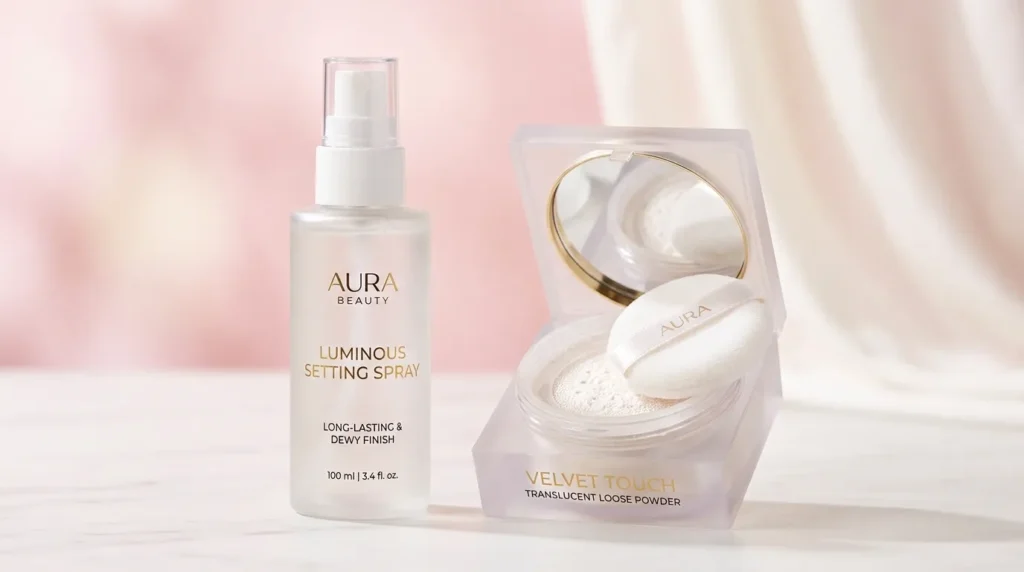
Comparison Table: Setting Powder vs Setting Spray
| Feature | Setting Powder | Setting Spray |
|---|---|---|
| Best for | Oil control, preventing shine, baking | Blending layers, humidity/sweat resistance |
| Finish | Matte (translucent) or soft-focus (pressed) | Dewy or matte, depends on formula |
| Best skin type | Oily, combination, T-zone shine | Dry, normal, or combined with powder for oily skin |
| When to apply | Immediately after concealer/foundation | Last step, after powder |
| Weak point alone | Can look cakey if overused | Won’t stop excess oil/shine on its own |
| Ideal use | Use for targeted areas (T-zone, under eyes) | Use over entire face to seal everything in |
Should You Use Setting Powder Before Setting Spray?
Yes. The most reliable order is: primer, foundation, concealer, setting powder (targeted or all-over depending on skin type), then setting spray as the final seal. This order gives you oil control from the powder and a humidity-proof, transfer-resistant finish from the spray, without one canceling out the other.
Building a Long-Lasting Makeup Routine for Your Skin Type
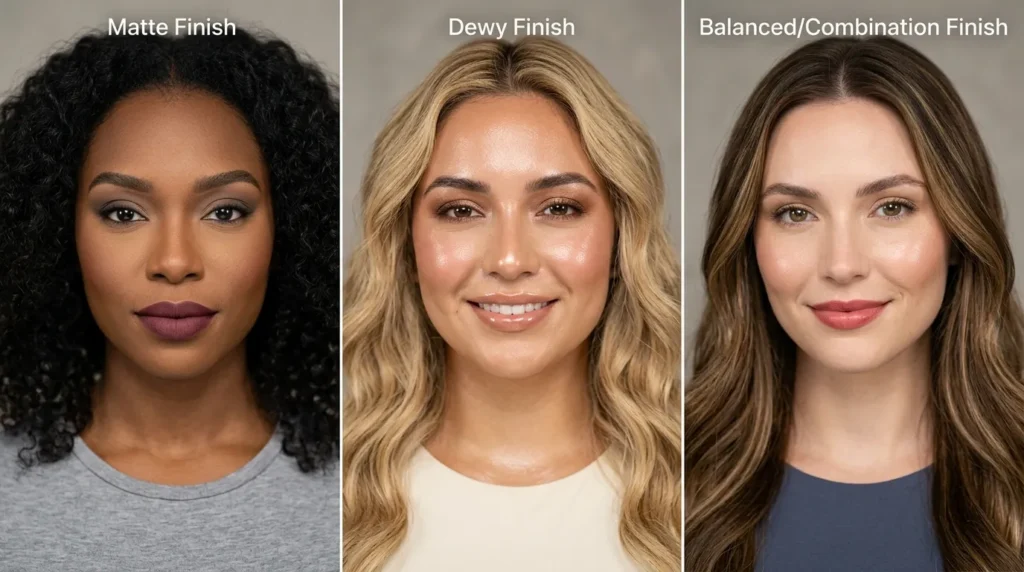
Since oily, dry, and combination skin behave so differently, a proper long-lasting makeup routine should be adjusted rather than applied identically across skin types. This is where most people get how to set makeup to last all day without caking wrong — they copy someone else’s exact steps without accounting for how their own skin actually behaves.
For Oily Skin
Use a mattifying, silicone-based primer, apply foundation in thin layers, bake the T-zone with loose powder, and finish with a matte, alcohol-based setting spray. Carry blotting papers for touch-ups instead of adding more powder throughout the day, since layering powder on top of oil is a common cause of cakey buildup by the afternoon.
For Dry Skin
Focus heavily on hydration: a hyaluronic acid moisturizer, a dewy-finish primer, thin foundation layers, and a light dusting of pressed powder only where needed (avoid baking). Finish with a hydrating, dewy setting spray rather than a matte one, since matte formulas tend to emphasize dry patches.
For Combination Skin
Treat your T-zone like oily skin and your cheeks/perimeter like dry skin. Use powder and baking only in the T-zone, keep the rest of the face powder-free or very lightly powdered, and use a setting spray that balances both — a satin or “your skin but better” finish usually works best.
Across every Glow Beauty Lab skin-type test, the pattern holds: matching your setting method to your actual skin behavior — not a trend or a single product everyone recommends — is what separates a routine that lasts from one that doesn’t.
Touch-Up Routine for All-Day Wear
For genuinely long days or events, carry blotting papers, a small pressed powder compact, and a travel-size setting spray. Blot oil first, press (don’t swipe) a small amount of powder only where shine has returned, then mist lightly with setting spray.
This three-step touch-up avoids the buildup that causes makeup to look heavier and cakier as the day goes on, and it’s the same maintenance approach behind most professional advice on how to set makeup to last all day without caking during weddings, work shifts, or travel days.
It’s also worth noting that timing matters just as much as product choice. Doing a full touch-up too early, before oil has actually resurfaced, tends to add unnecessary product and speeds up the cakey look later.
A good rule of thumb is to check your T-zone around the four-hour mark, blot only if there’s visible shine, and hold off on powder until you can actually see it’s needed. This single habit — waiting for the signal instead of touching up on a fixed schedule — is one of the simplest ways to keep a long-lasting makeup routine looking fresh instead of heavy by the evening.
Many readers researching skincare-adjacent routines also come across brands like preppyglow, which focuses on lightweight, skin-first formulas — a good reminder that the products underneath your makeup matter just as much as the makeup itself when it comes to a long-lasting, non-cakey finish.
People Also Ask (FAQ)
What is the best way to set makeup so it doesn’t look cakey?
The most reliable way to figure out how to set makeup to last all day without caking is to hydrate skin properly first, apply foundation and concealer in thin layers, use powder only where needed (not all over), and finish with a setting spray to blend everything together seamlessly.
How do I make my makeup last all day in hot weather?
Use a mattifying primer, bake oily areas with translucent powder, and finish with a humidity-resistant, transfer-proof setting spray. Blot oil during the day instead of adding more powder.
Is setting spray better than setting powder?
Neither is “better” — they do different jobs. Powder absorbs oil and locks products in place; spray blends everything and adds humidity resistance. Most long-lasting routines use both.
How do I stop my concealer from creasing under my eyes?
Apply a thin layer, pat it in gently, and set it immediately by pressing (not swiping) a small amount of translucent powder underneath before moving on to the rest of your face.
How long should setting spray take to dry before touching your face?
Most setting sprays need 60–90 seconds to fully set. Touching your face too soon can smudge freshly applied powder or concealer.
Can you set makeup without powder or spray?
Yes, in a limited way — using thin layers, a good primer, and letting each layer absorb before adding more can extend makeup wear even without powder or spray, though the finish typically won’t last as long as a full setting routine.
Conclusion: Your Long-Lasting, Cake-Free Routine at a Glance
Knowing how to set makeup to last all day without caking really comes down to five repeatable steps: hydrate and prime your skin properly, apply foundation and concealer in thin layers, use the baking technique strategically (not everywhere), choose setting powder and setting spray based on your specific skin type, and follow a light, blot-first touch-up routine instead of piling on more product.
Once you understand why makeup fades or cakes, adjusting your routine becomes much easier than following generic advice that wasn’t built for your skin type. At Glow Beauty Lab, this five-step framework is the same one we recommend to readers with oily, dry, combination, and mature skin alike, simply adjusted at the powder and spray stage to match your unique needs.
