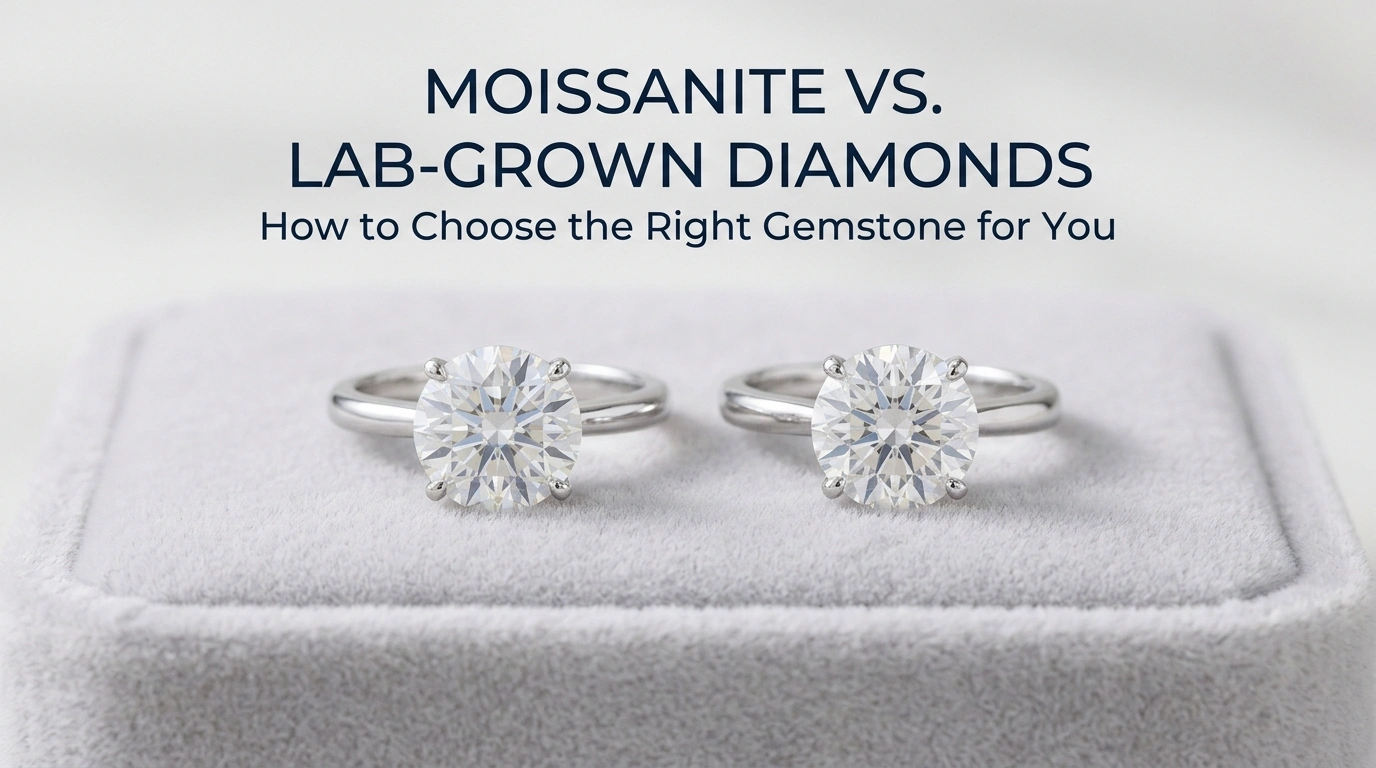
Moissanite vs. Lab-Grown Diamonds: How to Choose the Right Gemstone for You
Key Takeaways
- Composition: Moissanite is made from silicon carbide; lab-grown diamonds are pure carbon structures.
- Brilliance: Moissanite displays a fiery, rainbow-like sparkle, while lab diamonds produce a more classic white scintillation.
- Durability: Lab-grown diamonds lead with a Mohs hardness of 10. Moissanite follows close behind at 9.25, still suitable for daily wear.
- Price: Moissanite typically costs less than similarly sized and graded lab-grown diamonds, appealing to budget-conscious shoppers.
When selecting the perfect gemstone for your jewelry, understanding the differences between moissanite and lab-grown diamonds is essential. Both stones offer stunning visual qualities and unique characteristics, so your choice should reflect your personal taste and values. For a deeper dive into their attributes, you can read more about What’s the difference between moissanite and lab diamond?
Moissanite and lab diamonds are both cultivated in controlled settings, enabling more ethical, sustainable sourcing than traditionally mined stones. As demand for alternatives to natural diamonds continues to rise, it is important to weigh the factors of brilliance, durability, and budget when making your selection.
Understanding Moissanite
Moissanite is a remarkable gemstone formed from silicon carbide. Discovered in 1893 within a meteor crater, natural moissanite is extremely rare, and nearly all moissanite available in the jewelry market is laboratory-created. Known for its fiery brilliance and energetic display of color, moissanite’s high refractive index is the primary reason for its vibrant rainbow sparkle, which sets it apart from other gemstones. This unique feature often makes it a favorite for those seeking distinction and flair in their jewelry.
Moissanite’s durability and affordability make it a practical alternative for engagement rings and other jewelry pieces. It is resistant to heat and chemical exposure, enabling versatile use across many settings and designs. The gem also maintains its appearance over time, as it resists cloudiness and scratches relatively well, making it ideal for anyone seeking low-maintenance beauty in their jewelry.
Exploring Lab-Grown Diamonds
Lab-grown diamonds are genuine diamonds with identical chemical, physical, and optical properties as natural diamonds. Produced in advanced labs using processes that replicate natural geological conditions, these diamonds exhibit the same timeless white brilliance and clarity as mined diamonds. The lab environment ensures traceability, resulting in responsibly sourced stones and reduced environmental impact. In recent years, lab-grown diamonds have grown in appeal, merging ethical sourcing with the enduring value and prestige associated with diamonds.
The increasing innovation in lab technology means that lab-grown diamonds come in a wide array of shapes, cuts, and carat sizes. This flexibility enables jewelers to meet virtually any design preference or need. Lab-created diamonds are also typically graded using the same criteria as natural diamonds, such as color, cut, and clarity, providing reassurance and transparency for buyers interested in quality and certification.
Comparing Brilliance and Fire
The differences in how moissanite and lab-grown diamonds interact with light often set them apart visually. Moissanite’s higher refractive index results in a fiery, rainbow-like dispersion of colors, making it catch the eye under almost any light condition. Some jewelry enthusiasts cherish this bold look, while others might favor the lab-grown diamond’s more traditional brilliance. Lab-grown diamonds reflect light to produce a more classic, subdued white-blue sparkle, closely mirroring the appearance of natural diamonds.
It’s important to consider your lifestyle and desired look when choosing between the two. If you enjoy attention-grabbing accessories, moissanite may be your gemstone of choice. Conversely, for those drawn to understated elegance, the familiar glow of a lab-created diamond may be more appropriate.
Assessing Durability
Durability is vital for pieces meant to be worn daily, like engagement rings. Diamonds, both mined and lab-grown, rank at the top of the Mohs scale at 10, meaning they are extremely hard and resistant to scratching. Moissanite, while not quite as hard, still scores an impressive 9.25 and is extremely tough. Both materials are resilient against everyday wear and tear. However, if maximizing hardness and long-term durability are top concerns, lab-grown diamonds come out ahead.
That said, for most practical purposes, both offer excellent longevity and can withstand the routine impacts and abrasions of daily life. Their resilience assures long-lasting beauty and usefulness for generations with proper care.
Evaluating Price Points
Budget can significantly influence which gemstone you ultimately select. Moissanite is generally far more affordable than lab-grown diamonds, even in larger carat sizes or higher quality grades. This lower price point lets individuals design bigger, more elaborate settings without breaking the bank. As the cost of producing lab-grown diamonds continues to decline, these stones are becoming more accessible, but they still command higher prices than moissanite for a similar size and clarity.
Additionally, the overall value for money is a consideration for many shoppers. Moissanite appeals to those who wish to maximize impact and size for their investment, while lab-grown diamonds may be favored for maintaining potential resale value and for those seeking authenticity traditionally tied to the term “diamond.”
Considering Ethical and Environmental Factors
Both moissanite and lab-grown diamonds point toward the future of responsible jewelry. Since both are created without mining, they eliminate the common ethical and environmental issues tied to traditional diamond sourcing. Consumers who value sustainability and ethical transparency often gravitate toward these options in order to ensure their jewelry reflects their values. Choosing lab-created gems eliminates worries about conflict diamonds and the considerable environmental disruption caused by mining. For more on the ethics of gem production, refer to this National Geographic article.
Consumers are also becoming more inquisitive about supply chains and the origins of their gemstones. Lab-created stones support transparency in production methods and often come with certifications of origin, providing additional peace of mind for environmentally conscious shoppers.
Making Your Decision
The decision between moissanite and lab-grown diamonds comes down to your style, priorities, and budget. Those attracted to bold, rainbow-like fire and cost savings may prefer moissanite. On the other hand, if classic diamond sparkle, hardness, and tradition are top priorities, lab-grown diamonds present a compelling option. Consider what matters most, whether that is the way your jewelry looks, feels, or aligns with your values.
Whether you are planning a meaningful proposal, celebrating a milestone, or simply treating yourself, understanding the strengths of both stones empowers you to select a piece that tells your unique story. Both alternatives offer impressive beauty, longevity, and peace of mind regarding your purchase.
Conclusion
Moissanite and lab-grown diamonds both present compelling, responsible alternatives to traditionally mined stones, each offering distinct advantages. By understanding their differences in composition, brilliance, durability, price, and ethical considerations, you can make an informed choice that best suits your lifestyle and values. Whether you opt for moissanite’s vibrant sparkle or the timeless beauty of a lab-grown diamond, you will find a beautiful and thoughtful alternative that shines as brightly as your commitment.
No matter your decision, both gemstones help reduce the environmental impact and uphold ethical values in your jewelry purchases. These alternatives reflect increasing consumer awareness, making them excellent options for a new generation of jewelry lovers who seek both beauty and responsibility.
